
Shyness: where it comes from and how to feel less shy
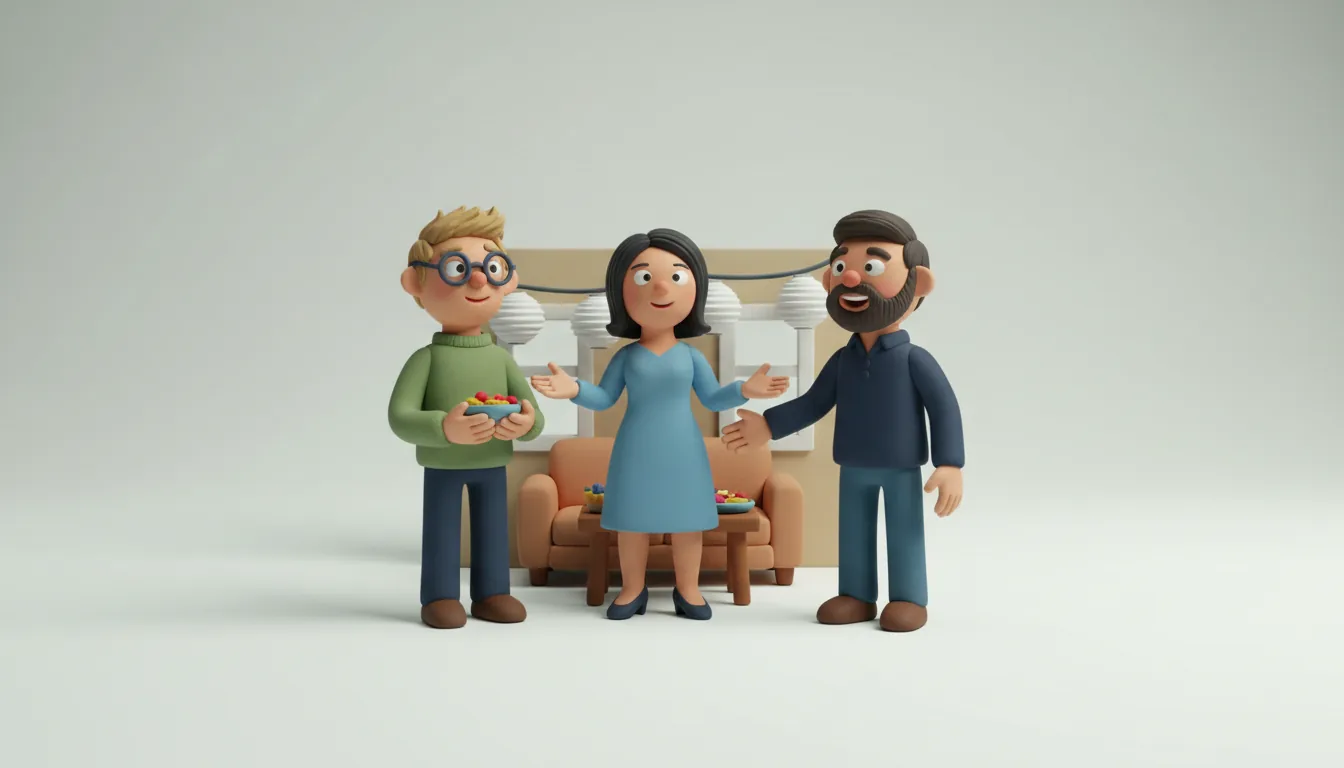
Shyness is the pull to hold back around people, mostly ones you don't know well yet, because part of you is worried about how you'll come across. It's common. Often there's a warm, funny person underneath who just needs a few minutes longer than everyone else.
An example: Arlo got to Marisa's housewarming twenty minutes early, which turned out to be a mistake. By the time the room filled up, he was standing by the sofa with the bowl of candy he'd brought, holding it against his chest like a shield. Marisa found him under the paper lanterns and came over with a bearded man in a navy shirt. "Arlo, this is Gabe. He climbs with me on Thursdays." Gabe held out his hand. Arlo smiled, looked down at the bowl, and for a long second couldn't work out how to shake hands without dropping the gummy bears. With Marisa he can talk for hours. They've been friends since they were eighteen. With a stranger in front of him, his words go somewhere he can't reach.
What shyness feels like from the inside
From the outside, shyness looks like silence. From the inside it's busy. Your heart speeds up before you say your name. You rehearse a sentence in your head, and by the time it's ready, the talk has moved on. Your face gets warm. You check your phone so your hands have something to do. On the way home you replay the one thing you did say and wonder if it sounded strange.
Other people rarely see any of that. They see someone quiet and sometimes read it as cold or bored, the same mistake people make about any quiet person. Arlo has been called aloof more than once by people who later became his close friends.
Where shyness comes from
There's rarely one cause. Usually it's a mix:
- How you started out. Some people seem to arrive in the world a little more careful around new faces and new places.
- What happened next. Being teased, moving a lot, or growing up next to a loud sibling who did all the talking can teach someone that holding back is safer.
- Where you are now. A new city, a new language, or the first months after a breakup can make a usually easy person shy for a while.
Shyness isn't the same as needing time alone to recharge, which is a separate question covered in introvert or extrovert. A shy person can love a crowd and still dread the first five minutes of meeting it. A reserved person is different again. They feel at ease and simply keep their private life to themselves until they trust you.
Shy with strangers, or shy in the spotlight?
Not all shyness looks alike. Many people are shy in only one of two places.
Some are shy with strangers. They'll give a toast at a wedding without blinking, but a one-on-one chat with someone new at a party leaves them tongue-tied. The person standing at the edge of the room, the classic wallflower, is usually this kind. Sticking to safe small talk can even get a shy person wrongly called shallow.
Others are shy in the spotlight. They'll talk to anyone at a bus stop, then go red when the whole table sings to them or turns to hear their story. Some people feel both, and some feel one at twenty and the other at forty. Knowing which one you have tells you where to start.
How shyness shows up across the types
Any type can be shy. Where it shows, and what helps, depends a lot on personality. Here are eight of the 16 types:
- Harmonizer goes quiet in a loud room full of strangers and comes alive at a small dinner at home. Hosting four people suits them better than attending a party of forty.
- Vitalizer is rarely shy while looking after others. Ask them to talk about themselves, though, and the spotlight can make them squirm.
- Analyst freezes during small talk and relaxes the moment the talk turns to an idea they know well. One real question works better than ten polite ones.
- Mentor can hold a whole room and still feel unsure inside. Their shyness hides behind a confident face and shows later, as worry about how they came across.
- Dreamer needs time to get a feel for a person before letting them close. Sitting quietly together for a while comes before any big talk.
- Strategist watches first and speaks once they're sure the room is safe. Some of what looks like shyness is simple caution.
- Guardian is slow to trust and shy with new faces, then loyal and openly warm once trust is there. Arlo is one.
- Craftsman is shy about talking but not about doing. Hand them the grill or a broken speaker and the conversation tends to start by itself.
Small steps to feel less shy
You don't have to become the loudest person at the party. The aim is to hold back less often when you'd actually like to join in. A few steps that help many shy people:
- Arrive with a job. Bring snacks, offer to take coats, or run the music. A task gives your hands and your nerves somewhere to go.
- Put the bowl down. Free hands make it easier to wave, shake hands and look open.
- Prepare two questions. "How do you know Marisa?" and "What's keeping you busy lately?" will carry most first chats.
- Say one thing early. The longer you wait, the bigger the first sentence feels.
- Leave on a good note. Head home after a nice moment, so that's the one you replay.
Shy around your friends' friends
This is where many shy adults get stuck: a party where you know only the host. Ask the host ahead of time to introduce you to one person, and stay near that person for a while. Two people talking draw others in more easily than one person standing alone.
Shy at family gatherings
A partner's family, a big holiday table or relatives you see once a year can bring old shyness back. Pick one relative to sit next to and ask about something they love. Offering to help in the kitchen still works, too.
Shy with a partner
Some people are relaxed with a partner in everyday life and shy about the big things: saying "I love you" first, asking for what they want, or telling them something hurt. Writing it down first helps, and so does saying it side by side on a walk instead of face to face.
If what you feel is less fear and more the sense that you keep saying the wrong thing, being socially awkward is a slightly different problem with its own fixes.
How to help a shy friend warm up
- Introduce them with a hook. "Gabe, Arlo knows every hiking trail in this state" gives both people something to say.
- Don't point it out. "Why are you so quiet?" makes it worse every time.
- Plan side by side things. Cooking, a walk, a board game. Talk comes easier when you're looking at the same thing.
- Give them a role. A job turns a guest into part of the party.
- Let them leave early without a fuss. They'll come back more often if leaving is easy.
Arlo, two parties later
At Marisa's next party, Arlo asked ahead for a job and spent the first hour in charge of the music. Gabe came over to ask about a song, and they talked about mountains until the lanterns were the only lights left on.
Learn how your type handles a room of strangers
Some types freeze with strangers and others only in the spotlight, so knowing yours tells you which of the small steps to try first. Away from any crowd, take the free personality test on your own couch. It describes your strengths, your struggles and what you need from people. If one new friend felt easy to talk to from the start, send them the link from your result. After their turn, your shared relationship type may hint at why the talk between you came so easily.
Questions people ask
Why am I so shy?
Usually it's a mix of how careful you were from the start, what you went through growing up and what's going on in your life now. Shyness tends to be strongest with new people and in new places.
Can you stop being shy?
Many people never switch it off completely, but they can feel it much less. Small, repeated steps, like saying one thing early or arriving with a job, make new situations easier over time.
Is shyness a personality trait?
It's a tendency that shows up more in some types than others, and it can change a lot depending on the people and the place.
Does shyness go away with age?
For many people it softens as they get older and gather more practice. It can also come back for a while after a big change, like a move.
Written by Virko Kask, founder of Typeza
Written with the help of AI tools.
One question for two, every week
A question to ask your partner, friend or family, and how different types tend to answer it.
Free. Unsubscribe any time.