
What does brash mean? Brash vs bold, and living with a brash person
Brash describes someone who speaks up fast, loudly and without much thought for how it lands. A brash person is bold and sure of themselves, and the tact that usually travels with boldness gets left behind.
The adverb is brashly and the noun is brashness. Close words are brazen, forward, cheeky and pushy, each a little different. The opposite is tactful or careful, and for a quieter version of the same courage, people say bold or outspoken.
Rosa and the hedge
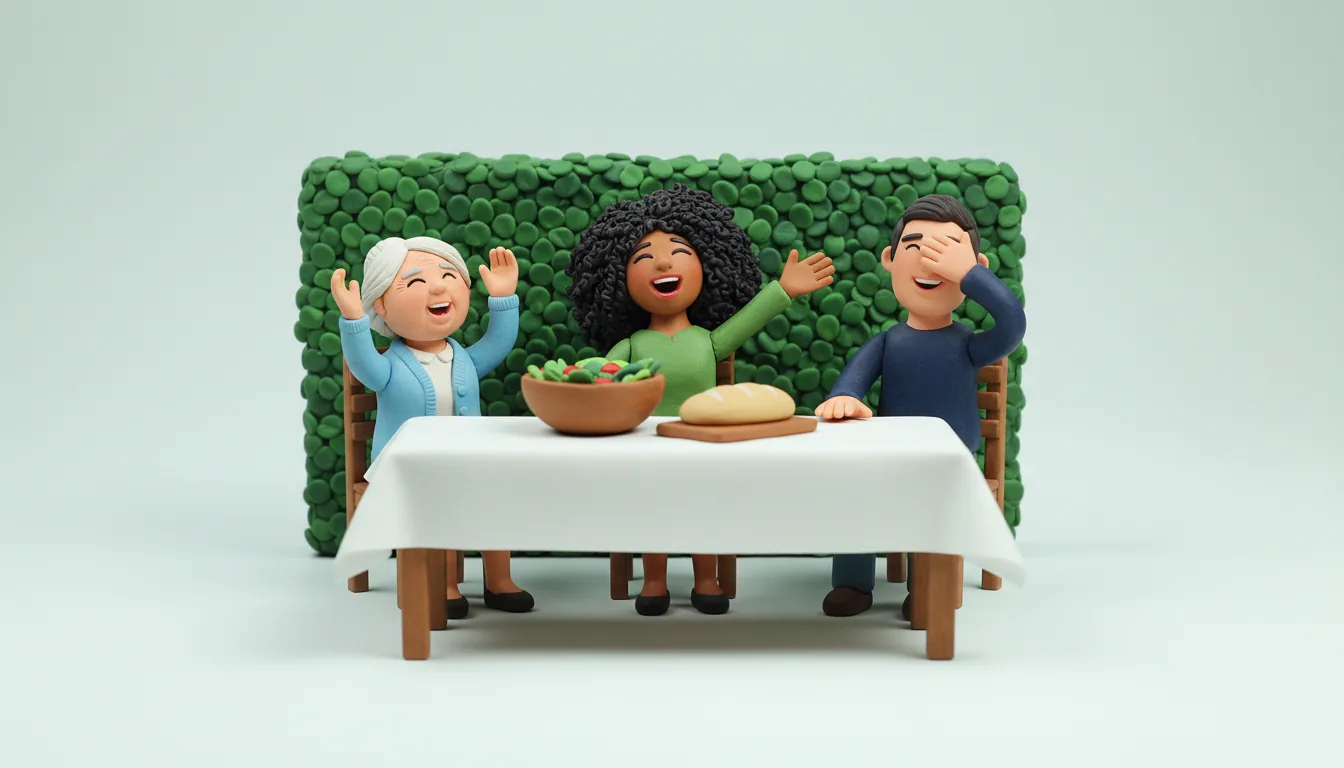
An example: Lukas, 30, brought his girlfriend Rosa, 31, to Sunday lunch at his grandmother's house for the first time. Hilde, 80, had set a long table in the back garden. Behind them stood a hedge so tall it hid half the sky.
Rosa sat down, looked up and laughed. "Hilde, that hedge is a wall! You've got no afternoon sun at all." She threw one arm up toward the top of it. "I'd cut it in half tomorrow."
Lukas put a hand over his eyes. His grandmother had planted that hedge forty years ago.
Hilde put both hands in the air and laughed louder than Lukas had heard her laugh in years. "Thank you! I've asked my son to cut it for ten summers. He says it's tradition."
On the drive home Lukas told Rosa it had gone well, and also that she might want to ask a question or two before giving his dad her opinion next week. Rosa thought about it and agreed. She hadn't meant to be rude. She had just said what she saw, the way she always does.
Brash, bold, confident or rash?
These four words overlap, and the line between them is about tact and thought. Bold means willing to take a risk or say something hard, and it's usually praise. Confident means trusting yourself, often quietly. Brash is bold without the care for how it lands, so it often carries a small criticism. Rash is different again: it means acting too fast, without thinking it through, and it's about the decision more than the manner. So if you're wondering whether a move was rash or brash, ask what was missing. If the thinking was missing, it was rash. If the tact was missing, it was brash. Dictionaries also list "hasty" as a sense of brash, probably from people mixing it up with rash, so the two words do overlap a little. A strong personality can be firm and clear without being either.
What brash looks like day to day
Brash behavior is easy to spot because it's meant to be seen and heard. These are some common signs.
- They give their opinion in the first five minutes, whether anyone asked or not.
- They speak louder than the room, and often first.
- They ask direct personal questions that others would save for later.
- They tease people they've only just met.
- They decide on the spot and announce it, without checking with anyone.
- They laugh at a plan and then offer their own right away.
A brash person often isn't trying to win anything. If someone needs to come out on top in every exchange, that's closer to the attitude described in confidence vs arrogance. And a person who argues against whatever is said, just to argue, is more of a contrarian.
A brash partner, friend or relative
A brash partner can be great fun and a little tiring. They're the one who sends back the wrong order, starts talking to strangers on the train and says what they think of your new haircut. Some people pick a brash partner because of that energy. The trouble usually comes in small moments, like a family dinner or a quiet friend's birthday, where the same energy feels too big.
A brash friend tells you the truth when nobody else will. That's worth a lot. They're also often the one who gets a quiet group talking, or who asks the waiter the question everyone else was too shy to ask. It helps to agree on when you want their honest view and when you just need them to listen.
A brash relative is often the one people talk about after family meals. Usually they've always been this way, and the rest of the family has learned to laugh, wince or hand them the salad bowl. If they also take over decisions that belong to others, the better word is overbearing. And if the problem is mostly how long they talk, people who talk too much has ideas for that.
Brash on the outside
Some people come across as brash without being careless about others at all. They may come from a family where everyone spoke loudly and teasing meant love. They may feel nervous with new people and fill the silence with strong opinions. Or they simply think out loud, so their first thought reaches you before their second, kinder one.
Place matters too. What sounds brash in one family or one town can sound normal, even warm, in another, where people say what they mean and nobody takes offense.
Rosa is a good example. She said the hedge was a wall because she liked Hilde at once and felt at home. To Lukas it looked brash. To Hilde it felt like being taken seriously.
Honest energy or plain rude?
How brashness lands depends a lot on the listener, and personality type plays a part. The Harmonizer values a calm, gentle mood and may find a loud, direct remark hard to sit through. The Commander speaks plainly and acts fast, and often reads brashness as honest energy. The Dreamer is sensitive to tone and can feel a quick, sharp comment for a long time. The Entrepreneur likes things said straight so they can move on, and may barely notice the edge.
So a Commander and a Harmonizer at the same table can hear the same joke as refreshing or as a small shock. Type theory sketches typical reactions like these, and it can't tell you how your own family will respond. Read it as a way to understand the other side, not as advice.
How to be bold without being brash
Boldness is a good thing to keep. The goal is to keep the courage and add a little care.
- Ask one question first. "Can I say something about the hedge?" takes three seconds and changes how the rest is heard.
- Watch the room. A loud joke works at a garden lunch and not at a quiet coffee with someone who's had a hard week.
- Make it about the thing, not the person. "This hedge blocks the sun" lands better than "Why would you grow it like this?"
- Save the strongest opinion for later. With new people, the second visit is a better time for it.
- Notice the faces. If someone goes quiet after you speak, check in. "Was that too much?" is a fair question.
- Keep your warmth visible. A smile and a kind word around a direct remark make it feel honest instead of harsh.
You don't have to become someone quiet. Many people like a bold voice in the room, as long as it leaves space for theirs.
Learn where your boldness comes from, and how it lands
Typeza shows the way two people's types meet, including where one hears honest energy and the other hears something rude. Begin with the free personality test, then invite the partner, friend or relative who keeps covering their eyes when you speak.
Questions people ask
What does brash mean in simple words?
Brash means bold and loud in a way that doesn't stop to think about other people's feelings. It's often used for someone who says exactly what they think, right away.
What does brashly mean?
Brashly means doing something in a brash way. "He brashly told the host the soup needed more salt" is a typical use.
What is a brash decision?
A brash decision is made boldly and quickly, without much care for how it affects others. If the main problem is that it wasn't thought through, people more often call it rash.
What is another word for brash?
Forward, brazen, cheeky and pushy are close. For a kinder word, people say bold or outspoken.
Is brash the same as rude?
They overlap, but brash is about manner more than intent. A rude person doesn't care how you feel, while a brash one often cares a lot and simply speaks before checking.
Is brash a compliment?
Usually not, but it isn't harsh either. People often say it with a mix of admiration for the nerve and a wince at the manner.
Sources
- Dictionary.com, "brash". The senses tactless, hasty and showy, the forms brashly and brashness, and the note that the "hasty" sense likely came from confusion with rash.
Written by Virko Kask, founder of Typeza
Written with the help of AI tools.
One question for two, every week
A question to ask your partner, friend or family, and how different types tend to answer it.
Free. Unsubscribe any time.