
Sore loser: why some people hate losing, from board games to quizzes
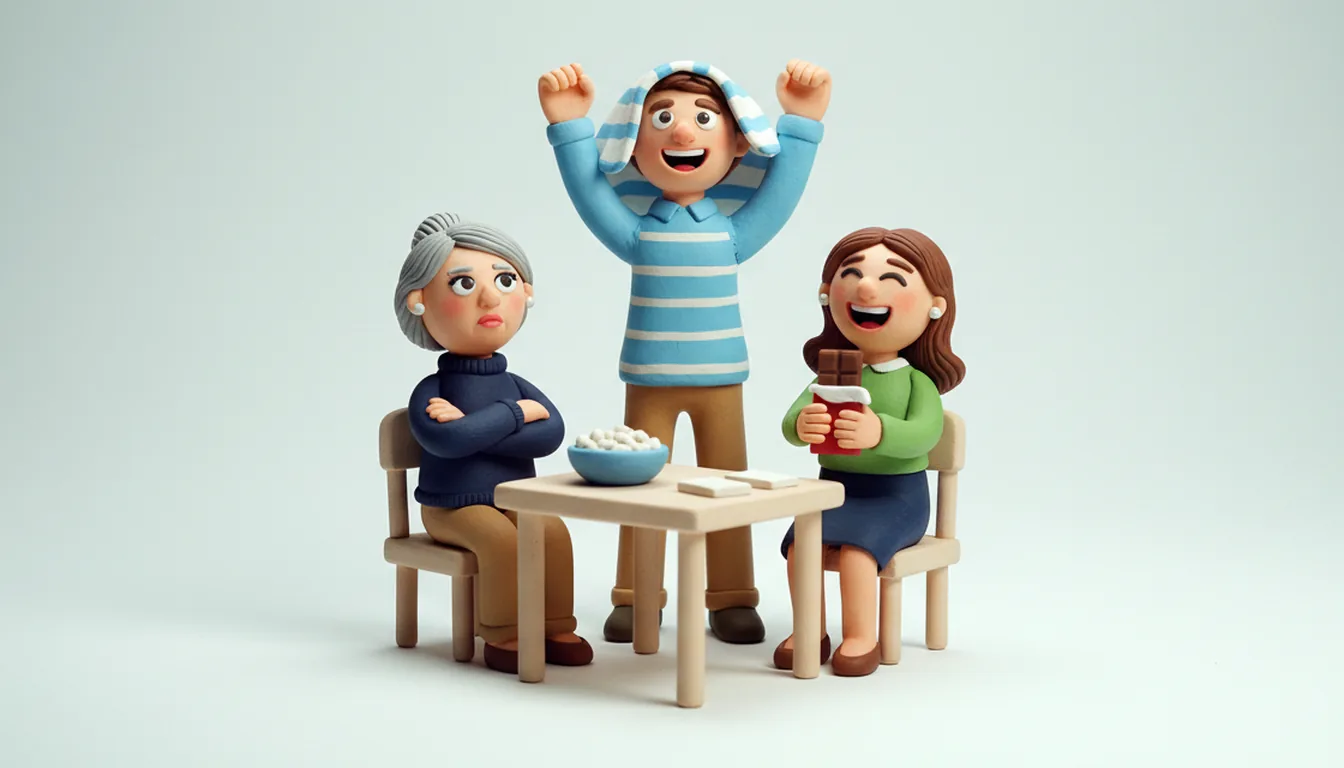
A sore loser is someone who can't lose gracefully. When a game or contest goes against them, they sulk, argue, blame luck or the rules, or simply quit. The phrase is mostly used about games and sports, from board games to family quizzes, and very often about grown adults who should know better. Plenty of people have a small sore loser inside. Some just let it out more than others, and personality plays a part in why.
An example: every Christmas Eve the Brennans play a quiz after dinner, and every Christmas Eve somebody leaves the table. Last year it was Carol, who is sixty-four and taught math for thirty years. She lost by one point on a question about the longest river in Africa, announced that the answer card was wrong, checked on her phone, found that it was right, and went to do the dishes very loudly. Her son Luke, who won, ran a lap of the living room with a tea towel over his head like a boxer. Her daughter Hattie came second and only wanted the chocolate prize. Carol is the sore loser, Luke is the sore winner, and Hattie is the one everybody wants on their team.
What is a sore loser?
"Sore" here means hurt and irritated, the way a sore muscle is touchy. A sore loser takes defeat personally and lets everyone see it. Bad loser and poor loser mean the same, and spoilsport is close.
The opposite is a good sport, or a gracious loser: someone who shakes hands, says "well played" and means at least some of it. Being a good sport doesn't mean you don't care about winning. Good sports often care a lot. They just don't make their disappointment everyone else's problem.
Sore loser signs, from mild to board flipping
Sore losing comes in many sizes. Here they are, roughly from mild to legendary:
- "That one doesn't count." A sudden new rule about what should have happened.
- The instant rematch. "Best of three." Then "best of five."
- The tired exit. Losing badly, then finding they are very tired all of a sudden.
- Blaming everything else. The dice, their partner, the lighting, the cards that were clearly shuffled wrong.
- Rule lawyering. Opening the rule book halfway through and reading from it out loud.
- The silent tidy. Packing the game away a little too fast and a little too neatly.
- The board flip. Rare, but every family seems to have one story about it.
If you recognize yourself in the first two, you are in very large company.
When the sulking outlasts the game, people have another word for it: petulant.
The sore winner, the other half of the problem
A sore winner is the mirror image: someone who can't win gracefully. They gloat, take victory laps, explain how easy it was and bring the win up again at Easter. Luke's tea towel lap was a mild case.
Sore winners are often worse company than sore losers, because their behavior turns a game into a ranking. A sore loser spoils one evening for themselves. A sore winner can make the whole table never want to play again.
The winner people are glad to play with again is magnanimous, generous toward the person who just lost.
Why losing stings some people more
The reasons are mostly ordinary:
- The game feels like a verdict. For some people losing a quiz says something about how smart they are, and losing a race says something about how quick they are.
- Fairness matters a lot to them. Losing to bad luck or a sloppy rule feels wrong, and a fair loss is easier to take.
- They had a plan, and it failed. For a strategist at the table, a lost game is a broken plan, and that hurts more than the score.
- Family history. Siblings who competed for everything as kids often slip straight back into it over a deck of cards.
- It is late. Many sore losers are simply tired and full of dinner, and would be fine at four in the afternoon.
How each type tends to win and lose
How people handle a loss depends quite a bit on personality type. A playful guide, in the order the types page uses:
- Ideator: loses interest before they lose their temper, and starts inventing better rules halfway through.
- Vitalizer: loud joy, loud despair, and both forgotten five minutes later.
- Analyst: a wrong answer card offends them far more than losing, and they will check it.
- Inspector: follows every rule and gets sore when others don't.
- Commander: plays to win, every time. A loss is a problem to solve, so expect a rematch.
- Diplomat: brilliant at bluffing games, with a mood that drops fast when luck turns against them.
- Entrepreneur: keeps score, and sometimes keeps it across years of family holidays.
- Counselor: cares more about everyone having fun and may quietly let you win.
- Craftsman: says nothing after a loss and practices alone until it never happens again.
None of these types is a worse loser by nature. They just feel the sting in different places.
Games that bring out the worst in people
Some games seem designed to test friendships. Monopoly goes on for hours and rewards being ruthless. Uno is built on betrayal. Racing games on a console let your own partner knock you off the track one bend before the finish. Scrabble ends in a dictionary dispute more often than anyone admits. And a family quiz puts everyone's pride on the table at once.
A few small changes keep the peace:
- Set a time limit and stop when it runs out, whoever is ahead.
- Play in teams and mix them up each round.
- Choose games where everyone plays together against the game.
- Make the prize silly, like choosing the next song or not doing the dishes.
For a birthday, birthday party games for adults has team games where nobody loses alone.
How to not be a sore loser
If you are the one who leaves the table, a few habits help:
- Pick a second goal before you start, like trying a new strategy or making someone laugh. Then a loss can still be a good evening.
- Say "good game" first, even through your teeth. The words get easier with practice.
- Wait ten minutes before any appeal. Most rule disputes feel less urgent after a glass of water.
- Laugh at your own sulk. "I'm being Carol about this" defuses it fast.
- Lose a few low-stakes games on purpose. It reminds you that nothing bad happens.
Once you can say you win some, you lose some and mean it, game night gets a lot more fun.
Playing with a sore loser you love
The sore loser in your life is often family, a partner or an old friend, so walking away isn't really an option. Don't tease them in the moment, since that only makes it worse. Give them a role that isn't competing, like quizmaster or banker. Choose shorter games and cooperative ones more often, or a game with no winner, like hot seat questions. And when they do lose gracefully, say so later. It means more than you think.
Find out what kind of player you are
This year Carol is the quizmaster. She writes the questions, checks every answer twice and is having the time of her life. If you want to know why you play the way you do, or why someone in your family takes losing so hard, start with the free personality test. Your type appears the moment you finish. With it come your results on four base traits and a free description of what your type does well and finds hard. You don't have to sign up to read it.
Then invite the family's sore loser, or the sore winner, to the same test from your result. Sending an invite takes a free account, and every player must be at least 16. Once they are done, you learn your relationship type and why game night between you goes the way it does.
Questions people ask
What is the opposite of a sore loser?
A good sport or a gracious loser: someone who congratulates the winner and moves on, even when they wanted to win badly.
What is another word for a sore loser?
Bad loser and poor loser mean the same thing. Spoilsport is close.
What is a sore winner?
Someone who can't win gracefully. They gloat, show off and keep bringing up the win long after the game is over.
Why do some adults get so upset about losing games?
Often the game feels like a judgment of how clever or quick they are. An old rivalry with a brother or sister can flare up too, and so can being tired at the end of a long dinner.
Is it sore loser or sour loser?
Sore loser is the usual phrase. Sour loser is a common mix-up, and people will still understand you.
Sources
- Dictionary.com, "sore loser". A person who gets angry or annoyed when they don't win.
Written by Virko Kask, founder of Typeza
Written with the help of AI tools.
One question for two, every week
A question to ask your partner, friend or family, and how different types tend to answer it.
Free. Unsubscribe any time.