
Money can't buy happiness: is it true, and what does?
"Money can't buy happiness" means that the best parts of a life, like the people in it and the hours you spend with them, aren't for sale. Money can make life much easier, and a lack of it can make life hard. What it can't do is make you happy by itself. No one person is known to have said it first, and many languages have their own version, like the French "l'argent ne fait pas le bonheur."
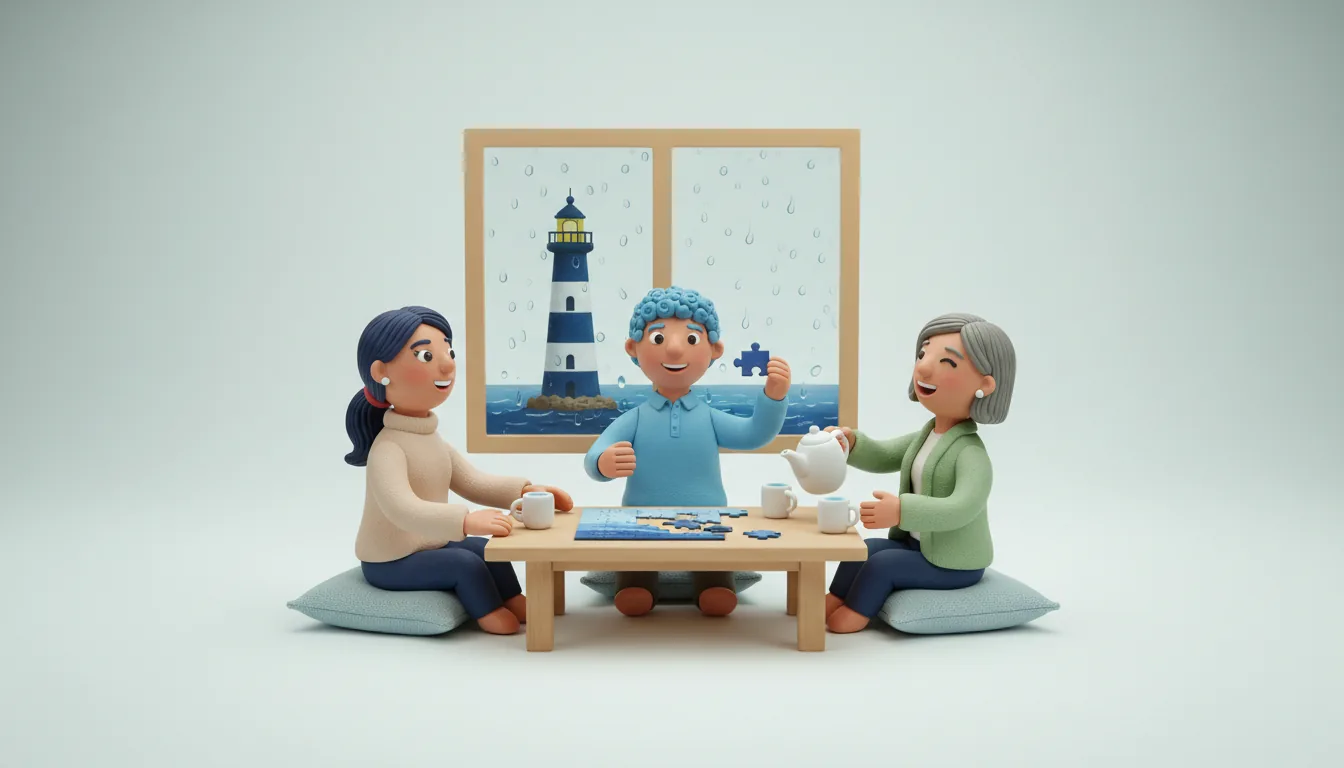
An example: on a wet Sunday in October, Priya, Sam and Lou were halfway through a 1,000-piece puzzle on Priya's coffee table. It showed the old lighthouse they could see from her window. Sam had spent the morning looking at a flat with a balcony and a river view, and he couldn't stop talking about it. It cost a lot more than his current place. "Money can't buy happiness," Lou said, hunting through the pile for an edge piece. Priya didn't look up. "It bought me a dishwasher, and I've been happier every evening since." Sam laughed and asked the obvious question. If money can't buy happiness, what does?
Nobody had a quick answer. Late in the afternoon Sam found the last piece of the lighthouse and held it up like a trophy. The whole afternoon had cost them a secondhand puzzle and a pot of tea.
Both friends were partly right, and that's why people keep arguing about the saying.
Is it true that money can't buy happiness?
Partly. When money is short, life gets heavy fast. A late bill, a broken boiler or a car that won't start can fill your head for weeks. In those moments money really does buy something close to happiness, which is relief. Anyone who has lived through a tight month knows the saying can sound too easy.
Once the basics are covered, research gives a mixed answer. A 2023 study by three researchers who had disagreed found that for most people, happiness kept rising with income. For the least happy group it leveled off at around $100,000 a year. People also get used to what they have. A bigger flat feels wonderful for a few weeks, and then it's just where you live.
So the people who say "money can buy happiness" and the people who say it can't are often talking about different situations. One is thinking about the month the rent was late. The other is thinking about the friend who bought a boat and still seems restless.
What money gives you
Money is good at a few things.
- Safety. A roof, food in the fridge and something put aside for the day the washing machine breaks.
- Comfort. A warm home, a good mattress and shoes that don't hurt.
- Choices. The chance to say yes to a trip to see an old friend, or no to a chore you hate.
- Time, sometimes. Priya's dishwasher gave her back half an hour every evening. Paying for help with a big job can do the same.
- A way to help. Covering a friend's train ticket home or treating your sister to lunch on a hard day feels good for both of you.
None of this is small. Comfort and safety make everything else easier to enjoy.
What money can't buy
The saying is really about this list: things money can do little for.
Time you can't get back
You can pay someone to clean the oven, but you can't buy a longer Sunday. Nobody can buy back the year their best friend lived around the corner, or the summer the whole family was in one place. Time with the right people is what many of us say we'd want more of.
People who show up
Money can pay for a party. It can't make anyone come for the right reasons. The friend who drives over when your heating fails, the brother who calls on the day you get bad news and the neighbor who waters your plants can't be hired. Many things to be grateful for sit on this side of the line, and many of them cost nothing.
A calm head
You can buy a quiet house. A quiet mind is a different matter. Plenty of comfortable people lie awake worrying, and plenty of people with very little sleep well. Feeling at peace with what you have is more a skill than a purchase, and how to be content looks at what helps.
How each type sees money and happiness
People don't only disagree about the saying. They feel differently about what money is for, and type shapes part of that feeling. Here are eight of the 16 types.
- Ideator: sees money as freedom to chase the next idea. Things bore them quickly, so a new project or a trip somewhere strange does more for them than anything with a price tag.
- Harmonizer: enjoys what money does for comfort, like a cozy room, good food and people around the table. For them happiness is ease, and they spend to create it.
- Vitalizer: gets the most joy from spending on other people. A dinner they hosted, with everyone laughing, beats any treat for themselves.
- Inspector: feels calm when money is in order. Knowing where everything stands is a kind of happiness for them, and a surprise bill spoils it.
- Dreamer: cares more about meaning and beauty than price. A song, a walk at dusk or a long conversation lifts them more than a shopping trip.
- Entrepreneur: enjoys money as a sign that something they built is working. Their risk is always wanting the next step and missing the one they're on.
- Guardian: sees money as a way to look after their people. Showy spending puts them off, while helping family when it counts feels right.
- Craftsman: likes fewer, better things. One tool that will last twenty years makes them happier than a drawer full of cheap ones.
Look at where happiness lands in that list: an idea, a full table, order, beauty, the people you protect. Money touches most of them only lightly. What lifts your own mood is a separate question, and what makes you happy helps you find your answer.
When a couple disagrees about money
A couple's money arguments are often about something other than the numbers. Picture this: Mara wants to keep the tax refund for the day the old boiler gives up, and Jonas wants a weekend by the sea before winter. To her, money means calm, and an empty account makes her nervous. To him, money means shared memories, and every "we can't" feels like life being put off. Each thinks the other is being unreasonable, though both are guarding something that matters to them. Their talks go better when each says what the money means to them before anyone argues about where it goes. When one partner looks tight with money to the other, our piece on what stingy means helps tell careful saving apart from holding back.
When the saying sounds unfair
"Money can't buy happiness" is easiest to say when you have enough. Said to a friend who is worried about rent, it can sound like a brush-off. So can the line that happiness is a choice. If someone close to you is going through a tight month, leave the saying out. Ask how they're doing, offer something practical if you can, and keep the wisdom for another day.
The saying works best as a note to yourself. A bigger flat or a newer car won't do the job that people and free time do.
See why your friends value different things
Ask three friends what makes them happy and you may get a dishwasher, a view and a proverb, and type can explain part of that spread. Start with your own answer: the free friendship compatibility test shows your type, your gifts and the spots where you tend to trip up. To compare, send your friends the link from your result so they can take the same test. As each one finishes, you can open the relationship type you share and see why you answer the big questions so differently.
Questions people ask
What does money can't buy happiness mean?
That the best parts of a life can't be bought, even though money makes life easier.
Who said money can't buy happiness?
No one person is known to have said it first. It's a proverb with versions in many languages.
Can money buy love?
No. It can pay for a nice dinner or a trip, but it can't make anyone care about you. Love grows from time, attention and trust, and nobody can sell those.
Is money the key to happiness?
It's one key among several, and it matters most when it's missing. Once the basics are covered, close people and time to enjoy them count for more.
How much money do you need to be happy?
There's no amount that works for everyone. Enough that bills don't keep you awake is a common answer. Beyond that, how you spend your days and who you spend them with counts for more.
Sources
- Wiktionary, "money can't buy happiness": the proverb's meaning and its versions in other languages, French among them.
- ScienceDaily, "Does more money correlate with greater happiness?": the 2023 PNAS study by Killingsworth, Kahneman and Mellers; happiness rises with income for most people and levels off at about $100,000 for the least happy.
Written by Virko Kask, founder of Typeza
Written with the help of AI tools.
One question for two, every week
A question to ask your partner, friend or family, and how different types tend to answer it.
Free. Unsubscribe any time.