
Happiness is a choice: what the saying gets right, and where it stops
"Happiness is a choice" means that your mood is partly up to you. Things go wrong all the time, but you still get some say in what you pay attention to and what you do next. People say it to cheer up a friend after a small setback, or to remind themselves not to let one bad hour spoil a whole day.
It's a modern saying with no clear author. You'll see it on posters, cards and social media, often in the shorter form "choose happy".
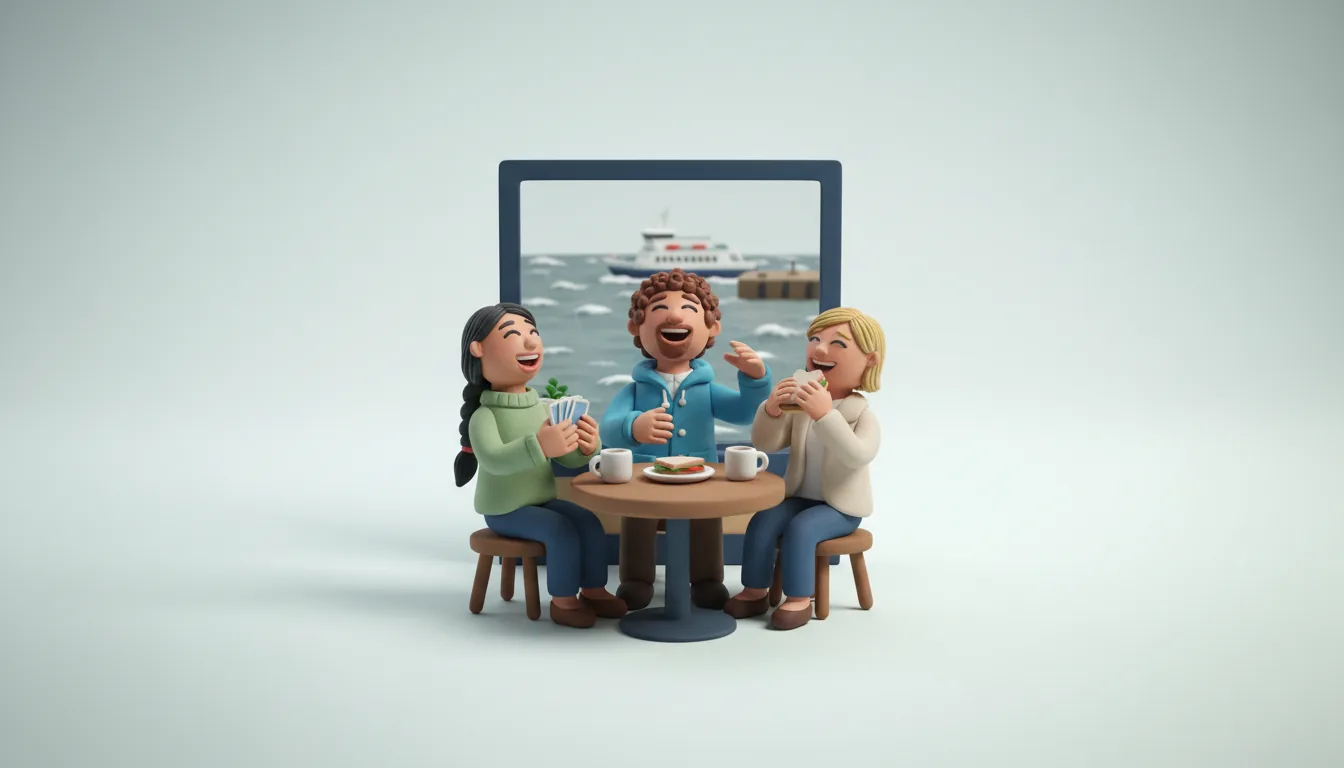
An example: Ines, Marco and Beth have planned a day on the island for months, and at the harbor the ferry is cancelled because of the wind. The next one might sail at four, or it might not. Marco groans. Beth says nothing at all, which is never a good sign with Beth. Ines finds a table in the little harbor cafe, pulls a deck of cards out of her coat and says, "Happiness is a choice. Who's playing?" Marco laughs and sits down. Beth needs twenty minutes and a cheese sandwich before she picks up her cards. By three o'clock she's winning and laughing louder than anyone. Later she says the saying was right about a cancelled ferry, and that she'd throw her sandwich at anyone who used it on her during a truly bad month.
The part of the saying that holds up
On an ordinary day, a lot of how you feel depends on small decisions. The saying is a short way to remember that.
Small choices add up
Whether you get up and open the curtains, call a friend back, go for a walk or eat something before you decide the day is ruined. None of these will change your life alone. Together they often shape a day more than the big events do. Small choices also make the next one easier: once the curtains are open, the walk feels more likely, and after the walk, calling a friend back feels less like a chore. Ines doesn't fix the weather. She finds a table and a deck of cards.
Where your attention goes
On the same afternoon you can notice the cancelled ferry or the warm cafe, the lost plans or the friends next to you. Both are true. Choosing which one gets more of your attention is the part of happiness you can actually steer. It's close to the idea behind how to be content: enjoying what's already here without giving up on what you want.
The saying is also a cousin of the old line that money can't buy happiness. Both say that a good day is built from things close at hand.
Where the saying goes too far
Some days are simply hard. A long friendship ends, a move goes badly, or everything seems to go wrong in the same week. On days like that, a good mood can't be picked like a shirt from a drawer. Treating it as a choice can make people feel they've failed at being happy, on top of everything else.
So the saying works best when you say it to yourself, about something small. Saying it to a friend who is struggling is a different thing. "Happiness is a choice" can sound like "your pain is your own fault", even when you mean well. If someone close to you is having a rough time, skip the slogan. Sit with them, listen, or offer something practical, like a meal or a lift.
Is happiness a choice or a feeling?
It's a bit of both. The feeling itself arrives on its own. Nobody decides to feel joy at a friend's good news, or a dip when the ferry is cancelled. What you choose is what comes next: how long you stay with the bad news, and what you do in the hour after it. Over time those choices change how often the good feelings show up. In that sense happiness works more like a habit you keep up than a switch you flip.
Choose happy and the other versions
The idea comes in many forms. "Choose happy" and "choose happiness" are the short versions you see on mugs. "I choose to be happy" is the same idea said about yourself. "Happiness is a state of mind" puts it a little differently: it's about how you look at things more than what you have. A longer version, "happiness is not by chance, but by choice", rhymes nicely and makes the same point.
What helps each type feel better
Even on a small bad day, people reach for different things to feel better. Typeza sees personality type as part of that, and what works for Ines might annoy Beth. Seven of the 16 types:
- Harmonizer: feels better through comfort first. A warm drink, a soft chair and a good meal come before any talk about choices.
- Mentor: needs to let the feeling out. A few minutes of open complaining to a friend clears the air, and then they bounce back fast.
- Inspector: calms down when there's order again. Making a plan B, checking the timetable and knowing what happens next helps most.
- Dreamer: needs a little time for a mood to pass on its own. Music or a quiet walk works, and being told to cheer up does the opposite.
- Diplomat: gets better by doing something. Getting people moving, finding a game or a new plan lifts them quickly.
- Organizer: feels better after a useful hour. Fixing something, sorting something or getting a job done turns the day around.
- Craftsman: wants calm and no fuss. Some quiet, something to do with their hands and a good snack, and they're fine.
Beth is one of the people who need the sandwich before the pep talk. If you're not sure what lifts your own mood, what makes you happy walks through five everyday kinds of happy.
Saying it without sounding preachy
If you want to share the idea, a few things help:
- Say it about yourself first. "I'm choosing to enjoy this" sounds kinder than "you should choose to be happy".
- Keep it for small things. A cancelled ferry, a rainy weekend or a burnt dinner can take it. A real loss can't.
- Offer something with it. Ines doesn't just say the line. She brings the cards.
- Leave room for a bad mood. Beth needs twenty minutes. Giving her those twenty minutes is part of what works.
Find out how you and your friends bounce back
After a bad hour, some people recover with a joke and others need food and silence first, and type is often part of that difference. Start with the free friendship compatibility test. Send the friends you travel with the link from your result. For each one who answers, you see the relationship type you share, which can show why a cheerful friend feels like help on one day and pressure on another.
Questions people ask
What does "happiness comes from within" mean?
It means your mood depends more on how you see your life and what you do each day than on what you own or what other people do. Outside things still matter, but they rarely keep you happy on their own.
What does "happiness is a journey, not a destination" mean?
It means you won't find happiness waiting at the finish line of a big goal, like a wedding or a move. It shows up in ordinary days along the way, so enjoy those too.
Written by Virko Kask, founder of Typeza
Written with the help of AI tools.
One question for two, every week
A question to ask your partner, friend or family, and how different types tend to answer it.
Free. Unsubscribe any time.