
What does stingy mean? Tight with money, and tight with more
Stingy means unwilling to spend or share money or things, even in moments when giving would be easy and nobody would miss it. Where a generous friend reaches for the bill without thinking, a stingy one checks who had the extra side dish.
It's said STIN-jee, with a soft "g" as in "ginger." Said with a hard "g," STING-ee, it's a different word that describes something that can sting, like a nettle. Other words for stingy are tight, tight-fisted, cheap, miserly and penny-pinching, and in British English people also say "mean." The opposite is generous or open-handed, and at the far end sits extravagant, someone who spends far more than they need to.
Stingy, frugal or thrifty?
These three often get mixed up, and only one of them is an insult. A frugal person spends little by choice and is happy that way. A thrifty person makes things last, mends a jacket instead of replacing it and knows how to stretch a week's groceries. Both are about how someone treats their own money. Stingy is about other people, and it describes holding back when sharing is expected or would cost almost nothing. Cheap is the everyday word, and when people use it about a person, it means much the same as stingy.
Small signs of a stingy streak
A stingy habit rarely shows in one big moment. It's in small things that add up:
- Splitting the bill to the cent, even after a friend covered the last three dinners.
- Presents that are always an afterthought, or skipped with a joke about not believing in them.
- Never lending, even a book or a ladder, or lending and keeping careful count.
- Forgetting the wallet more often than chance would explain.
- Keeping score of favors, and bringing up the old ones when a new one is asked.
- Choosing the cheapest option for the group while treating themselves to the better one.
- Not sharing food that's clearly enough for everyone.
One of these on its own means very little. A pattern of them, over time, is what makes friends start to use the word.
Careful with money, still not stingy
Plenty of people come across as stingy when they're not. Someone saving for a home may turn down a weekend away. Someone who grew up with very little may count every coin out of habit and still be the first to help when it matters. Some people simply don't know what's expected, like how a group usually splits a meal or whether a host likes guests to bring something.
What separates the two is who ends up carrying it. A careful person keeps their own spending low, while a stingy one lets the cost land on others.
The receipt at the cottage
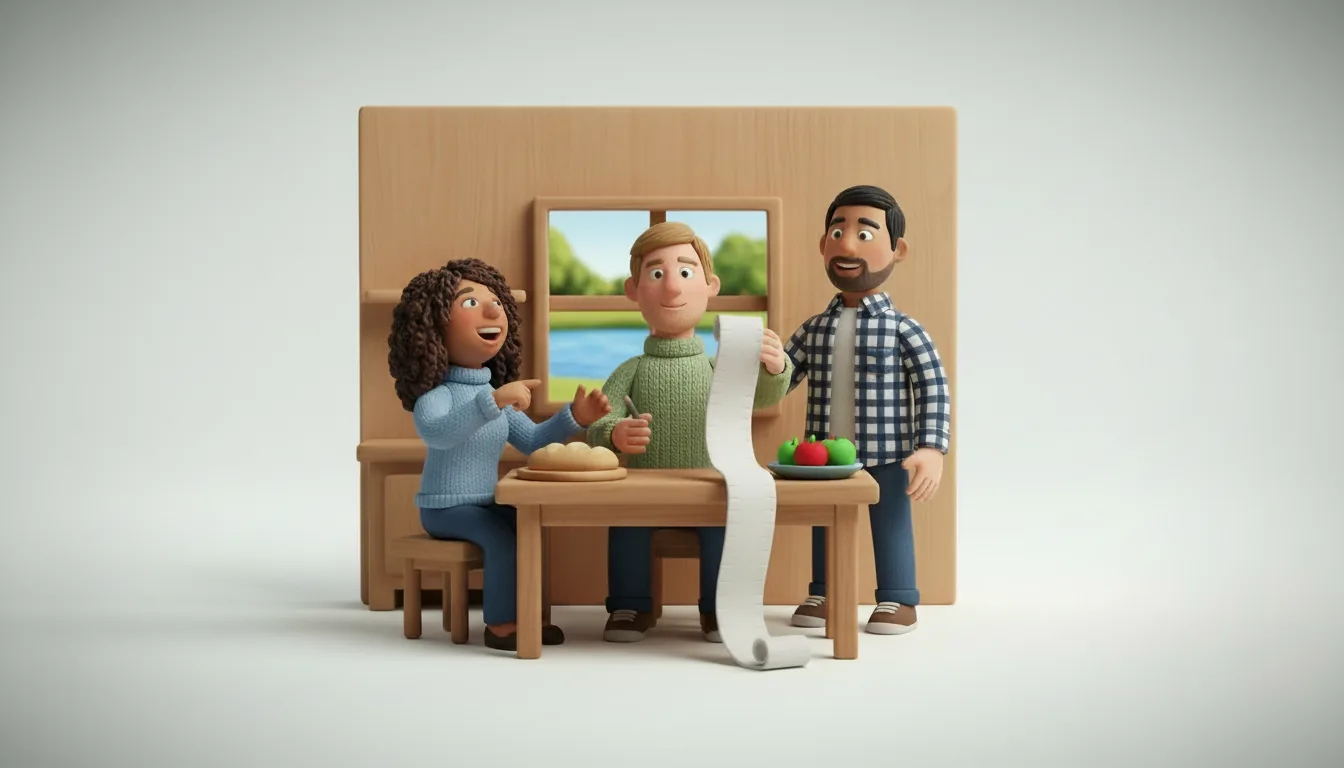
An example: every October, three old friends rent a cottage by a lake for a long weekend. Aldo, 36, does the big grocery run on the way there. On Sunday morning, before they leave, he sits at the kitchen table with the receipt, which is nearly as long as his arm, and a pencil. "Noor, you had the berries, and Felix, the fancy cheese was yours," he says, and works out everyone's share down to the cent.
Noor, 33, laughed the first year. Now it's a tradition, and she teases him about it every time. "Aldo, I'll owe you forty cents forever."
What the friends don't say as often is the rest of the weekend. Aldo drove the three of them there, two hours each way, and never asked for fuel money. On Saturday he was up early fixing the porch step the owner had warned them about. When Felix, 34, came in with an armful of firewood, he found Aldo had already stacked the first load.
Aldo is careful with money and generous with time and help. His friends know that, so the pencil has become a running joke.
A stingy partner or friend
In a couple, stinginess tends to show up around who picks up the bill and who notices when the other is always the one reaching for it. One partner may keep a careful tally of shared spending while the other gives without counting. Many couples settle it with a plan, and our piece on the 50/50 relationship compares the ways people split. When the real gap is about what money means to each of you, money can't buy happiness has more on couples who see it differently.
On a first date, the question of who covers dinner can feel bigger than it is. Some people offer to split, some like to treat, and a cheap date isn't stingy at all as long as both of you enjoy the plan.
With friends, stinginess often looks like always being the last to offer. Friends notice who brings the snacks, who covers the parking and who suddenly has to make a call when the check arrives.
Stingy with time and attention
Money isn't the only thing people hold back. Someone can be generous with their wallet and stingy with their time, always too busy to call or half-listening when you talk. Others hand out praise like it might run out. When a person puts themselves first in nearly everything, the word is closer to selfish. At the other end sits the selfless person, who sometimes gives so much there's little left for them.
Giving in different currencies
People give in different ways, and personality type often shapes which way comes naturally. The Mentor tends to give words and attention, the long call or the warm note when you need one. The Inspector is often careful with spending and dependable with help, which a freer spender can mistake for stinginess. The Dreamer usually gives time and understanding more easily than things. The Entrepreneur often thinks of money as something to use well, so they can look tight at a dinner and then spend a whole Saturday helping you plan a move.
So one type's careful saving may look stingy to another, while the saver sees themselves as giving in a way that counts more. These are broad patterns from type theory and won't fit everyone. They aren't meant as advice about anyone you know.
How to talk about money without blame
If someone close to you seems stingy, a calm talk usually works better than a hint or a joke with an edge:
- Talk about the habit, not the person. "I've covered the last few dinners" lands softer than "You're cheap."
- Say what you'd like. Maybe it's taking turns, or splitting evenly without the itemized math.
- Ask what money means to them. Saving may feel like safety, and that's worth knowing.
- Agree on a simple system for shared things, so nobody has to keep track in their head.
- Notice what they do give. Like Aldo's friends, you may find the generosity is there in another form.
Generosity has more than one shape, and magnanimous describes the big-hearted kind that forgives easily and shares a win.
What each of you gives, and how
Once two people know their types, Typeza shows how each of you tends to give and what each of you notices when the other one does. It begins with the free personality test and your own type. Then you can invite your partner or a friend to take it as well and compare.
Questions people ask
What is a stingy person?
A stingy person doesn't like to spend or share, even when it would be easy and fair to. They may split every bill to the cent, avoid lending things or let others cover more than their share.
Is stingy the same as cheap?
Very close. Cheap is the more casual word and can also describe things of low quality, like a cheap umbrella. When used about a person, cheap and stingy mean nearly the same.
What is the opposite of stingy?
The opposite is generous. Other opposites are open-handed and giving. At the far end is extravagant, which describes someone who spends much more than needed.
What does extravagant mean?
Extravagant means spending or using far more than is sensible, or being showy and over the top. "An extravagant birthday party" is a typical use.
How do you pronounce stingy?
It's STIN-jee, with a soft "g." With a hard "g," stingy means able to sting, as in "a stingy nettle," though that use is rare.
How do you use stingy in a sentence?
"He's stingy with compliments, but he never misses your birthday." Or "Don't be stingy with the sauce."
What's another word for stingy?
Tight, tight-fisted, miserly, penny-pinching and cheap all work. Frugal and thrifty sound kinder and describe careful spending rather than holding back from others.
Sources
- Dictionary.com, "stingy". Reluctant to give or spend, said STIN-jee. A second word said STING-ee means having a sting.
- Wiktionary, "mean". Ungenerous or stingy, chiefly in British English.
Written by Virko Kask, founder of Typeza
Written with the help of AI tools.
One question for two, every week
A question to ask your partner, friend or family, and how different types tend to answer it.
Free. Unsubscribe any time.