
Morals vs values (and ethics): the difference in plain words
Values, morals and ethics, in one line each
A value is something that matters to you, like honesty or family. A moral is your own sense of what is right and what is wrong. Ethics are the shared rules a group lives by, and that group can be a family, a circle of friends or a couple.
A hand of cards on the rug
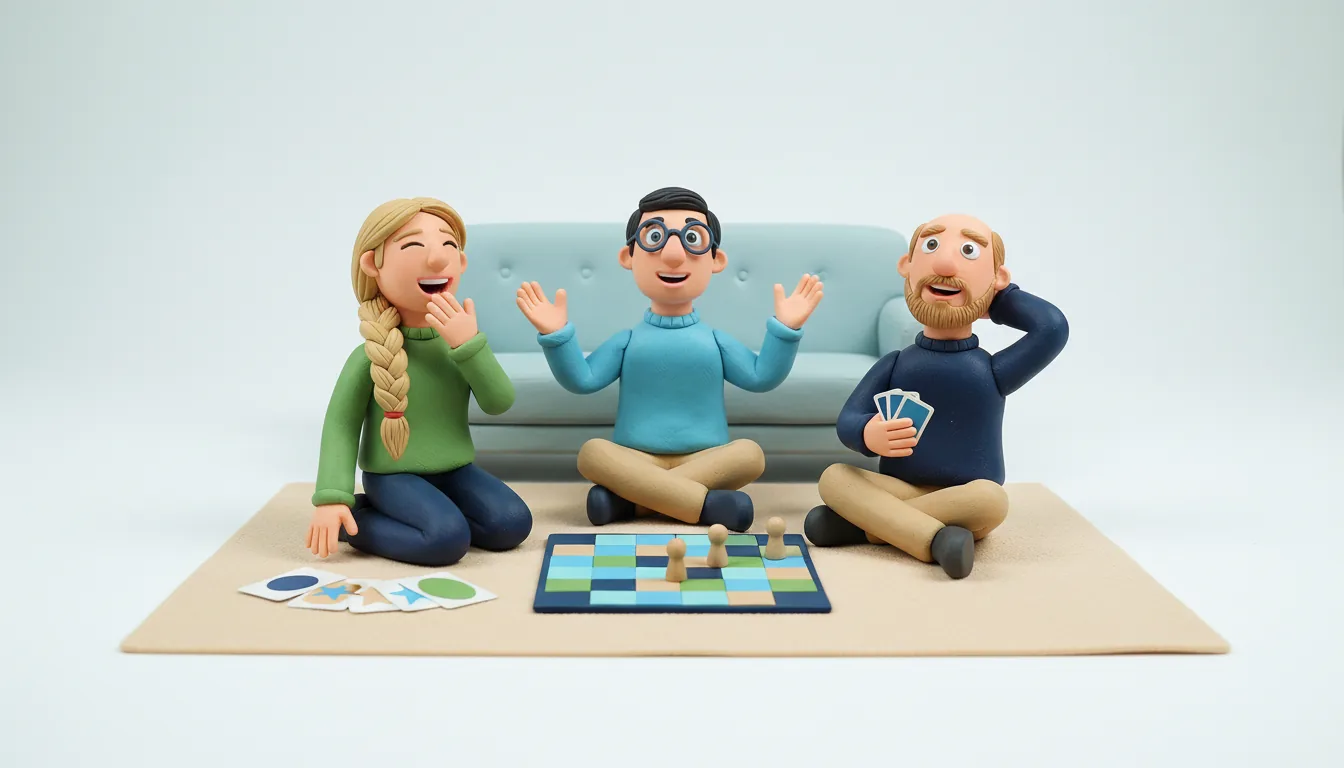
An example: every other Thursday, Anouk, 36, Tobias, 38, and Pavel, 41, play a long board game on the rug in Anouk's living room. They have done it for six years. One night, Anouk leaned over the board and her whole hand of cards slid off her knee and landed face up on the rug. Tobias put both palms up. "I saw everything," he said. "We should redeal." Pavel groaned. "It's a game. Play on, we'll forget it in five minutes." Anouk reminded them of the house rule they had agreed on the very first night: anything you see by accident, you say out loud, and the hand starts again. So they redealt. Pavel won anyway.
Nobody on that rug was being a bad person. Each of them was leaning on something different, and the evening shows all three words at work.
What a value is
A value is something that matters to you, something you'd protect or put first when you have to choose. Pavel's value that night was a good evening with friends, and stopping the game for a redeal felt like a waste of it. Values don't come with a right or wrong attached. Two people can both care about honesty and about fun and simply rank them in a different order. For a long list of values, and how values differ from beliefs and principles, read personal values.
What morals are
Morals are your own beliefs about right and wrong. They grow out of the way you were raised, the people around you and what has happened to you, and they tend to feel less like a choice than a value does. Tobias's morals told him that knowing someone's cards and saying nothing is a kind of cheating, even if nobody would ever find out. People call this inner sense a moral compass, the pull toward what you think is right before you have even thought it through.
What ethics are
Ethics are the rules a group shares about how its people should act. Many groups never write them down. A family might have an unspoken rule that nobody misses a parent's birthday call. A group of friends might agree that what's said at the table stays at the table. A couple might decide that neither of them makes a big decision about the home alone. Anouk's house rule about cards seen by accident is a small piece of ethics. Three people agreed on it once, and now it settles the question before anyone has to argue.
Ethics vs morals: are they the same thing?
They overlap, and in everyday talk people often use the two words as if they meant the same. The difference is where the rule lives. Morals live inside one person, and ethics live in a group. You can follow your group's rules and still feel privately that something is wrong. You can also do what you feel is right when the group's rules say otherwise.
The same split explains immoral vs unethical. Immoral means something goes against a person's sense of right and wrong, like lying to a friend to get out of helping them move. Unethical means it breaks the rules a group has agreed to, like peeking at the cards when your game night has a rule against it. Plenty of things are both.
Morals, values and ethics in everyday life
A friend's secret
Your friend Mira tells you she's thinking of moving abroad and asks you to keep it quiet for now. A week later a mutual friend asks you straight out whether Mira is leaving. Your value is loyalty to Mira. Your morals may tell you that lying is wrong. The ethics of your friend group might say that a secret belongs to the person who shared it. A common way out is "You'll have to ask her," which respects all three.
A promise you made as a couple
You and your partner promised a friend you'd help her paint her new flat on Sunday. By Saturday night one of you has had a long week and wants the day off. One says, "We said we'd go, so we go." The other says, "She has six other helpers, she won't mind." Both of you are decent people. One puts keeping your word first, the other puts rest and an honest limit first, and that's enough to start a real argument between two people who agree on almost everything else.
A family rule and a friend's wedding
Your family has a rule that everyone comes home for your parents' anniversary. This year it falls on the same day as a close friend's wedding. The family's ethics say you go home. Your value is the friendship. Your morals say you shouldn't break a promise you made to your friend months ago. One way out is to talk to the family early, which shows respect for the rule even while bending it.
Why two good people with different values clash
Many arguments between decent people come from two values that are both worth having, put in a different order. One person puts honesty first and the other puts kindness first. Then a white lie about a friend's haircut looks like a small kindness to one of them and a small betrayal to the other. Each can feel the other has broken a moral rule, when really they only ranked the same two values differently.
It helps to name your value out loud instead of the rule. "I need to know I can believe you" is easier to hear than "You lied." Many people live by honesty is the best policy, and it still leaves room for tact.
Which value comes first, by type
Personality type doesn't decide your morals. It can shape which value you reach for first. Six of the 16 types:
- Vitalizer puts the people in the room first, and will bend a rule if someone at the table would be hurt by it.
- Analyst puts fairness first. Like Tobias, they'd rather stop the game than win it with an edge nobody earned.
- Inspector puts the agreed rule first. Anouk suggested the house rule on the first night and has held everyone to it ever since.
- Diplomat puts the moment first. Like Pavel, they'd rather keep a good evening moving than stop it over a small thing.
- Strategist takes the long view and asks what a choice will do to trust a year from now.
- Organizer expects a promise to be kept to the letter, and keeps their own the same way.
Writing your own moral code
A moral code is the short set of rules you hold yourself to, even when nobody else would know. Many people never write theirs down, and trying it can be useful. Keep it to five or six lines in plain words. For example:
- I tell the truth, and I choose when and how kindly to say it.
- I keep small promises as carefully as big ones.
- I don't say anything about a friend that I wouldn't say to their face.
- If I'm wrong, I say so first.
- I treat people the same whether or not they can do anything for me.
For lines from others on the same theme, see integrity quotes. For the bigger question of what all this adds up to in a person, read what makes a good person.
Your type and the values you put first
Typeza doesn't grade anyone's morals. It shows two people their personality types and the relationship type between them, which can help explain why the same choice feels obvious to one of you and strange to the other. Take the free personality test and send your result to a friend, a partner or someone in your family.
Questions people ask
What is an example of a moral and a value?
"It's wrong to read someone's private messages" is a moral. Trust is the value behind it. One value can sit behind many morals.
Sources
- Dictionary.com, "moral": morals as "principles or habits with respect to right or wrong conduct."
- Dictionary.com, "ethics": ethics as the rules of conduct of a particular group or culture.
- Dictionary.com, "value": values as what a person or group holds as important.
Written by Virko Kask, founder of Typeza
Written with the help of AI tools.
One question for two, every week
A question to ask your partner, friend or family, and how different types tend to answer it.
Free. Unsubscribe any time.