
White lies: when a small lie is kind and when it hurts
A white lie is a small untrue thing you say to be kind or to keep things smooth, when nobody is meant to get hurt. The "white" marks it as harmless. It sets these lies apart from the ones people tell to hurt someone or to get something for themselves.
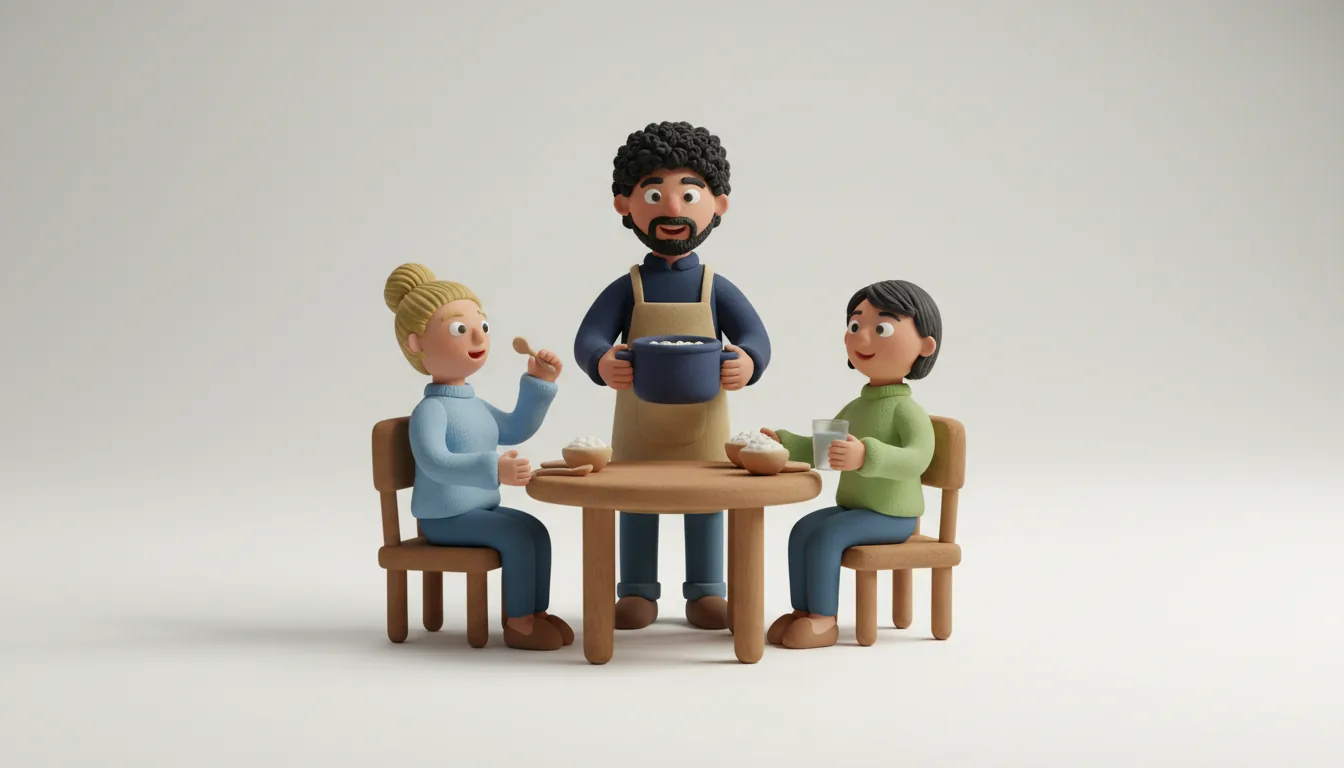
An example: Hugo carried the pot to the table with both hands, beaming. It was his first mushroom risotto, a practice run before he made it for his sister's birthday dinner on Saturday. Pia took one bite, raised her spoon in the air and said, "Hugo, this is incredible." Sanne took one bite and reached for her glass of water. She drank half of it, smiled and said, "The mushrooms are really good. It's very salty, though. Did you use salted stock?" Pia kicked her under the table. Hugo tasted it again, went quiet, then laughed. He had used salted stock and added two big spoons of salt on top.
Pia told a white lie. Sanne didn't. Both of them were trying to be good friends.
White lie examples from everyday life
Many people tell a few without noticing. Some common ones:
- "I love it," about a gift you'll never use.
- "This is delicious," about a meal that isn't.
- "I'm fine," when you're not.
- "I'm five minutes away," while you're still looking for your keys.
- "Sorry, I already have plans," to skip a party.
- "No, you didn't wake me."
- "Your new haircut looks great."
- "I didn't see your message."
Some of these are about the other person's feelings. Others mostly save the speaker from an awkward moment. That difference matters more than the lie itself.
Kind white lies and selfish ones
A useful way to sort white lies is to ask who they're really for.
For the other person. You praise the scarf your aunt knitted. You tell a friend her speech went well after it's over and can't be redone. You say the photo of you both is lovely, even though your eyes are half closed. These lies protect someone's good moment and cost them nothing.
For you. "I didn't see your message" saves you from saying you didn't want to reply. "I'm five minutes away" saves you from admitting you're late. These feel harmless, but they're mostly about your comfort, and the other person pays a little for them in waiting or confusion. They sit close to the line between looking after yourself and being selfish.
Three quick questions help with the gray cases:
- Who is this lie for? If the honest answer is "me," look for a true thing to say instead.
- Does it cost them anything? Pia's "incredible" could have cost Hugo a salty birthday dinner.
- Would you be fine if they found out? If the thought makes you wince, the lie is probably bigger than it looks.
Why Pia says "incredible" and Sanne can't
How easily someone tells a white lie depends partly on personality type. Here are eight of the 16 types:
- Ideator tends to skip the white lie by turning the truth into a joke. "Bold move, putting the whole sea in one pot." Hugo is one, which is why he laughed first.
- Vitalizer tells them easily and warmly. The mood at the table matters a lot to them, and a little praise keeps it glowing. Pia fits this well.
- Analyst finds even small lies uncomfortable. They'd rather say nothing at all than say something they don't believe.
- Inspector says the exact true thing, calmly and once, often with a fix attached. That's Sanne, and her question about the stock is very typical.
- Diplomat reads the room first. They can pick a kind white lie or a well-timed truth, depending on who is listening.
- Strategist thinks about where a lie leads. They'll tell one that clearly ends tonight and avoid one that could come back later.
- Counselor tells white lies to spare feelings, then carries them around. Often they come back a day later and gently share the truth in private.
- Encourager leads with praise, so their white lies are often stretched truths. "Best risotto ever" might mean "pretty good."
Nobody on this list is more honest than the rest. They just care about different things at the table.
When a white lie protects a friendship
Some white lies are a small act of care. They work best when the thing is finished and can't be changed, and when the truth would only take away someone's good moment.
A friend shows you photos of the wedding dress she wore yesterday. A friend's band played its first show, and it's over. Your partner's mother gives you a sweater in a color you'd never pick. In each case, "I love it" or "you were great" keeps the moment happy and changes nothing important.
Friends also let small things go, like "No, you didn't talk too much tonight." Nobody needs a full report every time.
Small lies that wear trust down
White lies cause trouble when they pile up, when they're about something that still matters, or when they get found out.
The salty risotto is a good example. Hugo was about to cook it for twelve people. Pia's lie felt kind at the table, but Sanne's truth was the one that helped him.
Couples know this pattern well. "I don't mind where we eat" turns into years of restaurants one person never liked. "I'm fine," said every evening for a month, becomes a wall the other person can't see past. One day the truth comes out, and the partner starts to wonder what else wasn't true. Many people can forgive one white lie. It's the habit that makes them stop believing the nice things.
Some people go too far the other way and hand over the plain truth with no care at all. That's what being brutally honest looks like. Sanne managed to be honest and kind at once.
Saying something true and kind instead
Often there's a true thing that does the same job as the lie. A few ways to find it:
- Find the real good part. Sanne started with the mushrooms because she meant it.
- Thank them for the effort. "You made this from scratch for us" is always true.
- Ask a question. "What made you pick this one?" lets them talk about what they love.
- Pair the truth with a fix. "It's a bit salty. Maybe skip the extra salt next time?"
- Say what you feel, not what you think of it. "I love that you thought of me" works for almost any gift.
Whether the old saying honesty is the best policy always holds is a bigger question. White lies are simply where many people test it every day. If your friends enjoy catching each other out, two truths and a lie turns lying into a game where everyone knows the rules.
Hugo's second risotto
On Saturday, Hugo made the risotto again with plain stock and half the salt, and his sister asked for the recipe. Sanne got the first bowl. Pia admitted she would have called it incredible even if it had been burned, and everyone laughed, Pia loudest. That night Hugo wondered why his two friends had answered so differently.
Learn why some friends praise everything
Whether you call a dish incredible or tell the cook it needs less salt depends partly on type. Honest or kind first, the free personality test names what you're good at, where you trip up and what you need from friends. Send the friend whose praise you can never quite read the link from your result. Once they have answered, your relationship type may explain why their kind words feel good and tell you so little.
Questions people ask
What is an example of a white lie?
Saying "I love it" about a gift you don't like, telling a friend her finished speech went well, or saying "I'm on my way" while you're still at home.
Why is it called a white lie?
"White" marks the lie as harmless. It's a small lie told to be kind, unlike one told to hurt someone or gain something.
Are white lies bad in a relationship?
One now and then often isn't. A habit of them is, especially about feelings or plans, because the other person starts doubting everything kind you say.
Is saying "I'm fine" a white lie?
It is when you're not fine. Once in a while it's harmless, but said for weeks it keeps your partner or friend from understanding what's wrong.
Do some people never tell white lies?
Some people find even small lies very hard and choose silence or a gentle truth instead. Many people tell some, mainly to protect someone's feelings.
Sources
- Wikipedia, "Lie". A white lie as a harmless or trivial lie told to be polite or spare someone's feelings, and a black lie as one told to harm.
- Wiktionary, "white lie". An untrue statement meant to produce a good result, such as staying polite.
Written by Virko Kask, founder of Typeza
Written with the help of AI tools.
One question for two, every week
A question to ask your partner, friend or family, and how different types tend to answer it.
Free. Unsubscribe any time.