
Everything happens for a reason: what it means, and when not to say it
"Everything happens for a reason" means that events, even bad ones, have a purpose or lead somewhere good, even if you can't see it yet. People use it to make sense of a setback, and it can be a real comfort when you say it about your own life. Said to someone else in a hard moment, it often lands badly, because it asks them to find the good side before they're ready.
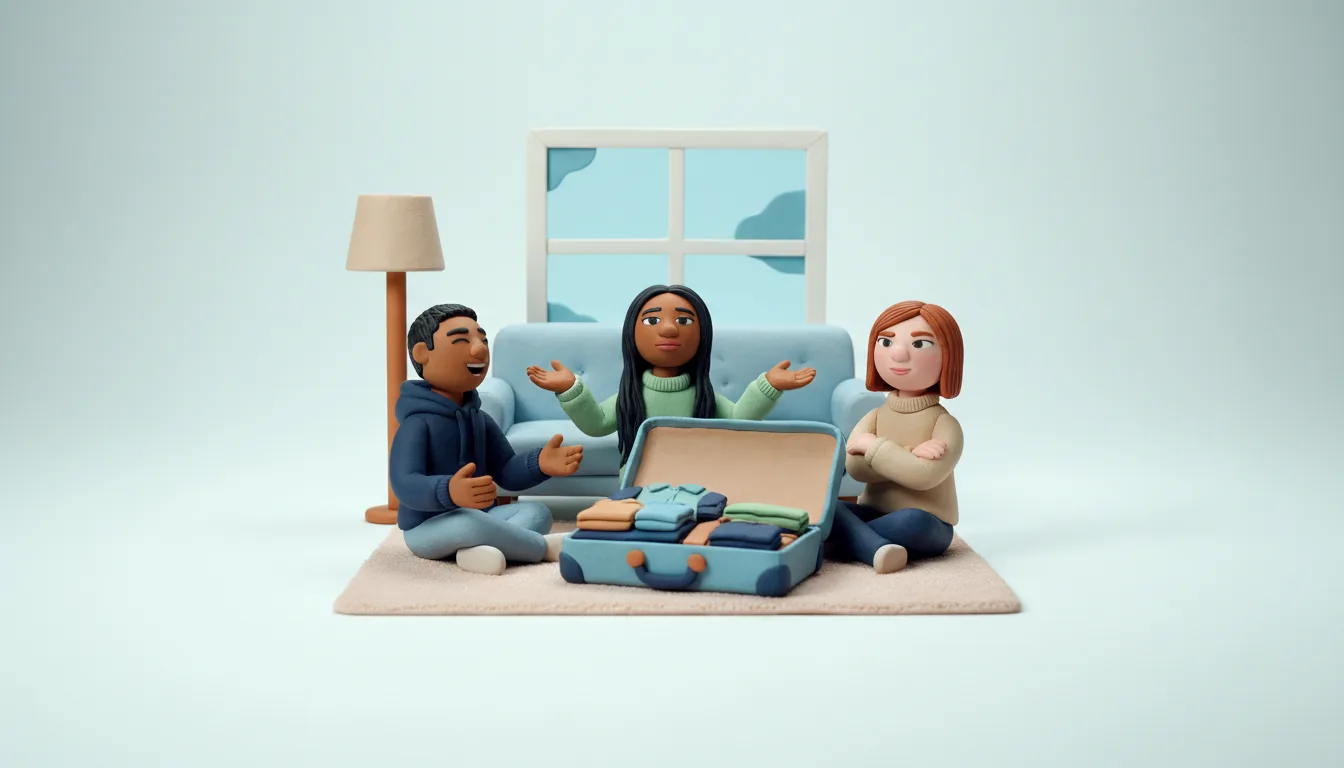
An example: Maya had been planning the trip to her sister's for eight months. Three days before the flight she saw that her passport had run out in the spring. She sat down on the rug next to the half-packed suitcase, shrugged at her two friends and said, "Well. Everything happens for a reason." Jonah laughed and said maybe the reason was that she still hadn't packed any socks. Ade folded her arms and raised one eyebrow. When Ade's flat flooded last spring, three people said those exact words to her in one afternoon, and she still remembers how alone they made her feel. For Maya the sentence was a way to let go of a bad week. For Ade it was what people say when they'd like you to stop talking about it.
Two ways to hear the saying
People hear two different promises in these words:
- There's a plan. Something bigger than you arranged this, and it will make sense in the end.
- Something good can come of it. Nobody planned the setback, but you can learn from it or end up somewhere better.
Many people today mean the second one. "Things do happen for a reason" usually gets said the same way, about the missed train that led to a new friend, or the flat you didn't get that sent you to a better street. Which promise a person hears depends a lot on what they already believe, and that's worth knowing before you say it to them.
Why people reach for it
- It makes a random event feel less random.
- It closes a topic that's hard to sit with.
- It's quick, and it sounds kind.
- It lets the person saying it feel they've helped.
Many people who say it mean well. They see someone hurting, they want to help, and this is the line that comes to mind first. The trouble starts when a saying meant for your own life gets handed to someone else.
When the saying helps
It helps most when you pick it yourself. Maya said it about her own passport, and it let her laugh at the week instead of fighting it. It also helps once time has passed. Five years after a move you didn't want, you may well see what it led to, and saying so feels true.
It can help between two people who already share the belief, too, as long as the one going through it says it first. Then agreeing with them is a kindness.
Why it can sting in a hard week
In the middle of a loss, the saying asks a person to accept that the loss was meant to be. For someone who is grieving, that can sound like their pain has a purpose they're expected to agree with. For someone whose home flooded or whose plans fell apart, it can sound like "please stop being upset." It also skips the thing people need first, which is to be heard.
A simple rule helps. Say it about your own life whenever you like. About someone else's, wait until they say it first.
When someone says it to you
Sooner or later someone will say it to you on a bad day, and you'll have to answer. You don't have to argue, and you don't have to agree. A few calm replies:
- "Maybe. Right now it just feels like a bad week."
- "I might see it that way later. Today I'm still annoyed."
- "Thanks. Can I tell you what actually happened?"
The last one is often the most useful, because it gives the other person something better to do than reach for a saying. Many people are glad to listen once they know that's what you want.
The planner and the let-it-be person
Some people find this saying calming, and others can barely stand it. A lot of that comes down to how a person handles things they can't control, and Typeza's types differ here.
- Mentor feels the mood of a bad moment strongly and may say it to lift the room, sometimes too soon.
- Inspector wants a cause he can check. "The passport ran out because nobody looked at the date" is the only reason he needs.
- Diplomat skips the meaning and goes straight to fixing it, with an emergency passport booking by noon.
- Entrepreneur asks what can still be saved, moves on fast and finds the saying a little slow.
- Guardian watches how the words land on the person who's hurting, and is the first to say "that's not helping right now."
- Counselor believes in deeper meaning more than most, and still keeps it quiet until a friend is ready.
- Encourager often really does think something good is around the corner, and says so with real excitement.
- Craftsman shrugs at the whole idea. Things happen, you deal with them, and then you have dinner.
People mix these, of course. The point is that a line that steadies one friend can grate on the next.
What to say instead
When a friend is in a hard spot, a few plain lines do more than any saying:
- "This is a rotten week, and you didn't deserve it."
- "Tell me what happened, from the start."
- "Should I help fix it, or would you rather just vent for a bit?"
- "I'll come with you to the appointment."
- "I don't know why this happened. I'm sorry it did."
Then listen. If they bring up "everything happens for a reason" themselves, you can agree with them. For more ways to help someone who feels low, see how to cheer someone up.
Short lines in the same spirit
If you like the idea and want something fresher, here are a few short lines of my own. They're best said about your own life, or once a friend is ready to hear them.
- "Not every road is the one you planned, and some are better."
- "Plans change. You're still you on the other side."
- "Some detours turn out to be the trip."
- "Give it a year, then decide what it meant."
- "The week was bad. The story you tell about it later might be good."
- "Not everything has a reason. Most things have a way through."
For an old line that promises less and calms more, there's this too shall pass. If you want the version about the people who walk into your life and why, reason, season or lifetime looks at it friend by friend. And for an ending that may lead somewhere new, read about when one door closes, another opens.
Why one friend shrugs and another needs to talk
How you take a bad week, and how your friends take it, often comes down to type. Typeza shows any two people the relationship type between them and what comes easily to them as a pair. Start with the free personality test, then invite a friend and see what you share.
Questions people ask
What does "everything happens for a reason" mean?
It means a bad turn has a purpose, or will lead to something good later on.
Is it true that everything happens for a reason?
Nobody can prove it either way. Many people find meaning in hard times when they look back, and many others feel some things just happen. Both views are common.
Who said everything happens for a reason?
No single person. It's an old idea that turns up in many places and times, and today it's simply a common saying.
Is it rude to say everything happens for a reason?
It isn't rude, but it can hurt someone in the middle of a loss or a crisis. It's safest about your own life, or after the other person has said it first.
What is the opposite of everything happens for a reason?
"Some things just happen" is the plainest way to say it. It means bad luck is only bad luck, with no hidden purpose.
Written by Virko Kask, founder of Typeza
Written with the help of AI tools.
One question for two, every week
A question to ask your partner, friend or family, and how different types tend to answer it.
Free. Unsubscribe any time.