
How to find a hobby that fits your personality
The way to find a hobby is to start from what you already enjoy, then try small versions of things that match it. A hobby your friend loves can still bore you, because it feeds a need you might not have.
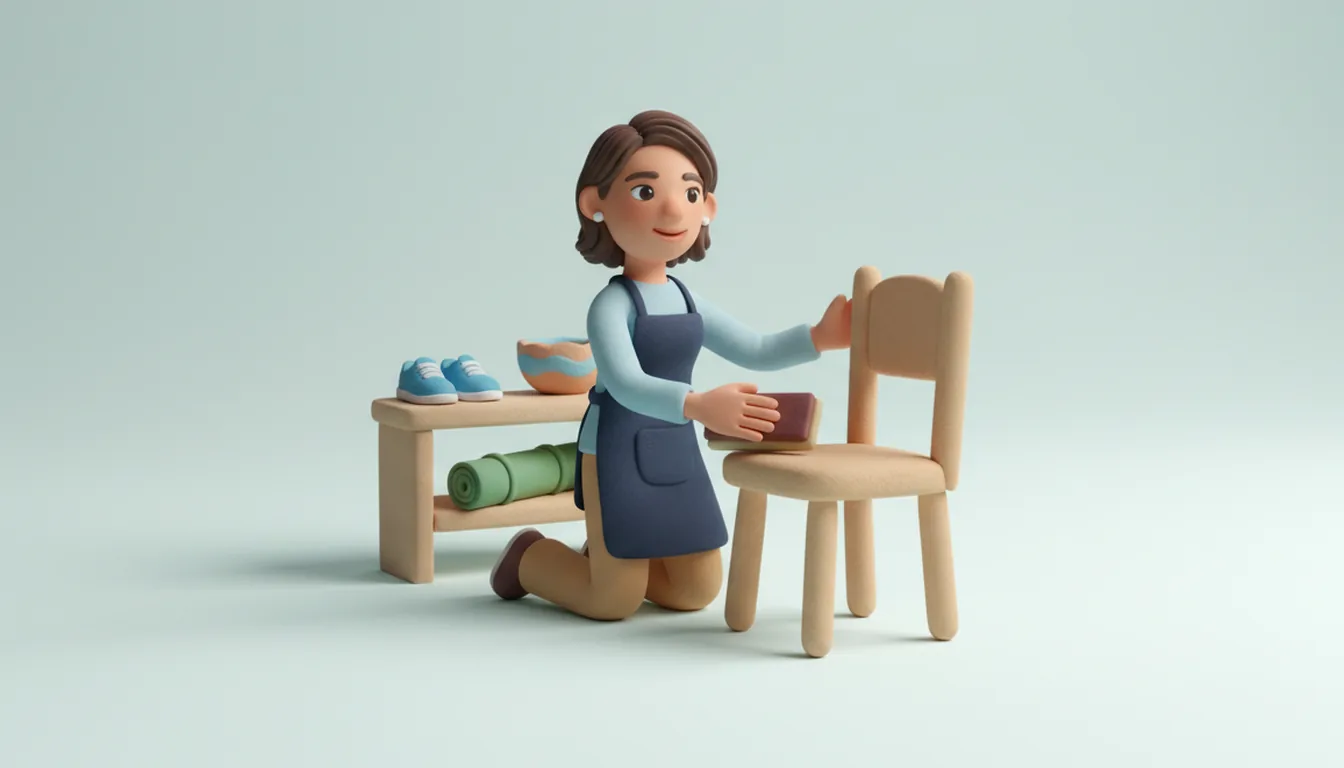
An example: Grace turns 41 and realizes her free time has become emails and TV. So she tries the hobbies her people love. Her friend Mel takes her to a running club, where Grace hates the early alarm and the chatting at every corner. Her sister signs them both up for a pottery class, which is fun for the hands and far too loud. A yoga app lasts nine days. Then, at a yard sale, she pays five dollars for a wobbly old chair and spends a whole Saturday sanding it in the garage. She forgets to eat lunch. She has restored eleven chairs since. Grace needs something quiet, alone and done with her hands. Running gives her none of that.
Questions that point you to a hobby
Before you buy any gear, spend ten minutes with these questions. Write down the answers, because patterns show up fast.
- What did you love doing at ten? Kids pick hobbies without worrying about looking good. Drawing, building, collecting or climbing trees often still fit.
- Where do you lose track of time? Notice the tasks where an hour feels like ten minutes, even boring ones like organizing a drawer.
- Do you want company or a break from people? After a long week, some people want a crowd and others want a closed door.
- Hands or head? Some people relax by making something they can touch. Others relax by solving or learning.
- Calm or a rush? Think of whether you want your heart rate to go down or up.
- What do you scroll past slowly? Recipes, gardens, old cars or travel photos often hide a hobby you haven't tried yet.
You will rarely land on one perfect answer. Two or three clear leanings are enough to start.
Fun hobbies, grouped by what you enjoy
Pick the group that matches your answers above. Many people fit two of them, like "alone and with my hands," which already narrows the list a lot.
Hobbies to share with other people
Choir or a community band, a weekly trivia team, pickleball, dance classes, a running club, improv, a book club, volunteering at an animal shelter, board game nights, community theater.
Hobbies for time on your own
Reading, journaling, solo hiking, jigsaw puzzles, birdwatching, learning a language with an app, knitting, photography walks, baking bread.
Many solo hobbies start on a quiet afternoon with nothing to do, and things to do when you're bored has small ideas to try first.
Hobbies that keep your hands busy
Woodworking, restoring old furniture, pottery, sewing, gardening, cooking new recipes, painting miniatures, fixing bikes, candle making, embroidery.
Hobbies that keep your mind busy
Chess, crosswords, learning an instrument, coding a small project, astronomy, history podcasts with notes, genealogy, building model kits, sudoku.
Calm, slow hobbies
Watercolor painting, tending houseplants, fishing, tai chi, gentle yoga, calligraphy, long walks with an audiobook, keeping an aquarium.
Hobbies with a bit of adrenaline
Rock climbing or bouldering, surfing, mountain biking, martial arts, skiing, kayaking, trail running, a beginner's motorcycle course.
Cheap, free and at-home hobbies
A good hobby doesn't need a big budget. Many of the best ones cost almost nothing: walking, running, reading library books, sketching with a pencil, birdwatching, bodyweight workouts, learning songs on a secondhand guitar, writing short stories, or swapping plants with neighbors.
If you want hobbies to do at home, look for ones that fit in a corner and pack away in five minutes. Puzzles, knitting, baking, journaling, houseplants and a small painting kit all work in an apartment. Grace started with one chair and one sanding block on an old sheet.
For outdoor hobbies on a budget, try a local hiking group, a community garden plot or a free running group in a park. Ask around before you buy anything. Someone you know probably has a tent, a bike or a set of paints sitting unused in a closet.
Hobbies for couples
A shared hobby gives a couple something new to talk about and a reason to plan time together. Good ones for two include cooking a new cuisine once a week, ballroom or salsa classes, hiking, tennis, a pottery class, birdwatching, learning a language together, gardening, and a long jigsaw puzzle on the dining table.
It works best when the hobby suits both of you. If one of you loves a crowd and the other needs quiet, try something you do side by side, like a puzzle or a garden. A shared hobby can also be small: one partner reads and the other knits, in the same room, every Sunday evening. For more ideas on time together, see fun things to do as a couple. If you'd like to move together, couple workouts has easy ideas and a few ground rules.
How to give a new hobby a fair chance
Many new hobbies fade in the second or third week, when the fun of being new fades and the skill isn't there yet. A few habits help:
- Try before you buy. Borrow or rent the gear, or take one class, before you spend money.
- Give it four sessions. The first try is awkward for everyone. By the fourth you know if you like it.
- Put it in your calendar. A hobby with a fixed slot, like Thursday evenings, survives busy weeks.
- Expect to be bad at first. Many adults hate being beginners. Being bad at something you chose is part of the fun.
- Let it go if it doesn't fit. Quitting a hobby that bores you is useful information.
If you keep starting new interests and dropping them, you might simply enjoy variety, which some people call multipotentiality. And once a hobby sticks, it can grow into something bigger. These things to be passionate about are a good next read.
Hobbies for when the kids have moved out
When the house gets quieter, two things open up at the same time: a spare room and your weeknights. It's a good moment for a hobby that uses both, or for the one you've put off for twenty years.
- Give the free room one hobby. Pick something that needs space and can stay set up between evenings, like a bench for stained glass or a desk for repairing old clocks.
- Keep one quiet weeknight for a class. A stone carving class or a beginner fencing group meets on the same night every week, and after a month the same faces start to feel like friends.
- Start the thing you kept saying "one day" about. Book a first flight with a gliding club, or take the scuba course you looked at in your thirties.
Which hobbies tend to suit which type
Typeza sees personality type as part of which hobbies stick, because a hobby feeds a need. Eight of the 16 types:
- Ideator: loves a hobby with endless new problems, like learning languages, tinkering with gadgets or a strategy game. Expect them to switch every few months.
- Harmonizer: enjoys cozy, sensory hobbies, such as cooking for friends, gardening or a warm pottery studio.
- Vitalizer: wants people and music around, so dance classes, choir or hosting game nights tend to stick.
- Analyst: goes deep on one system, like chess, astronomy or building a computer, and reads everything about it.
- Commander: enjoys a challenge with a clear result, like martial arts, climbing or a competitive sport.
- Dreamer: likes slow, quiet hobbies with room to think, like watercolor, photography walks or journaling.
- Entrepreneur: wants to see progress, so training plans, learning an instrument by levels or a side garden that feeds the family suit them.
- Craftsman: enjoys working with tools and materials, like woodworking, fixing bikes or fishing, and cares about doing it well.
These are leanings, and plenty of Commanders love knitting. Still, if every hobby you try feels like a chore, it may feed a need you don't have.
For longer lists by stage of life, from your 20s to retirement, see hobbies for women and hobbies for men.
Find the kind of free time that feels like yours
Grace now knows why the running club failed: she recharges alone, with her hands busy and her mind quiet. Type is often part of a clue like that. Try Typeza's free personality test. Your type appears when you finish, with a short profile of your strengths and weak spots that you can read without paying.
A hobby partner can take it too. Open a free account and invite a friend or your partner from your result. Each of you has to be at least 16. When they finish, you'll see your relationship type, with what feels easy between you and where you tend to pull in different directions. That makes it easier to pick a hobby you'll both look forward to.
Questions people ask
How do you answer "What are your hobbies and interests?"
Name one or two things you really do with your free time, and add a detail about why you enjoy them. "I bake bread on Sundays, mostly for the quiet" gives the other person something to ask about. If you're between hobbies, say what you'd like to try next.
Is there a quiz to find a hobby?
Many sites have hobby quizzes, but they mostly match you to a list. Knowing your personality type gives you a broader clue, because it shows what kind of activity recharges you.
What if nothing interests me?
Try the opposite of what you do all day. If your days are busy and social, try something quiet and alone, and the other way around.
How many hobbies should you have?
There is no right number. Many people do well with one hobby for the body, one for the mind and one to share with others.
Written by Virko Kask, founder of Typeza
Written with the help of AI tools.
One question for two, every week
A question to ask your partner, friend or family, and how different types tend to answer it.
Free. Unsubscribe any time.