
Icebreaker games for adults that work for quiet and loud people
A good icebreaker game for adults gives quiet people one partner and a small task, and it gives loud people a moment in front of the room. The games below are sorted by group size and mood. For each one you get what you need from home, the rules in a few lines and a rough time.
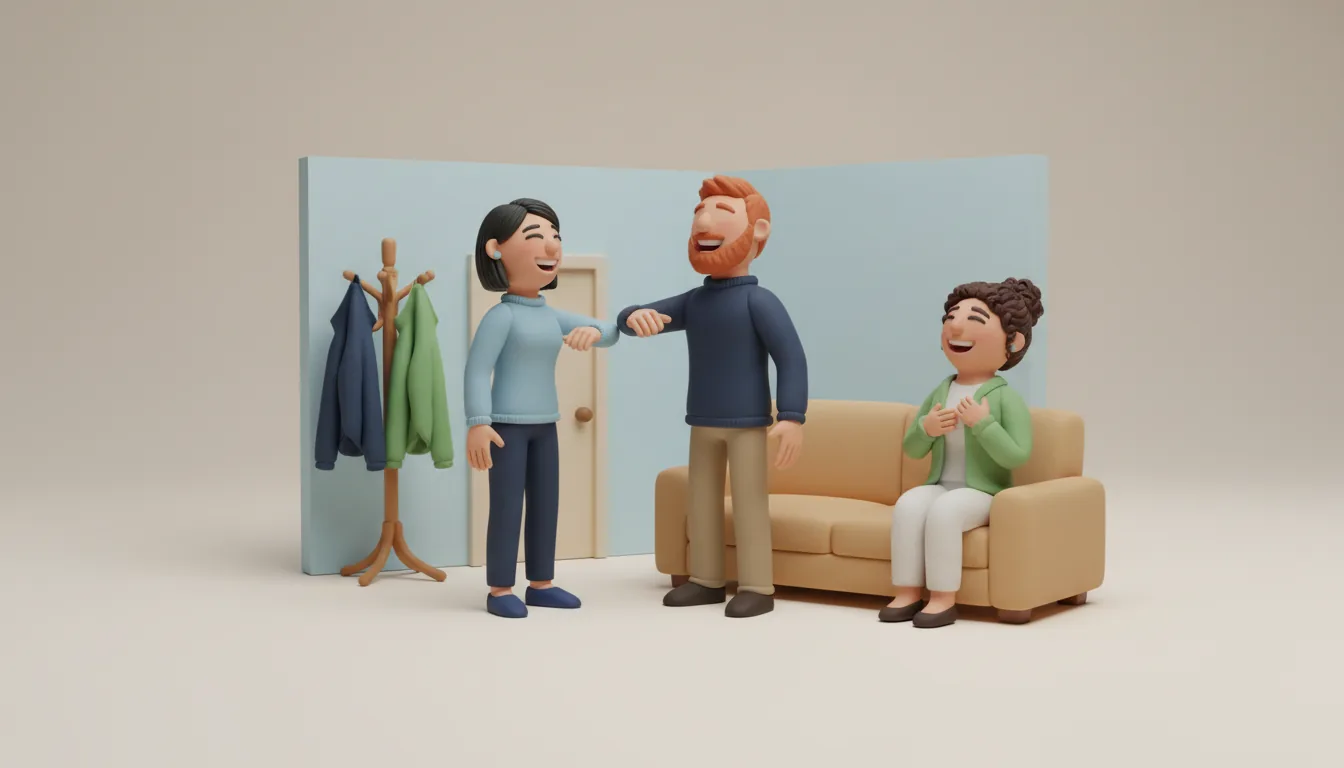
An example: "Do it again," Lotte said from the sofa, and the whole room turned to watch. Wren and Teodor had met forty minutes earlier, at the hiking club's first evening in Lotte's living room. Neither had said much while the others swapped trail stories. Then Lotte paired everyone up and gave each pair two minutes to invent a secret handshake. Theirs had a knock of fists, a knock of wrists, a snap and a slow, serious bow. On the second try Teodor forgot the snap, Wren started laughing before they reached the bow, and his red beard couldn't hide that he was laughing too. Lotte laughed with both hands on her chest. By the end of the night the two quietest people in the room were the ones everyone wanted to talk to.
Rooms full of people who just met
Icebreakers help most when people have a reason to be in the room and no shared past yet.
- A club's first evening. A hiking group, a choir or a running club starts with one thing in common. Games like the story of your name help people put names to faces.
- A new friend group. When a friend brings together people from different parts of their life, everyone knows the host and nobody else. Pairs games work best here, since they give each guest one new person at a time. Making friends as an adult has more on turning that first evening into a second one.
- The night before a wedding. Two families and two sets of friends meet, often for the first time. Choose games that mix the sides, and keep them short, since the rehearsal dinner has speeches and a meal to fit in as well.
Two truths and a lie is one of the best-known icebreakers, and it has its own page with ideas for every kind of group.
Icebreakers for a small group
Four to eight people can sit in one circle and listen to each other properly.
- The story of your name. You need nothing. Each person says where their first name came from, who picked it and one nickname they've had. Everyone else may ask one follow-up. About two minutes a person, and many people have a better story than they expect.
- The fifth photo. You need everyone's phone. Each player opens their camera roll, counts back five photos and tells the story behind that one, with no skipping allowed. About 15 minutes for six people.
- The alibi. You need a hallway or a second room. Someone at the party "ate the last slice of pie," and two suspects step out for three minutes to agree on where they were. The group calls them back in one at a time and asks about small details. If the two stories differ on three points, the suspects are caught. About 10 minutes a round.
Icebreaker games for large groups
With ten to thirty people, you want games that move bodies around the room and mix the crowd for you.
- Mingle mingle. You need open floor space. Everyone walks around saying "mingle, mingle" until the host calls out a number, and people rush to form groups of that size. Each new group shares one small thing, like the best meal of their week, before the next round. About 15 minutes.
- The big wind blows. You need a circle of chairs, one fewer than the number of players. The person standing in the middle says "The big wind blows for everyone who..." and adds something true about themselves, like "has slept in a tent" or "can't whistle." Everyone it's true for has to find a new chair, and whoever is left standing calls next. About 15 minutes.
- Zip zap zop. You need nothing. The group stands in a circle and sends a clap across it, saying "zip," then "zap," then "zop" in that order and pointing at the next person. A wrong word or a long pause puts you out, and the pace keeps rising. About 10 minutes.
For a crowd that likes to mingle, the find your other half game in things that go together pairs up strangers with name tags.
Funny icebreaker games
These are for the moment when the room is ready to laugh and needs a reason.
- The secret handshake. You need nothing. Pair up people who don't know each other, and give each pair two minutes to invent a handshake with at least four moves. Every pair shows theirs, and the room picks one to teach to everybody. About 15 minutes.
- Yes, and. You need nothing. Two players plan an absurd trip together, and every sentence has to start with "Yes, and" and add something to the last one. After two minutes, the next pair takes over. About 10 minutes for five pairs.
- The gibberish expert. You need two chairs at the front. One player is a visiting expert who only speaks a made-up language, and a partner sits beside them and tells the room in plain English what the expert just said. The room asks the expert about their work, and the answers get stranger each time. About 10 minutes for three pairs.
Icebreakers for quiet people
Shy adults often do fine with one person and freeze in front of twelve. These games keep the talking in pairs, or put it on paper.
- Introduce your partner. You need nothing. Pairs talk for three minutes, then each person introduces the other to the room in three sentences. Talking about someone else is easier than talking about yourself. About 15 minutes for twelve people.
- Conversation name tags. You need sticky labels and pens. Under their name, guests write one thing they'd like to be asked about, like "my sourdough" or "the bike trip in May." People walk up and start right there. It runs all evening.
- Blind portraits. You need paper and pens. Pairs sit face to face and draw each other for one minute without looking down at the paper. Then they swap drawings and show the room. About 10 minutes, and nobody's drawing looks like a person.
Icebreakers you can play sitting down
Some evenings happen around a table or on two sofas, and nobody wants to stand up.
- Pass the face. You need nothing. The first player makes a face at the neighbor, who copies it, then turns and makes a new face for the next person. Anyone who laughs while copying is out. About 10 minutes.
- Great minds. You need nothing. Two players count to three and each say a random word at the same time. Then both say a word that links the last two, like "red" for "apple" and "car," until they say the same word together. About 5 minutes a pair, and the room claps when they match.
- Mirror. You need two chairs facing each other. One player makes slow movements and the other copies them like a mirror, so smoothly that it's hard to tell who is leading. The rest of the room guesses the leader. About 10 minutes for four pairs.
Once the group knows each other, things to do with friends at home has longer games for a second evening. In December, Christmas party games for adults has winter games for the same crowd.
Icebreakers for a work party
At a work party, people know names but not much else. Pick games where nobody has to share anything private, and let anyone watch instead of play.
- The two-minute switch. You need two rows of chairs facing each other. Pairs talk for two minutes on a light topic, like the best place they've ever eaten breakfast. Then one row moves one chair to the right. About 20 minutes for twenty people.
The big wind blows, the secret handshake and great minds all work at a work party too. For the rest of the party plan, office Christmas party ideas has themes and games for a whole team.
A joke of the day from work jokes gets people laughing before the first game starts.
Games where the quiet and the loud both win
Every new group has people who want the floor and people who want one good conversation. Here are six of the 16 types and the games that suit them:
- Ideator adds a fifth move to every handshake and a new rule to zip zap zop by the third round.
- Harmonizer notices who's standing alone and pulls them into a pair. They love conversation name tags, since the first line is already written.
- Analyst stays quiet at first, then wins great minds with links nobody else saw coming.
- Dreamer comes alive in blind portraits and introduce your partner, where one other person is really listening.
- Strategist enjoys the alibi and asks the small questions that catch both suspects.
- Organizer likes a game with clear rules and a clear end, like the big wind blows, and often offers to run it.
These are leanings that type theory describes. Any guest can surprise you, and nothing in the list is advice about a real person. Use it to mix the games, so each kind of guest gets a turn to enjoy one.
Find out how you and a new friend get along
Typeza tells two people their relationship type, and it can explain why some strangers feel like old friends after one game. Start with the free personality test. Then send it to someone you met at the last party.
Questions people ask
What is a good icebreaker game for adults?
The secret handshake, the big wind blows and the story of your name work for many groups. They need nothing you have to go out for, and nobody has to perform alone.
How long should an icebreaker last?
Ten to fifteen minutes is enough for many icebreaker games. Play one at the start, and save a second one for when the energy drops.
Written by Virko Kask, founder of Typeza
Written with the help of AI tools.
One question for two, every week
A question to ask your partner, friend or family, and how different types tend to answer it.
Free. Unsubscribe any time.