
Signs of a bad friendship, and why the same friend can be good for someone else
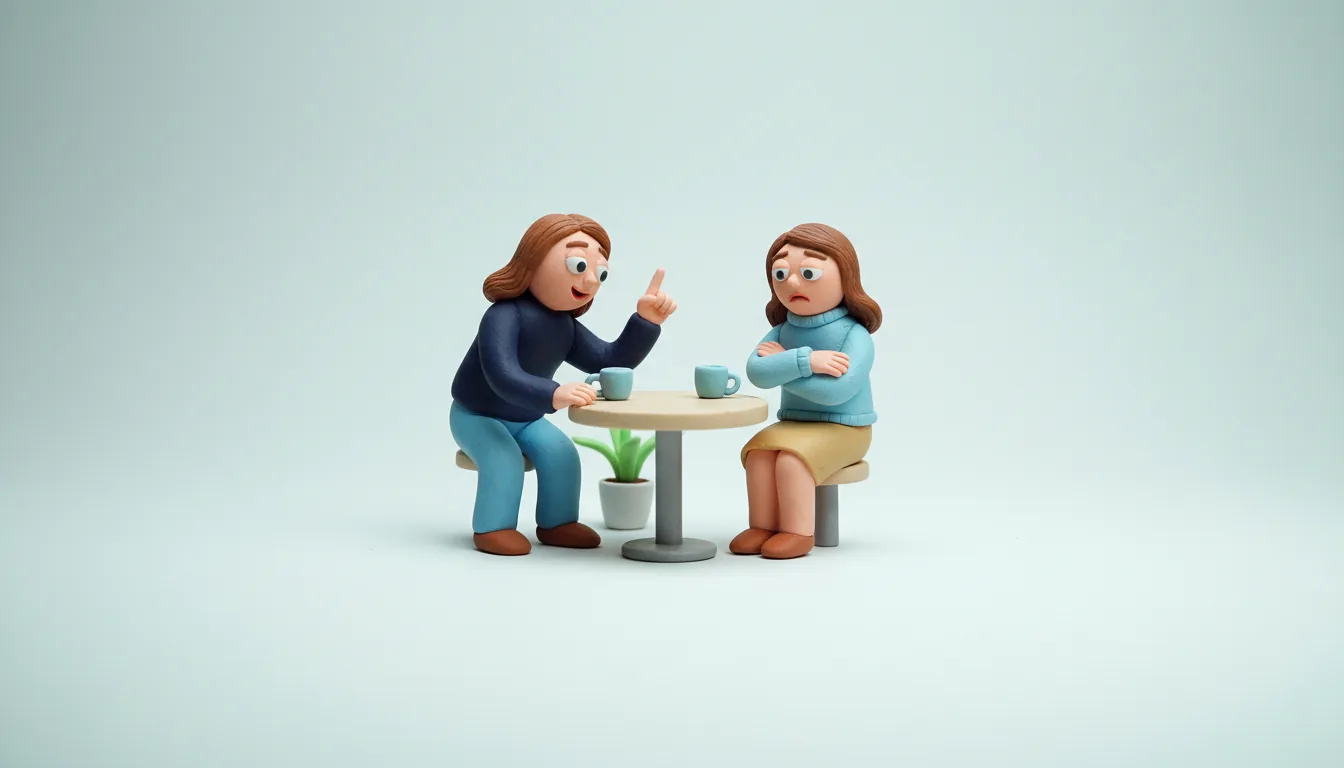
The main signs of a bad friendship are effort that only goes one way, feeling drained after you meet, jokes that land as put-downs, a friend who is missing when it matters, and arguments that never settle. One bad month is not a sign. A pattern you can predict is. Sometimes the reason is plain: the other person treats you badly. Often nobody is doing anything wrong, and it still does not feel good. This article goes through the signs, and then through the part most lists skip: why a friend who wears you out can be an easy friend to somebody else.
What are the signs of a bad friendship?
The signs people describe tend to repeat.
- It is one-sided. You do the calling, the planning and the remembering. If you stopped, the friendship would stop.
- You feel drained after seeing them. A good evening with a friend leaves you lighter. This one leaves you tired.
- Jokes land as put-downs. They seem to know exactly which remark stings, and it keeps coming up.
- They are not there when it matters. Plenty of time for a night out, none for the week you needed someone.
- You edit yourself around them. You hold back good news because it will be picked apart, and bad news because it will be used.
- You feel watched. Every choice you make gets a comment.
- Disagreements never settle. The same argument comes back in a new coat each time.
One bad month does not make a bad friendship. Everyone has a stretch where they are tired or distracted. The signs matter when they are the pattern, when you can predict how a meeting will feel before it starts.
Bad friend or bad fit?
Two very different things hide behind the same signs.
A bad friend treats people badly. They lie, they use people, they disappear when they are needed. Most of their friends would say the same about them, if they were honest.
A bad fit is different. The person is decent. They have close friends who love them. And still the friendship between the two of you does not work. You rub each other the wrong way without either of you meaning to.
The first case needs no theory. The second one does, because it puzzles people. You watch your friend be warm and relaxed with others and wonder what is wrong with you, or with them. Often nothing is wrong with either of you. The problem is the pair. When a good friendship of many years starts to feel off, questioning friendships covers what to ask and when to let it fade.
Why the same friend feels bad to you and good to someone else
Socionics, the theory Typeza grew out of, has 16 personality types, and each pair of friends lands in one of 16 relationship types. The relationship type belongs to the pair. It describes what each person gives without effort and what the other person needs, or cannot take. So a friend is never good or bad on their own. They are good or hard for you. That is why a compatibility test needs answers from both friends before it says anything.
That is why your friend's other friendships tell you nothing about yours. With their best friend they may be in Duality, where each one covers what the other finds hard. With you they may be in one of the tense types. Same person, different pair.
A few relationship types produce the signs above on their own, between two people who both mean well.
The friend who keeps correcting you
They notice the one thing you hoped nobody would see, and they say it. To them it is a helpful remark. To you it lands where you are least able to take it. You feel watched and start editing yourself. This is Supervision, and it runs one way: the friend doing the correcting rarely feels that anything is wrong. It works far better in a wider circle than one to one.
The friend you cannot stop arguing with
Everything about them fascinated you at first. Up close, every topic turns into an argument, and nobody ever wins. You are opposite on every basic dimension, so what one of you values most is what the other handles worst. This is Conflict. Rarely a bad person. Often a bad fit for daily closeness.
The friend who admires you and then needles you
From a distance you admire each other. Close up, each one's strongest side lands on the other's insecurity. A dinner with six people goes well. A weekend away does not. This is Super-ego.
The friend you understand and cannot do anything with
You want the same things in life and get each other's motives at once. Then you plan something together and each of you wants it done your own way, and the irritation is quick and mutual. This is Kindred. The friendship is fine as long as you are not running a project together.
The friend you talk past
You look alike on paper and use the same words for different things, so conversations arrive nowhere. You leave each time with the feeling that you missed each other again. This is Quasi-identity. It is more frustrating than harmful.
Causes of tension in friendships that have nothing to do with type
Not every tension is a type pattern. Life stages drift apart: one of you has a baby, the other is single and traveling. Money differences make plans awkward. One of you has a partner the other cannot stand. And there is plain overexposure. Even the easiest relationship types get tiring when there is never a break. Activation is the clear case: a short meeting lifts you both, and a two-week trip together leaves you exhausted.
Check these first. A friendship that only started to feel bad when circumstances changed is probably about the circumstances.
Conflict with a friend: what changes when you know the pattern
Knowing the relationship type does not fix the friendship, but it changes what you blame. If the pattern is Supervision, the remark that stung was not an attack, and your friend does not know how it landed. If it is Kindred, the fight over how to do things is not about respect. Either of you can stop taking it personally, and that alone takes a lot of heat out.
It also tells you which distance works. Several of the hard relationship types are fine with a friend you see in a group once a month and punishing with a flatmate. Stepping back is not the same as ending the friendship. For many pairs it is what saves it.
And sometimes the honest conclusion is that this is a bad friend, not a bad fit. Type explains friction between people who mean well. It does not excuse someone who does not.
How to find out which one you have
You and your friend each take the free friendship compatibility test separately. As soon as both types are in, you see your relationship type, what each side tends to feel and where friction usually begins. For the full range, from the friend who understands you without words to the one who keeps correcting you, read types of friends, and for the far end of the scale, what makes a best friend.
Questions people ask
What is the difference between a bad friend and a bad fit?
A bad friend treats most people badly, and their other friends would say so. A bad fit is a decent person who is hard for you in particular. The relationship type between your two personalities explains the second case. It does not excuse the first.
Why does my friend get along with everyone except me?
Because each of their friendships is a different pair. Since it depends on both personalities, one person can be easy company for one friend and tiring for another. It says nothing about who is the better person.
Should I end a friendship that feels bad?
That is your call, and it depends on which kind of bad it is. Many friendships in the harder relationship types work well at a different distance, as a friend you see in a group rather than one to one. A friendship with someone who treats you badly is a different matter.
Is it normal to have problems with a friend?
Yes. Every relationship type has places where the two people rub, even the comfortable ones. Problems become a sign of a bad friendship when they are the pattern rather than the exception, and when seeing the person costs you more than it gives.
Am I a bad friend?
Look at all your friendships together. If most feel fine and one keeps going wrong, the trouble likely sits in the fit between the two of you. If several friends raise the same thing, like late replies or plans you cancel, that is a habit worth changing.
What is a forced friendship?
A friendship kept going by a setting or by other people more than by the two friends, like your partner's friend's partner or a neighbor you always end up next to. It often works fine as a group friendship and needs no one-to-one time.
Written by Virko Kask, founder of Typeza
Written with the help of AI tools.
One question for two, every week
A question to ask your partner, friend or family, and how different types tend to answer it.
Free. Unsubscribe any time.