
Finally see why some people just get you.
Free Socionics Test
Tap the one that fits you better
This socionics test finds your sociotype, one of the 16 socionics types, through 41 quick choices between two statements. Most people finish in under 10 minutes. You see your type the moment you finish, along with how strongly you lean on each of the four dichotomies. After that, you can invite someone and see the intertype relation between the two of you.
How the socionics test works
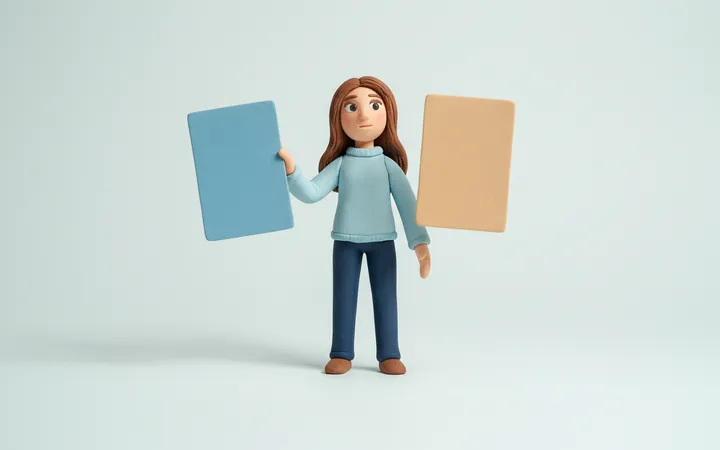
Answer 41 pairs of statements
Pick the one that sounds more like you. Each answer is one tap.
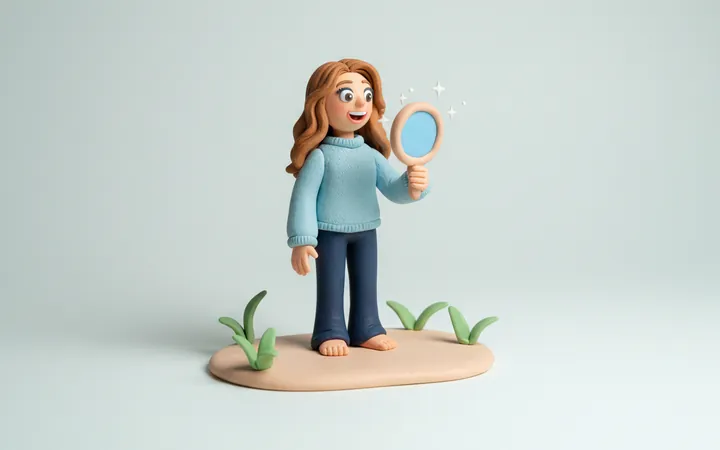
Get your socionics type
One of 16 types, your lean on each dichotomy, and the closest types ranked, so you can read them and choose.

See your intertype relations
Invite a partner, friend or family member. They take the same test, and you see which of the 16 relations you share.
What the test measures
Socionics describes how people take in and process information, sometimes called information metabolism. Your socionics type comes from four dichotomies:
- Extraversion or introversion: whether your attention goes outward to people and events, or inward to connections and meanings.
- Intuition or sensorics: whether you notice possibilities and patterns first, or what is concrete and present.
- Logic or ethics: whether you evaluate by facts, systems and cause and effect, or by people and how they feel.
- Rationality or irrationality: whether you decide first and work to a plan, or stay open and adapt as things change.
Together the four dichotomies give one of the 16 types. They go back to Carl Jung's work on psychological types.
Socionics intertype relations
In socionics, every pair of types has a defined relationship, called an intertype relation. There are 16 of them, from Duality, the most complementary, to Conflict, the most demanding. Each one describes what comes easily between two people and where they tend to misread each other.
Most socionics tests stop at your type and leave you to look up the relation in a chart. Typeza lets you invite the people in your life. When they finish the test, the relation between you appears, with a description of how it tends to work. All 16 relation descriptions are free to read.
Duality
The Complete Complement
Activation
The Energizing Spark
Mirror
Constructive Critics
Conflict
The Uncomfortable Opposite
See all 16 intertype relations · See the relation for any two types
The 16 socionics types
Each type has a full profile, free to read.















What is socionics?
Socionics is a theory of personality types that grew out of Jung's work in the 1970s. Where many type systems describe individuals, socionics also describes how any two types interact.
Read more: What is socionics
Socionics test questions people ask
Yes. The test is free and unlimited: no card, no trial and no sign-up to see your type. All 16 type profiles and all 16 intertype relation descriptions are free to read in full.
41 questions, under 10 minutes for most people. Each question is a choice between two statements.
Not to see your type. A free account saves your result and lets you invite people, so you can see your intertype relation with each of them.
We have not published an accuracy figure yet. Your result shows how strongly you lean on each dichotomy and ranks the types closest to your answers. If two types feel close, read both profiles and choose the one that fits you better.
Start with a test like this one, then read the profile of your result and of the closest types. Your type is the one that describes how you actually think and decide, weak spots included. Checking it against how you get along with people whose types you know helps too.
Read more: How to find your personality type: 4 ways
The 16 kinds of relationship socionics defines between any two types. Duality is the most complementary, Conflict the most demanding, and the rest fall between. The relation depends only on the two types, so it applies to partners, friends, family and colleagues alike.
Read more: The 16 intertype relations
Yes. Invite them from your result. They take the same free test, and when they finish, you both see the relation between your types. If you already know both types, the type pair chart shows the relation for any two.
Based on classical socionics theory - a description of typical patterns between types, not relationship advice or a prediction for your relationship. Terms of Service