
A friend in need is a friend indeed: meaning, and two ways to read it
The saying means that a friend who helps you when you are in trouble is a true friend. Anyone can be good company on a sunny afternoon, and the friends who turn up in a bad week show what the friendship is made of. The sentence is also strangely built, so it can be read the other way round, as a dry joke about the friend who only gets in touch when they need something.
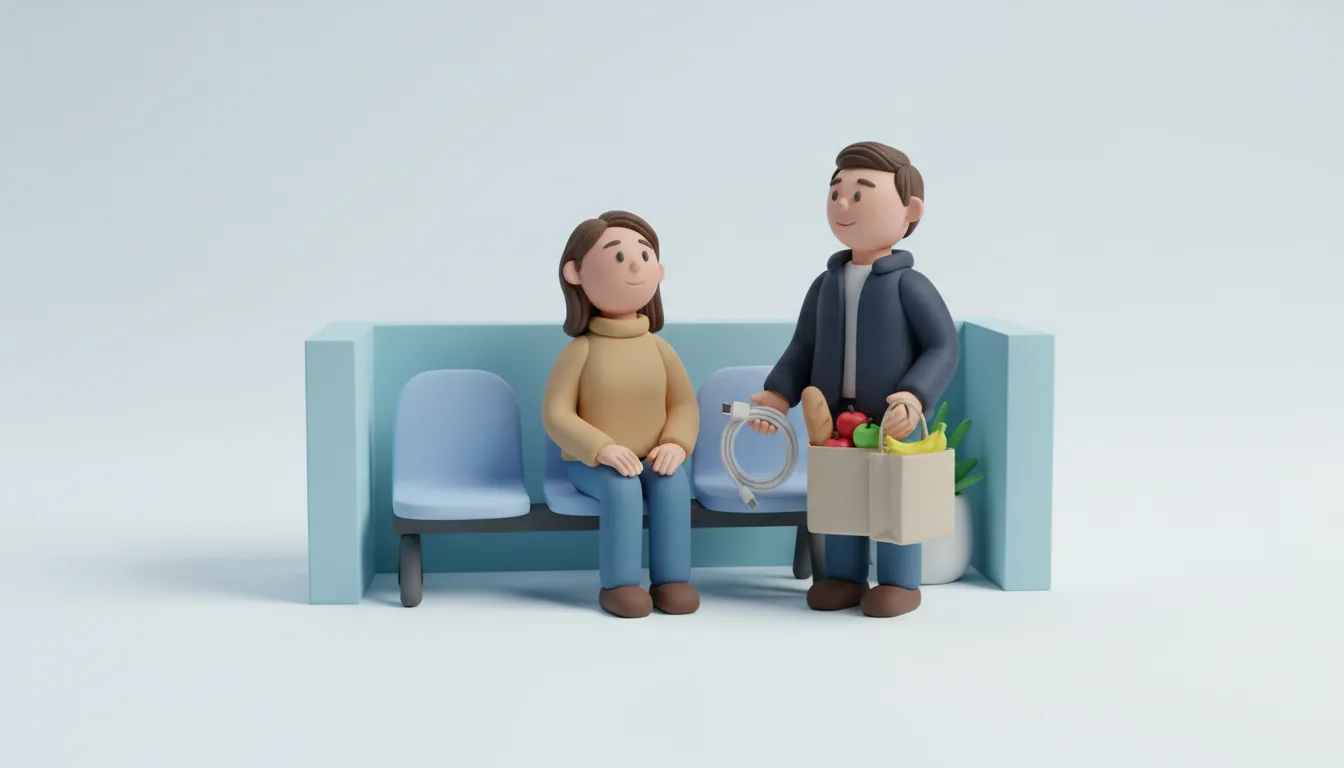
An example: Tess's grandmother had a saying for every occasion, and for friendship it was always the same one: "A friend in need is a friend indeed." For years Tess quietly applied it to Kira, whose name lit up her phone whenever Kira needed a ride to the airport, a loan until payday or a sofa for the weekend. Then Tess's father went into the hospital. Kira sent a quick "thinking of you!" and vanished. On the second evening, Idris, a friend from her running club whom she had met maybe ten times, walked into the waiting room with two bags of groceries and a phone charger. When Tess told her grandmother, the old woman nodded. "There you are. A friend in need is a friend indeed." Tess had both kinds of friend in one week.
Two ways to read the saying
The puzzle is the phrase "in need." It can belong to you or to the friend.
- You are in need. A friend who helps you when you are in need is a friend indeed, meaning a real one. This is the meaning dictionaries give and the one many people have in mind.
- The friend is in need. A friend who needs something becomes very friendly indeed. Read this way, the saying is a wink at people like Kira, who remember you when there is a favor to ask.
The first reading matches the oldest versions of the idea. The second grew out of the odd grammar, and people use it knowingly, often with a raised eyebrow. Both are worth thinking about, because many friendships have a bit of each.
The usual reading: help in hard times
A hard week sorts your friends without anyone meaning it to. Being a friend indeed rarely takes anything dramatic. It looks like:
- picking up the phone at an awkward hour;
- coming over with food when nobody asked;
- taking over a task, such as walking the dog or calling the insurance company;
- staying in touch after the first few days, when everyone else has gone back to normal life.
People often say "you find out who your friends are" after a breakup, an illness or a move. The surprise often goes both ways. Some close friends go quiet, and someone like Idris, half a stranger, turns out to be the one who comes.
The cynical reading: the friend who always needs something
Everyone needs help sometimes, and asking for it is part of any good friendship. The second reading points at something else: a friendship where help only flows one way. You hear from this friend when there is a favor to ask, and the line goes quiet when the favor is yours.
If that sounds familiar, our guide to the one-sided friendship has the signs and what to do. Before you decide, look at the whole picture. Some people ask often because life has been hard for them for a long time, and they give back in other ways, like loyalty, laughter or a sharp ear.
Indeed, or in deed?
Some people write the saying as "a friend in need is a friend in deed," and the spelling turns it into a neat point: a real friend shows friendship through deeds, and kind words alone don't count. It isn't the original spelling, but the idea fits the first reading well.
The joke version "a friend in need is a friend in need" turns up in searches too. It is the cynic's shortcut: a friend who needs something is, above all, a friend who needs something.
An old idea in a short sentence
The thought is far older than English. A Roman poet wrote more than two thousand years ago that a sure friend is seen when times are unsure. The English wording was in print by 1658. The rhyme of "need" and "indeed" probably helped it stick, because it is easy to remember and pleasant to say.
The fair-weather friend
The opposite of a friend indeed is a fair-weather friend. This is someone who is great company when the sun shines, at parties, on holidays and over good news, and who disappears when it rains.
Be careful with the label, though. Some friends go quiet in a crisis because they don't know what to say, or because they are scared of saying the wrong thing. A short message such as "I'd love your company this week, even for an hour" often brings them back. A real fair-weather friend stays away even after you ask, and that is one of the clearer signs of a bad friendship.
Seven friends, seven kinds of help
While her father was in the hospital, Tess got help from seven people, and none of them helped in the same way. Here they are by personality type:
- Harmonizer: sat with her in the waiting room with a flask of tea and her favorite biscuits, and somehow made the plastic chairs feel like a living room.
- Vitalizer: sent a silly voice message every evening. It was the only time Tess laughed that week.
- Commander: phoned the ward, got a doctor to explain the plan in plain words and sorted out the parking.
- Strategist: asked what her father would need at home after he left the hospital, and wrote a list before anyone else had thought of it.
- Organizer: this was Idris, with the groceries, the charger and an offer to feed her cat.
- Counselor: stayed on the phone for an hour and asked how Tess herself was doing, which nobody else had asked.
- Craftsman: fitted a grab rail in her father's bathroom the day before he came home.
All seven were friends indeed. Each one gave the kind of help that came most naturally, which is often the kind they would want themselves. That is why some help lands perfectly and some passes by unnoticed. In Duality, usually the easiest relationship type for close friends, one person's natural help tends to cover exactly what the other finds hard. In other pairs, kind help can arrive in a shape the other person barely recognizes.
Being the friend in need
Asking for help is hard for many people, especially the ones who are usually doing the helping. A few things make it easier:
- Ask for one clear thing. "Could you pick up my son on Thursday?" is easier to say yes to than "I'm struggling."
- Let people help their way. The friend who brings soup may never be the friend who listens for an hour, and that's fine.
- Say thank you, and mean it. Then let it go. Friends are not keeping score.
- Pay it forward later. When life is calm again, be the one who turns up for someone else.
See what kind of help reaches your friend
Tess now knows that Idris shows care by arriving with full bags, and that the quietest friends are sometimes the first to come. Relationship types can show which friends' help reaches you most easily. Typeza's friendship compatibility test is free, and the first part is about you alone: each time, you choose which of two statements is more like you. Your type is on screen the moment you finish, together with four base traits, and you don't have to sign up for any of it. The profile of your type is free and covers what you give and what you need from friends.
Then invite a friend from your result. You need a free account to send the invite. After your friend's answers are in, you both find out your relationship type, one of 16 possible ones, and what the friendship tends to feel like for each of you.
Questions people ask
What does "a friend in need is a friend indeed" mean?
Hard times show who your real friends are. The one who helps when you are in trouble is the real thing.
Is the friend in need the one who helps or the one who needs help?
In the usual meaning, you are the one in need, and the friend who helps is the friend indeed. People sometimes read it the other way, as a joke about a friend who is only friendly when they need something.
Is it "indeed" or "in deed"?
The usual spelling is "indeed," meaning truly. "In deed" is a later play on words that fits the meaning: a real friend shows it through actions.
How old is the saying?
The idea is at least as old as the Greek playwright Euripides, in 424 BC. The English wording was in print by 1658.
What is the opposite of "a friend in need is a friend indeed"?
A fair-weather friend: someone who is around in good times and disappears when you need help.
How do you use "a friend in need is a friend indeed" in a sentence?
"My neighbor fed my cat for three weeks while I was away looking after my mom. A friend in need is a friend indeed."
Sources
- Wiktionary, "a friend in need is a friend indeed". The meaning, Euripides' Hecuba (424 BC), the Roman poet Ennius's "amicus certus in re incerta cernitur," the 1658 English quotation and the "in deed" variant.
Written by Virko Kask, founder of Typeza
Written with the help of AI tools.
One question for two, every week
A question to ask your partner, friend or family, and how different types tend to answer it.
Free. Unsubscribe any time.