
A stitch in time saves nine: meaning, and small things couples fix early
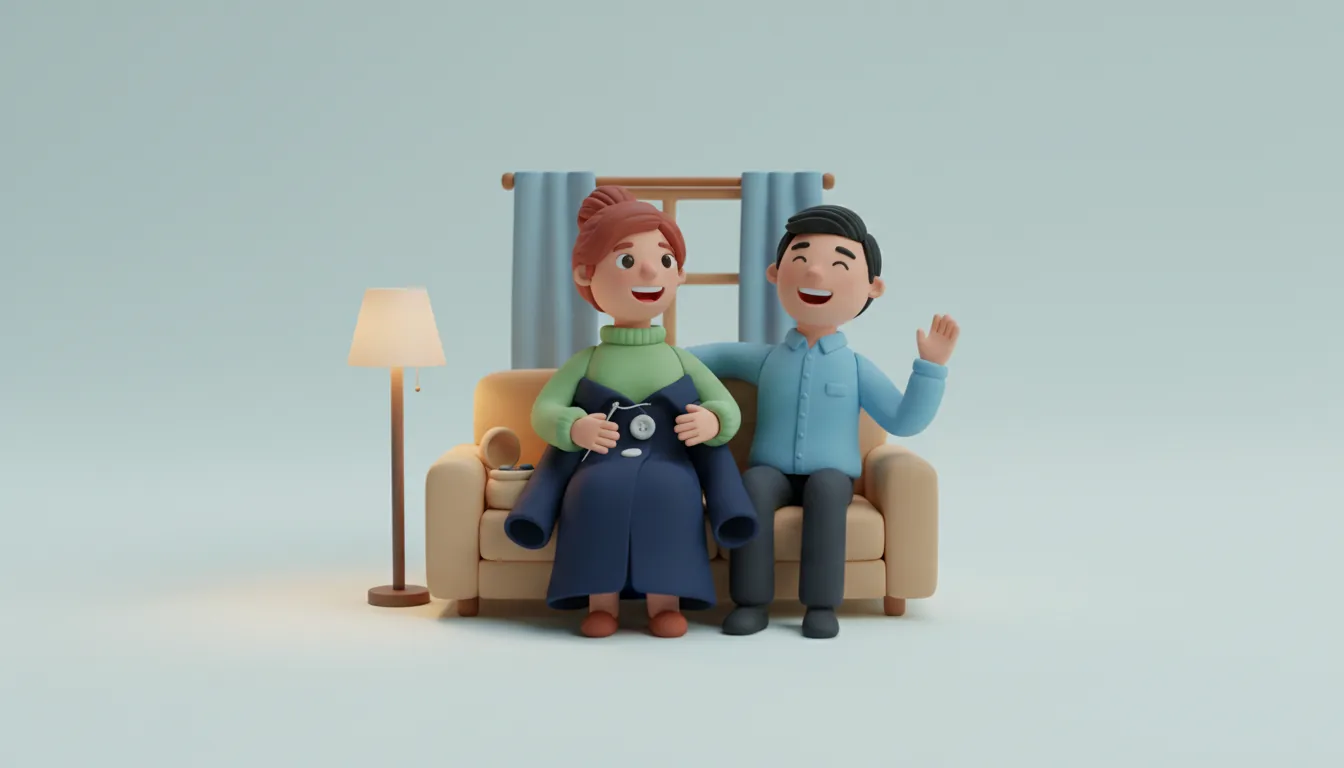
"A stitch in time saves nine" means that a small problem fixed early saves you a lot of work later. People use it about a dripping tap, a squeaky brake and a pile of paperwork. It fits relationships just as well. The small annoyance you mention this week costs one easy sentence. The same annoyance kept quiet for a year can turn into a fight about everything.
A small tear in a coat seam takes one stitch to close today. Wear the coat for another month and the tear runs along the seam, and now it takes nine stitches and a long evening with a needle. That's the picture behind the saying.
Small things worth saying this week
Plenty of couples fall out over small things that went unsaid until there were twenty of them. Here are a few that are much easier to mention early, each with a way to say it in one breath.
- Phones at the dinner table. "Could we leave them in the hall on weeknights? I miss talking to you while we eat."
- A joke about you that stung. "The story about my driving at Ana's on Friday went a bit far for me. Can we retire that one?"
- The chore you've quietly taken over. "I've done the dishes most nights this month. Can we take turns again?"
- Money for a shared trip. "The hotel you found is lovely, and it's more than I planned to spend. Can we look at one more?"
- How often you see each other's families. "Two Sundays a month at your parents' feels like a lot to me. Could we try one?"
- The snooze button. "Could you set one alarm and get up on it? I'm awake from the first ring."
Each of these takes a minute to say now. Saved up, they tend to come out all at once on a bad night, in a tone that makes the other person defend all six.
Ten minutes on the sofa
An example: Freya and Matteo have lived together for three years. For two weeks the top button of his navy winter coat hung by one thread, and every morning he said he'd fix it. Freya had her own small thing hanging by a thread. Twice that month Matteo had told friends "we'd love to" before he asked her.
One Sunday evening she took the coat and the sewing tin to the sofa. While she threaded the needle, she said it. "Can I tell you something small, before it gets big? When you say yes for both of us, I feel like a guest in my own weekend." Matteo said he'd thought she liked it when he handled the plans, because she always said she hated organizing. They agreed he would text her before saying yes for two. By the time she tied off the thread, both things were fixed.
Now Matteo sends "Free Saturday?" before he answers anyone. Small repairs like this one are a big part of how couples keep a relationship strong, and they rarely take longer than a button.
Why nine?
Nobody knows for certain. One likely reason is sound: "time" and "nine" almost rhyme, and that makes the line easy to remember. The first man to print the saying said as much, writing that many proverbs are put into "false rhymes" so they stick in the memory. Nine is also simply many more than one, which is the whole lesson.
From "may save" to "saves"
The oldest printed version found so far is in Gnomologia, a collection of proverbs printed in England in 1732. Its wording is a little more careful than ours:
> "A Stitch in Time May save nine."
The shorter "saves nine" shows up in a journal an English astronomer wrote in 1797, where he calls it a "vulgar proverb," meaning a common one. The journal wasn't printed until 1856. So people were already saying "saves" by the end of the 1700s, even if it took longer to reach print.
Friends and family need stitches too
Friendships have their own loose buttons. A friend who's twenty minutes late to every lunch probably doesn't know you've started bringing a book. "I love our lunches. Could we say 12:30 and mean it?" is easier to say after the third time than after the thirtieth.
Families are trickier, because the habits are older. If your dad comments on your cooking at every visit, the first time you mention it can feel huge. Keep it light and say it early in the evening. "Dad, I'd rather just enjoy dinner with you. Can we skip the review?" lands far better than a sharp answer after an hour of holding it in.
Stitch or mountain?
The opposite mistake has its own saying. Making a mountain out of a molehill means treating a small thing as a disaster. A stitch keeps a small thing small. The two can feel alike when you're the one listening, so it helps to check the size of your answer. One calm sentence, said once, is a stitch. The same small thing brought up with three old complaints attached is the mountain.
To tell them apart, ask two things. Has it happened more than twice? Do you still think about it the next day? If yes, it's worth one sentence. If it was a one-off and it's already fading, let it go.
When waiting is the better stitch
Some small things need no word right away. A partner who's short with you during one hard week at work is having a hard week, and that kind of tear usually closes by itself. A stitch sewn in anger also goes in crooked. If you're furious, wait until morning and say it then.
Patience still has a place here. Good waiting has an end: you pick a calmer moment, a day or two away, and then you say it. Waiting for months with no plan is another habit, and the piece on why people put things off covers it.
Fix-it-now people and wait-and-see people, by type
Some people sew the button the morning it comes loose. Others wait to see if it holds. The same split shows up when something small bothers them, and personality type is part of it. Eight of the 16 types are below, in types page order:
- Ideator notices the small problem early, then gets pulled toward a new idea, so the fix waits until it turns interesting or urgent.
- Vitalizer says how they feel the moment they feel it, warmly, and likes it settled before bedtime.
- Analyst spots the issue early and wants the exact words first, which can take longer than the issue deserves.
- Commander deals with it on the spot and sees waiting as wasted time.
- Strategist sees where a small thing is heading long before anyone else, and may still wait for the right moment to bring it up.
- Entrepreneur fixes practical things right away, like the leaking tap or the bill, and can leave a feeling for later because it doesn't seem urgent.
- Organizer keeps everything maintained on a schedule, from the car to the shared calendar, so little gets the chance to pile up.
- Craftsman reaches for the needle or the screwdriver at once and says less, so small worries can stay unspoken.
Freya waited two weeks, which is long for her. Matteo would have waited all winter. A couple with one of each does fine, as long as the early one doesn't nag and the waiting one doesn't wait forever.
See which of you fixes things early
Whether you mention small things right away or wait to see if they pass can come from your type, and so does the way your partner hears them. Typeza shows a couple the relationship type they make, where small things are easy to say and where they tend to pile up. Begin with the free couples compatibility test.
Questions people ask
What does "a stitch in time saves nine" mean?
Fixing a small problem early saves you from a bigger one later. One stitch now does the work of nine stitches next month.
Where does "a stitch in time saves nine" come from?
The oldest known print is Gnomologia, a book of proverbs from 1732, with "may save nine." The shorter "saves nine" appears in a journal written in 1797.
Why is it nine and not another number?
No one is sure. "Nine" almost rhymes with "time," and it stands for many more than one.
How do you use the saying?
"I took the car in as soon as the brakes squeaked. A stitch in time saves nine." It works for chores, paperwork and short talks with a partner.
What sayings are similar?
"An ounce of prevention is worth a pound of cure" means almost the same. "Nip it in the bud" is close too, and so is "don't put off until tomorrow what you can do today."
Sources
- The Phrase Finder, "A stitch in time saves nine": Thomas Fuller's Gnomologia of 1732 and his note on "false rhymes," and Francis Baily's journal, written in 1797 and published in 1856 by Augustus De Morgan.
Written by Virko Kask, founder of Typeza
Written with the help of AI tools.
One question for two, every week
A question to ask your partner, friend or family, and how different types tend to answer it.
Free. Unsubscribe any time.