
How to strengthen your relationships with a partner, friends and family
Relationships get stronger through small things done again and again: time that keeps coming back, attention the other person can feel, promises you keep, and a real repair after a fight. Big gestures are nice, but the everyday habits carry most of the weight, with a partner, with friends and with family.
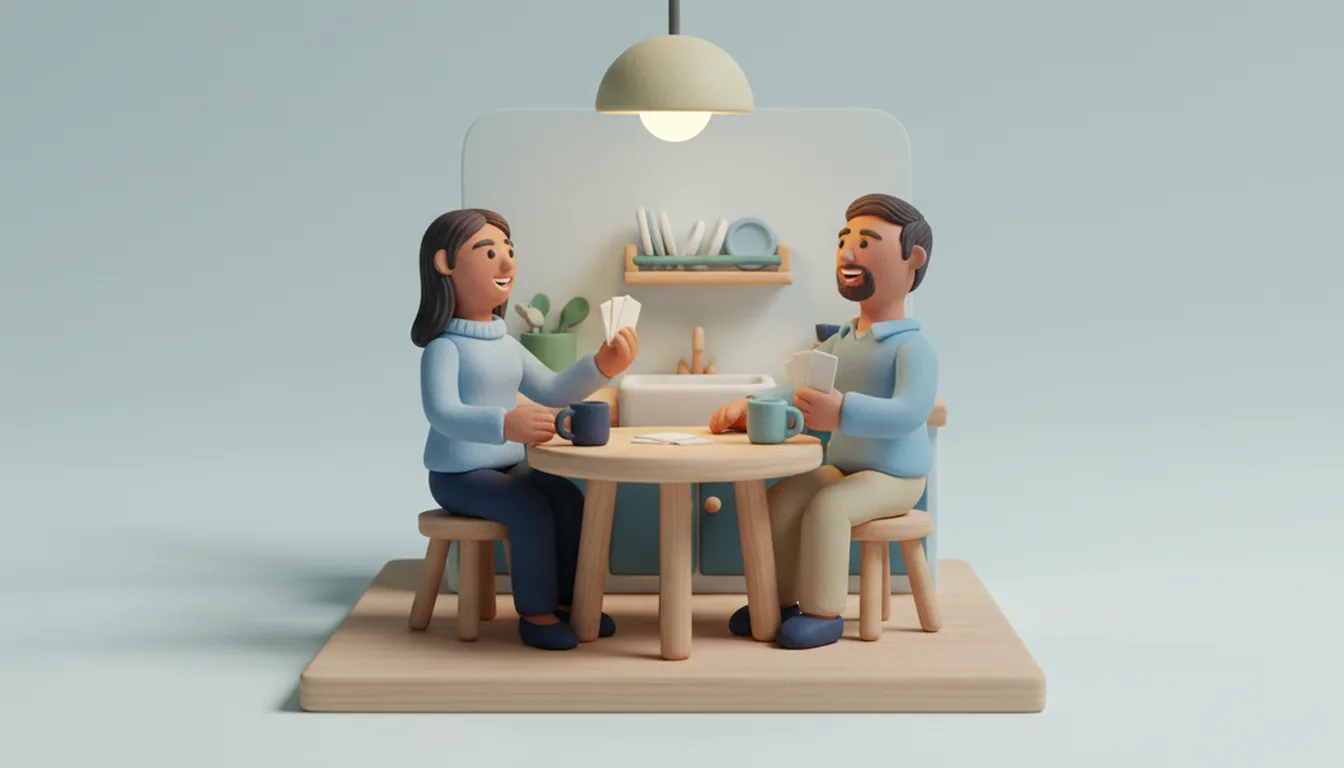
An example: every night after the dishes, Mei and Daniel play a game of crazy eights at the kitchen table. It takes about ten minutes, and the phones stay charging in the hallway. They started the habit during a hard year, when Daniel's father was ill and the two of them mostly passed each other in the hallway with a quick "how was it?" Some nights they talk about his dad, some nights about a strange neighbor, some nights they just play. Mei says the ten minutes are the reason they made it through that year still liking each other.
Nothing about it is special, and that is the point. Many strong relationships, romantic or not, rest on a few habits small enough to keep doing on a bad week.
What a strong relationship is built on
People often ask how to build a strong relationship foundation, as if it gets poured once at the start. In practice it gets laid down in small layers. Each time you turn up at the hour you promised, notice something the other person cares about or come back after an argument, you add a layer. Each time you cancel, half-listen or let a fight go cold, you take one away.
That's why two couples who love each other equally can feel so different after ten years. One kept adding small layers, the other got busy and stopped. You can start adding again at any point.
Four small habits that do most of the work
Time that comes back on its own
A habit that repeats without anyone planning it is worth more than a big night out once a year. A Sunday phone call, a Thursday walk, a running joke in the group chat. When the time is already there, nobody has to ask for it, and asking is often the hard part.
Attention they can feel
Being in the same room isn't the same as paying attention. Looking up from the phone, asking a follow-up question, remembering the name of a friend's difficult coworker or a dad's doctor. People feel noticed through details, and details only come from listening. The piece on being a better listener has more on that.
Doing what you said you'd do
Trust grows from small promises kept: calling back, picking up the bread, being there at seven. One broken promise rarely matters. A pattern of them teaches the other person not to count on you, and they stop asking. Promise less, and do all of it.
Making up after a fight
Every close relationship has fights. What matters is what happens after. A short "I was sharp with you earlier, sorry" the same evening can keep a small fight from turning into a cold week. Repair doesn't need a long speech. It needs someone to go first, and it helps when both people take turns being that someone.
How to strengthen your relationship with your partner
With a partner, the four habits show up in very ordinary places:
- Keep a small daily ritual. Coffee before work, a walk after dinner, one card game at the kitchen table. Protect it from phones.
- Say thank you for normal things. Taking out the trash and paying the bills count. Thanks for the ordinary keeps it from becoming invisible.
- Ask about their day with a real question. "How did the talk with your sister go?" works better than "how was your day?"
- Talk about the bigger things every month or so. A few calm questions catch problems early, and relationship check-in questions gives you a ready list.
- Keep learning what makes them feel cared for. It may be different from what makes you feel cared for, and it can change over the years.
For the bigger picture, the article on being a good partner covers what that looks like day to day.
With friends: showing up without a reason
Adult friendships often fade for one reason: nobody reaches out unless there's an occasion. The friends who stay close often have a low bar for contact. A photo of something that made you think of them. A "saw this and laughed" text. An invite to something boring, like a trip to the hardware store.
It also helps to be the one who remembers. Write down a friend's big dates, a job interview or a hard anniversary, and send a message on the day. Showing up for the hard parts, like a move, an illness or a breakup, matters more than any birthday party.
Keeping family close once everyone is grown
Family relationships come with old roles. You may still be the youngest at fifty. Strengthening them as an adult often means stepping a little out of that role: asking your mother about her own life as well as reporting on yours, or calling your brother for advice instead of waiting for the holidays to see him.
Short and regular beats long and rare here too. A ten-minute call every week can do more than a tense four-day visit once a year. And when an old family argument comes up, you don't have to win it. You can say, "Let's not do this one today," and change the subject kindly.
What makes each type feel close
The same habit can feel huge to one person and barely register with another. Typeza sees personality type as part of what makes someone feel the bond is strong. Six of the 16 types:
- Harmonizer: feels close through comfort and shared enjoyment, like a good meal together or a cozy evening with no rush. A tense home wears them down fast.
- Mentor: feels close through deep, honest talks and being truly seen. Small talk alone leaves them feeling far away.
- Dreamer: feels close when someone stays calm and present with them, even in silence. Being rushed or pushed to decide pulls them away.
- Organizer: shows care through practical help and feels close when it is noticed and thanked. A fresh idea, like a dish they've never cooked, cheers them up.
- Encourager: feels close when someone is curious about their ideas and believes in their plans. Being boxed in by routine makes them restless.
- Craftsman: feels close doing things side by side, like fixing a bike or cooking, without needing a long talk about feelings.
A Mentor married to a Craftsman may give and want very different things, and both can be loving. Knowing which habits land with the other person saves a lot of effort. A compatibility test with a partner, a friend or a grown relative can help show which habits those are.
How to improve a relationship that has gone quiet
Sometimes a relationship has simply gone flat, with no real trouble in it. You talk about logistics, see each other at the same places and feel a bit far apart. A few ways back:
- Bring back one old habit you used to share, even a small one.
- Ask a question you don't know the answer to.
- Do something new together, even if it's just a different walk.
- Say one specific thing you appreciate about them this week.
If you are the only one making an effort for months, say so calmly. A relationship needs both people adding layers.
Crazy eights after the dishes
Daniel's father got better, but the card game stayed. One evening Mei asked why Daniel always tried to fix things when she just wanted to talk. He asked why she wanted to talk about things that couldn't be fixed. They both laughed, because it had happened that very morning.
Learn why one of you fixes and the other talks
Whether you reach for a solution or a conversation when someone you love is struggling often has to do with type. The free compatibility test tells you yours, and the same test works for a partner, a friend, a parent or a grown sibling. Your result has a link you can send to your partner. After they finish, you both learn the name of your relationship type, plus a short note on how each of you tends to experience it.
Questions people ask
How do you build a strong relationship foundation?
Through many small moments of showing up, keeping your word and coming back after arguments. A foundation is built over years.
How do you strengthen friendships as an adult?
Reach out without needing a reason, remember the big dates in your friends' lives and show up for the hard parts.
Written by Virko Kask, founder of Typeza
Written with the help of AI tools.
One question for two, every week
A question to ask your partner, friend or family, and how different types tend to answer it.
Free. Unsubscribe any time.