
All is fair in love and war: what it means, and where to draw the line
"All is fair in love and war" means that in love and in conflict people stop following the usual rules, so tricks that would be wrong anywhere else get excused. The idea is often traced to Euphues, an English novel from 1578, which says that love knows no laws. The short wording we use today came later. Many people now say it as a joke, about a sneaky move in a game or a friendly rivalry, and only rarely as a real excuse.
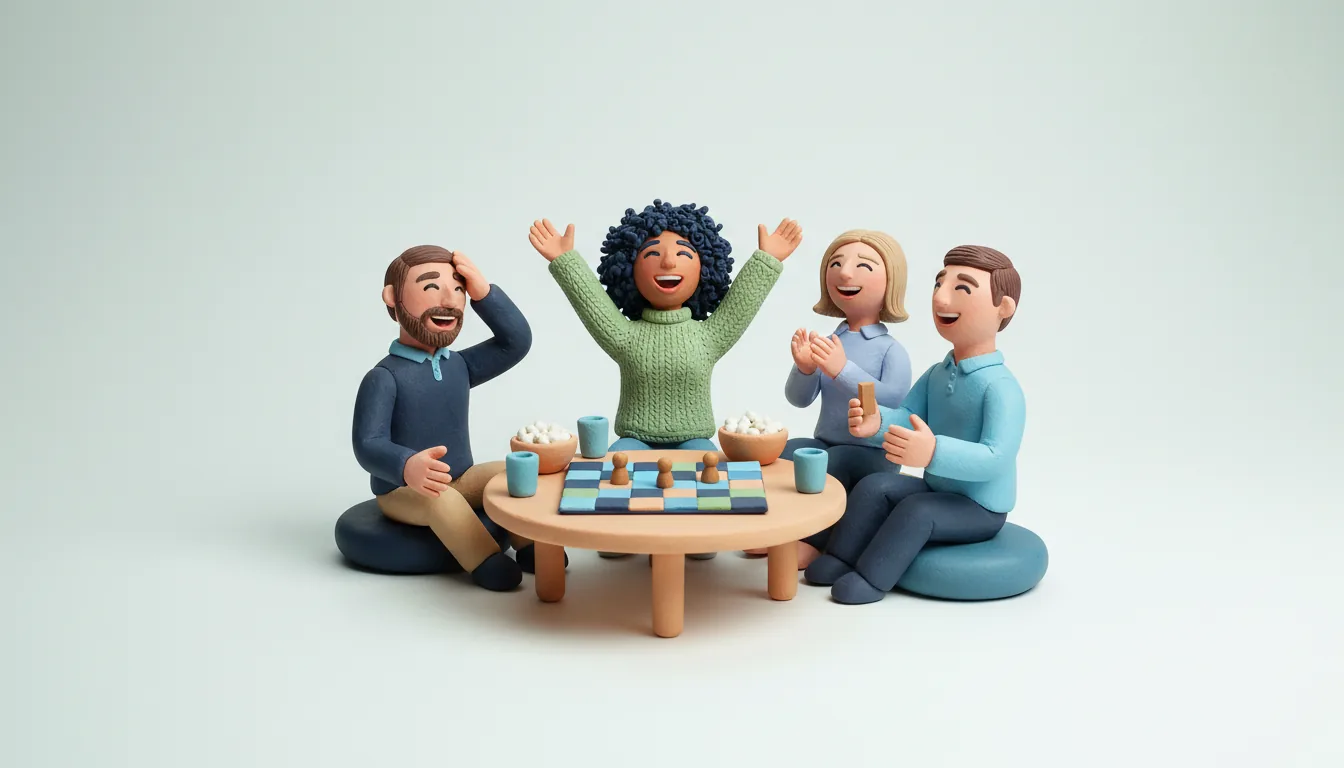
An example: every other Friday, four friends play board games at Ana and Jake's apartment. Last week Marisol spent six turns quietly working toward one square on the board, the exact square her husband Ben needed to win. When she finally took it, Ben put a hand on his forehead and laughed. "Your own husband!" Marisol threw both arms in the air. "All is fair in love and war." Ben swore revenge for the following Friday, and he meant it.
How people use the saying today
You'll hear it in three main ways.
- As a tease. Marisol at game night, or a friend who hid the last slice of pizza and grins about it.
- As a shrug about rivals. Two friends who both want the window seat, the last concert ticket or the top score.
- As an excuse. Someone did something unkind and wants it to count as fair because feelings were involved.
The first two are harmless fun. The third is where the saying stops working. Even in love, many of us still expect honesty, and in an argument with someone we love, we still want to be treated decently.
Game night, the court and the friendly rival
Board games, card nights, a pickup game of basketball, a tennis match between old friends: competing is one of the best things friends do together. It gives you a reason to meet every week, and it hands you stories you'll tell for years.
It also shows a side of people you don't see over coffee. The friend who never raises their voice can turn into a schemer who remembers every card. The one who seems calm can sulk for an hour after losing a set. A few habits keep it fun:
- Agree on the house rules before you start, including what counts as a take-back.
- Tease the move, never the person. "That was ruthless" is fine. Jokes about someone's weight or family cross the line.
- Let the winner enjoy it, then move on. Nobody likes a ten-minute victory speech.
- Mix in games where you play as one team, so the people who hate losing get to win together now and then.
If one friend always ends the night in a bad mood, ask them privately whether a different game would suit the group better. Often the game is the problem, and the friendship is fine.
The couple who turns everything into a contest
Some couples compete at everything: who finishes the crossword, who wins at cards, who runs faster, who parks better. For many of them it's a big part of the fun. The teasing keeps things playful, and a rematch is a reason to spend another evening together.
It stops being fun when one person always has to win and the other starts to dread it. Watch for these signs:
- One of you avoids playing with the other because losing gets ugly.
- The score is still coming up days later.
- A loss at cards turns into a comment about something else entirely.
- You keep score of chores, favors or apologies the way you keep score at darts.
If that sounds familiar, play on the same team for a while, or pick things neither of you is good at. A game you're both learning from scratch is hard to turn into a contest.
When an argument turns into a fight to win
The saying sneaks into arguments too. When people feel hurt, some reach for whatever works: dragging up an old mistake, mocking the way the other person talks, going silent for two days, or pulling friends and family into it. In the moment it feels like defense. Afterward it usually costs far more than the original disagreement.
Many couples fight about the same handful of topics, and what couples argue about shows why the same fight keeps coming back. Once you know the pattern, it's easier to keep the fight fair, because you can see it coming.
Where couples and friends draw the line
Every couple and every friend group draws its own line, but many land in similar places. In games and sport, nearly anything within the rules is fair: bluffing, blocking, a six-turn plan to grab the one square your husband needs. In love and in arguments, the line sits much closer.
Many people would call these out of bounds:
- lying to each other about things that matter;
- using a secret someone told you in trust;
- jokes aimed at the spot you know is sore;
- bringing up something that was forgiven years ago;
- making the other person look small in front of others.
Here's a handy test. Would you be happy for the other person to see exactly what you did and why? If yes, it was probably fair play. If you'd rather they never found out, it probably wasn't. Some disagreements aren't worth having at all, and pick your battles helps sort out which ones to let go.
Who plays to win and who plays for fun
Everyone knows someone who flips the board and someone who forgets the score halfway through. Personality type is part of the reason for the gap at the game table. Below are eight of the sixteen, kept in the order the types page uses:
- Ideator: plays for the clever idea. They'll try a strange strategy just to see if it works, and lose interest once a game feels solved.
- Vitalizer: plays for the noise and the laughter. A loud, happy table matters more to them than the final score.
- Commander: plays to win and says so. Losing stings, and a rematch is always on the table.
- Diplomat: loves bluffing, table talk and reading everyone's face, which makes them dangerous at any game with secrets.
- Entrepreneur: plays to win in the most efficient way and usually knows who is ahead without writing anything down.
- Guardian: cares most that everyone plays fair. A dirty trick bothers them even when it helps their own team.
- Counselor: watches the mood at the table and may quietly let someone else win if that person is having a hard week.
- Craftsman: calm and skilled, especially in sport. Says little, practices a lot and wins more often than anyone expects.
Two players who both want to win can have a great time as a couple. So can one who plays to win and one who plays to laugh, once they know that about each other.
Find out what kind of rivals you two are
How hard you play a board game, and how well you take a loss, can come down to personality type. The free couples compatibility test shows yours. Text your partner the link from the result page. As soon as they have answered, a page on your relationship type opens for both players, with the parts where you slot together and the parts where you rub against each other.
Questions people ask
What does all is fair in love and war mean?
It means that when people are in love or in a conflict, they stop following the usual rules, and tricks that would normally be wrong get excused. Today it's mostly said as a joke.
Who said all is fair in love and war?
The idea is usually traced to Euphues, an English novel from 1578. The short, modern wording came later.
Is all fair in love and war true?
In games and friendly rivalry, almost anything within the rules is fair. In love and in arguments, many couples and friends still expect honesty and kindness, so the saying works better as a joke than as advice.
What is another way to say all is fair in love and war?
People sometimes say "anything goes," "no holds barred" or "the gloves are off." Each one means the usual rules have been put aside for now.
Sources
- Wikipedia, "Euphues: The Anatomy of Wit": John Lyly's novel, entered for printing in December 1578.
- Luminarium, "Quotes from the Works of John Lyly": "Love knoweth no laws," from Euphues.
Written by Virko Kask, founder of Typeza
Written with the help of AI tools.
One question for two, every week
A question to ask your partner, friend or family, and how different types tend to answer it.
Free. Unsubscribe any time.