
Pick your battles: what it means for couples and families
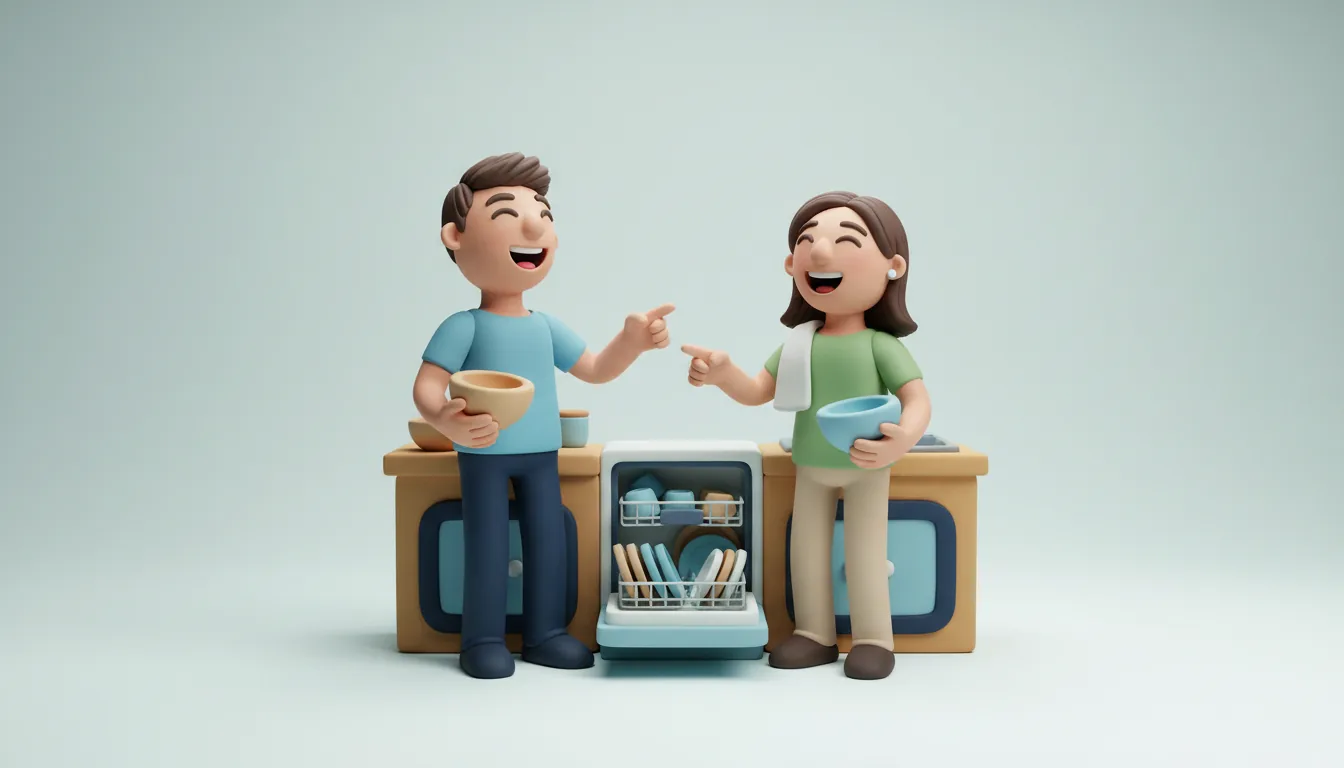
To pick your battles means to choose which disagreements are worth fighting about and to let the rest go. Plenty of differences never need a discussion. Some do, because they touch your values, your sense of fairness or something that will keep coming back. When couples and families pick their battles well, the arguments they do have are about something that matters.
An example: Freya and Matteo once argued for forty minutes about how to load a dishwasher. Bowls on the top rack or the bottom one. Knives pointing up or down. About thirty minutes in, Freya noticed that she did not care about bowls at all. What bothered her was that Matteo had not asked how her mother's hospital appointment went that afternoon. The dishwasher was the battle she picked, and it was the wrong one.
What does pick your battles mean?
The phrase is a piece of advice: save your energy for the disagreements that count. It borrows its picture from war. A general who fights on every hill wears out the army, so a wise one chooses where to fight. At home the hills are smaller. A wet towel on the floor, a visit to the in-laws, how much to spend on a sofa.
People who tell you to pick your battles usually have one of two worries. Maybe you are fighting too many small fights. Or a bigger fight is on its way, and you should save some energy for that one.
Choose your battles, or pick and choose them?
The saying comes in a few versions, and they all mean the same thing.
- Pick your battles. The usual form.
- Choose your battles. Slightly more formal, and often said as choose your battles wisely.
- Pick and choose your battles. A longer form that stresses being selective.
- Picking your battles. The same idea used about a habit, as in "I've learned to pick my battles with my dad."
How to tell if a fight is worth it
Before you start, run through five quick questions.
- Will this matter in a year? If it won't, it probably does not need a fight today.
- Is it about a value or a habit? Honesty and respect are values. Where the bowls go is a habit.
- Is it once, or a pattern? One late arrival is a bad day. Turning up late to every family dinner for a year is worth a talk.
- Is it really about this? Freya's dishwasher fight was about feeling unseen. Find the real topic first.
- Can I say it calmly right now? If not, the battle may be right and the timing wrong. Give it an hour.
If the answer to the first two is yes, the battle is probably worth having. If most of the answers are no, let it go, and really let it go. And when a fight is worth having, keep it about the one thing that's wrong, so you keep the good part and only pour out the bathwater.
What couples can let go, and what to talk about
Many couples fight about the same handful of things: money, chores, family, time and phones. Why the same fight keeps returning is explained in what couples argue about. Inside each topic, some parts are worth a battle and some are not.
Usually fine to let go:
- The way your partner folds towels.
- Which route to drive, when both get you there.
- A film choice you can live with.
- A small habit you already knew about before you moved in.
- One forgotten errand in a busy week.
Usually worth a talk:
- A share of the housework that feels unfair week after week.
- Money decisions that affect you both.
- How you are spoken to, especially in front of other people.
- A promise that keeps getting broken.
- Anything that leaves you feeling unseen or alone.
The small irritations have a name of their own, and pet peeves in relationships looks at them more closely. Many of them belong on the first list.
Picking your battles with family
Family adds history. A comment from your mother can weigh more than the same words from a stranger, because it lands on top of thirty years. If you still carry a chip on your shoulder from childhood, even a small remark can feel like a battle. Adult children and their parents often clash over the same few things: holidays, how the grandchildren are raised, life choices and old family roles.
A few things help.
- Remember who owns the decision. In your parents' kitchen, their rules apply. In your home, yours do.
- Let opinions stay opinions. A parent can dislike your haircut without anyone having to change anything.
- Choose one topic per visit. Bringing up three old grudges at one dinner rarely goes well.
- Pick the setting. A walk works better than the holiday table for a hard talk.
- Leave your siblings their own battles. You do not have to fight every family fight yourself.
When picking your battles goes too far
Picking your battles is good advice until only one person is doing the picking. If you always let things go and your partner or parent never does, the advice has quietly turned into giving in. Watch for these signs:
- You avoid topics you care about because fighting is tiring.
- You feel resentful about things you never said out loud.
- The same person always wins, or always backs down.
- Small things suddenly blow up, because the big things were never discussed.
In a fair relationship, both people let small things go and both people raise big things. If you are the one who always bends, how to compromise in a relationship can help you find a fairer middle.
Why one person's small thing is the other's big thing
What feels worth a fight depends partly on personality type. Here is how six of the 16 types tend to sort their battles:
- Harmonizer: avoids conflict and often lets too much go. Their risk is the battle that never gets fought until it is too late.
- Inspector: order and agreed rules matter to them. A broken routine or a missed promise is a real battle, even when others see a small thing.
- Commander: ready to fight and hates to lose. They may treat a small thing as a battle simply because someone pushed back.
- Guardian: values come first. They will let practical things go but will not bend on fairness or loyalty.
- Organizer: cares about how things get done. The dishwasher may truly matter to them, because doing a job properly is how they show care.
- Counselor: feels tension strongly and finds confrontation hard. They pick very few battles, and those few matter a great deal.
So when your partner calls your battle small, they may be judging it by what matters to their own type. Knowing each other's types makes it easier to agree on which battles you share.
See which battles you two are likely to pick
Freya and Matteo now joke about the dishwasher, because they know the fights were about different things for each of them. You and your partner each take the free couples compatibility test separately. Each step is a choice between two statements. You see your type straight away, along with four base traits, logic versus feelings being one of them, and your type's profile is free to read. There is nothing to sign up for until you want to invite someone. After a free sign-up, send the invite from your result. Once your partner has answered, the result shows you both your relationship type, the ground where you meet easily and the places where clashes are likely. A parent or a sibling can take the same test too.
Questions people ask
Is it good to pick your battles?
Yes, as long as both people do it. It saves your energy for what matters and keeps small differences from turning into fights. It goes wrong when one person always lets go and the other never does.
What does pick your battles mean in a relationship?
It means deciding together which disagreements are worth talking through and which differences you can both live with. Values, fairness and patterns that repeat are usually worth it. Small habits usually are not.
What is another way to say pick your battles?
Choose your battles, pick and choose your battles, or let the small stuff go. All of them mean saving your energy for the disagreements that matter.
How do you know which battles to pick?
Start with two questions: will it matter in a year, and does it touch something you value? Two yeses make it worth raising, calmly.
What does choose your battles wisely mean?
It means the same as pick your battles, with extra stress on thinking before you fight. A wise choice weighs how much the issue matters against what the fight will cost you both.
Written by Virko Kask, founder of Typeza
Written with the help of AI tools.
One question for two, every week
A question to ask your partner, friend or family, and how different types tend to answer it.
Free. Unsubscribe any time.