
How to compromise in a relationship without losing yourself
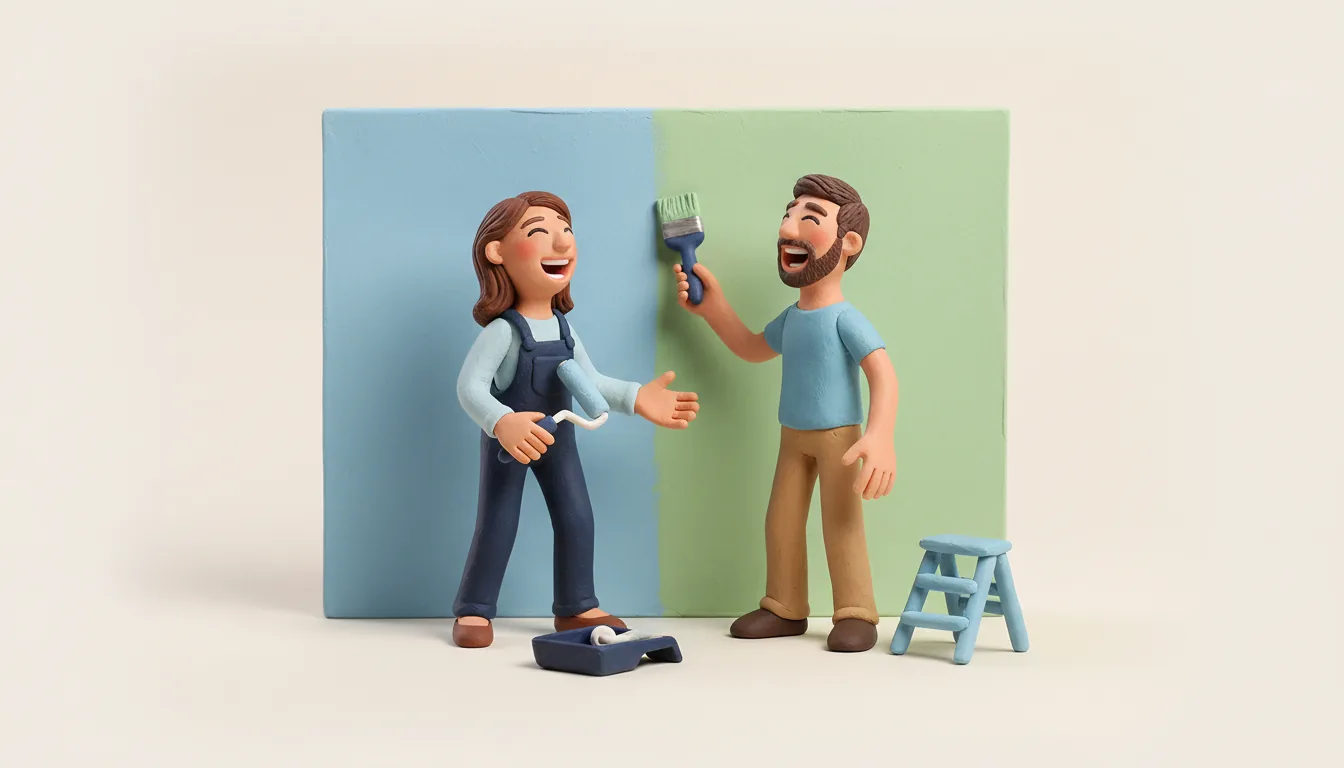
To compromise in a relationship, each of you says what you want and why, you look for an option that meets both needs, and you keep the give and take fair over time.
An example: she wants a dog. He wants a quiet flat with nothing that sheds. They have had the same talk four times, and each time one of them ends up sulking. Then a friend asks a simple question: "What is it you each want?" She wants something to care for. He wants calm evenings. They end up with an old, lazy cat, and both are happy.
What does compromise mean in a relationship?
Compromise in a relationship means both partners give a little so that both can live with the result. Nobody gets everything, and nobody walks away with nothing.
A good compromise can look different each time. Sometimes you meet halfway. Sometimes one person gets their way this time and the other gets theirs next time. Sometimes you find a new option neither of you had thought of. What makes it a compromise is that both people feel heard and neither feels used.
What is the role of compromise in a relationship?
Two people never want exactly the same things. Compromise is how a couple turns two sets of wishes into one shared life. It keeps small differences from piling up into resentment, and it shows each partner that their needs count.
People often say a relationship is about compromise. That is half true. A relationship is also about knowing what you will not trade. Some choices have no middle at all, and then the old saying about having your cake and eating it is the one that fits.
Examples of compromise in a relationship
Many compromises are about ordinary things.
- Holidays. Christmas with her family this year and with his family next year.
- Money. A shared budget for the bills, plus a small sum each person spends without asking.
- Weekends. One night out with friends and one night in together.
- Chores. Each takes the jobs they mind least, and the worst job rotates.
- Where to live. A shorter drive to her work and a bigger garden for him.
- Time alone. An hour after work with no questions, then dinner together.
- Social life. He goes to her work party, and she skips his game night.
What to compromise on, and what not to
The things you can compromise on in a relationship are mostly about how you live: plans, money, chores, holidays and how tidy the kitchen should be.
Some things should not be up for trade. Your safety and health belong here, and so do your core values, your close friends and family and your sense of who you are. If keeping the relationship means giving up one of these, it is no longer a compromise.
How to compromise in a relationship
These steps work for small questions and big ones.
- Pick a calm time. Nobody compromises well when they are angry, tired or hungry.
- Say what you want and why. "I want a dog" is a wish. "I want something to look after" is the need behind it.
- Listen for the need behind their wish. Say it back to them until they say "yes, that's it".
- Look for options that meet both needs. Write down three before you choose one.
- Try it for a set time. Agree to check in after a month and change what does not work.
- Keep it fair over time. If one of you has given way on the last five decisions, the next one goes the other way.
When compromise turns into sacrifice
Compromise vs sacrifice is a question many couples meet sooner or later. In a compromise, both people give a little. In a sacrifice, one person gives up something that matters a lot to them, and often keeps doing it.
Some sacrifice is part of love. People move for a partner's job or care for them through an illness. It turns unhealthy when the same person always gives, when they give up their friends or plans for good, or when they start to feel bitter and stop saying what they want.
Signs you are sacrificing more than you compromise:
- You can't remember the last time you got your way.
- You agree to avoid a fight and feel bitter later.
- Your friends say you have changed, and they don't mean it kindly.
- You no longer know what you want, only what keeps the peace.
Why compromise is easy with one partner and hard with another
Some couples meet in the middle without thinking about it, and for others every deal takes work. Typeza traces part of that to the relationship type between two partners, one of 16 described in socionics. These four couples show the range.
The couple who want the same weekend in different ways
A Harmonizer and a Diplomat love the same things: good food, a nice home and fun with friends. They talk about plans with ease. Then Friday comes. The Diplomat wants to go out, see people and say yes to whatever turns up. The Harmonizer wants a cozy night in with a film and a slow dinner. Plans they make together often stall halfway. Typeza calls this Extinguishment. They share the same interests and keep drawing different conclusions from them. Long talks about every weekend wear them both out. They do better with a simple rule, like taking turns, and with some evenings apart.
The partner who always gives in
An Inspector likes a clear plan, and her partner, a Strategist, admires the way she keeps their life in order. He fits in with her schedule, her rules for the kitchen and her plans for the holidays, and he rarely argues. From the outside it looks like the easiest compromise in the world. In Typeza terms the Inspector is the Orderer, on the receiving end, and the Strategist is the Supplier, who gives. The giving runs one way, and over the years he can forget what he wants himself. It works best when she asks what he would choose, and when he answers honestly.
The couple where both want the final say
Two Commanders met at a climbing gym and moved in together within a year. Both decide fast, both like to lead and both hate being told what to do. Small choices, like which way to drive or which sofa to buy, turn into contests. This pairing is called Identity, and the weak spot they share is the long view. During an argument, neither stops to ask how the choice will look in a year. They compromise best by dividing the ground. One owns the holidays, the other owns the house, and each trusts the other's call in their own area.
The couple who think they agreed
A Dreamer and a Counselor are both gentle and quick to sense a mood. They agree to keep Sundays for family. She means lunch with her parents. He means a slow day for the two of them alone. A month later each one feels the other broke the deal. It is a typical Quasi-identity moment, with the same words meaning different things to each of them. Their compromises are easy to make and easy to misread. It helps to spell out every deal in plain terms: who, when and where.
Many compromises happen on their own in Duality. What drains one partner is easy for the other, so chores and choices often divide themselves without a meeting.
Any couple can meet in the middle. The pattern only shows where it comes easily and where a clear deal helps.
How to see where the two of you meet in the middle
Your relationship type is another way to find what each of you wants, and it shows once you have both taken the test. The first step is the free couples compatibility test. Your result has a link to invite your partner. Each of you answers alone. Once you have both answered, your relationship type appears, and with it the spots where you are likely to pull in two directions. For the fights that keep coming back, read what couples argue about.
Questions people ask
Is a relationship all about compromise?
Compromise is a big part of it. A relationship also needs things you never trade, like trust and respect, and plenty of wishes you share without any deal at all.
How do you compromise in a marriage?
The same way as in any relationship, with more practice. Marriage brings bigger shared decisions, like money, children and where to live, so it helps to agree on how you decide as well as what you decide.
What if my partner never compromises?
Name one concrete pattern and ask for one change. If your partner still treats every question as theirs to decide, that is a problem of respect more than of compromise, and it is worth taking seriously.
What is the difference between compromise and settling?
In a compromise, both of you give a little and each keeps what matters most. Settling means accepting much less than you want, in one choice or in the whole relationship, because asking for more feels too hard.
What is a good quote about compromise?
The old proverb "Better to bend than to break" fits many couples. Many also have a line of their own, like "We both give a little, so we both win a little."
Written by Virko Kask, founder of Typeza
Written with the help of AI tools.
One question for two, every week
A question to ask your partner, friend or family, and how different types tend to answer it.
Free. Unsubscribe any time.