
Chip on your shoulder: what it means, and where the chip comes from
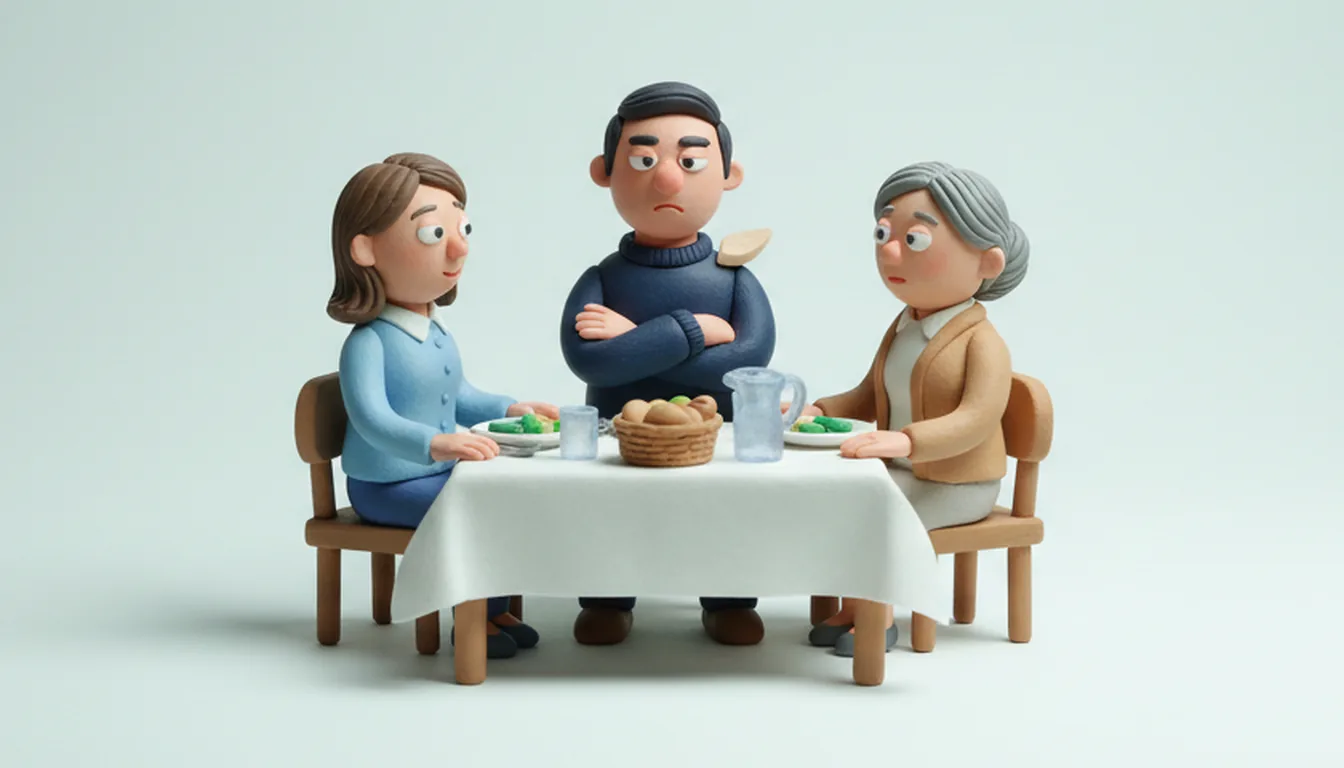
To have a chip on your shoulder is to carry an old grievance that makes you quick to take offense. A person with a chip believes they were treated unfairly or looked down on, expects it to happen again, and answers small remarks as if they were attacks. The phrase also has a second, warmer use. In sports and in stories about underdogs, a chip on your shoulder is the drive of someone set on proving the doubters wrong.
An example: at Sunday dinner, Callum's brother-in-law asked him a friendly question about a book everyone at the table seemed to have read. "Some of us didn't have time for books," Callum said, louder than he meant to. The table went quiet. Later, drying dishes, his mother said, "You've had a chip on your shoulder about your sister since you were twelve." Callum said he was only being honest. He could still remember the parent evening when a teacher told his mother, "Callum's a sweet boy, but he's no Claire."
A chip on your shoulder, defined
The chip is a resentment you carry around with you. It is usually about one subject, and the subject is usually you: your schooling, your height, your accent, your family's money, your place among your brothers and sisters.
Three things tend to come together:
- An old hurt. Something unfair happened, often long ago.
- A sense of being judged. The person feels others still look down on them for it.
- A readiness to push back. They answer before anyone has finished the sentence.
So when people say "he has a chip on his shoulder about not going to college," they mean the topic makes him touchy and defensive, even with people who meant nothing by it.
The schoolyard dare behind the phrase
The best-known story comes from the United States. A New York newspaper in 1830 described a custom among boys who wanted to fight. One boy put a chip of wood on his shoulder and dared the other to knock it off. Touching the chip meant the fight was on.
So the first chip was a dare, and a boy wearing one was looking for trouble. Over the years the phrase moved from the playground to adults, and its meaning slid from "ready to fight" to "carrying a grudge."
A second story, with less evidence behind it, points to the royal shipyards in Britain in the 1700s. Workers there could carry home leftover pieces of timber, called chips, on their shoulders, and they were angry when the navy cut back that perk. Either way, the chip is something you carry on your shoulder and are ready to defend.
Chip on my shoulder, chip on his shoulder: the phrase in use
You can put the chip on anyone's shoulder:
- "She has a chip on her shoulder about growing up with less money than her friends."
- "I had a chip on my shoulder for years after my parents paid for my brother's wedding and not mine."
- "The team played with a chip on its shoulder after every expert picked them to lose."
- "It's time you knocked that chip off your shoulder."
People often mix the phrase up with "a chip off the old block," which has nothing to do with grudges. That one describes a child who is very like a parent, close to the old saying about apples and trees. Searches for "chip off my shoulder meaning" usually come from this mix-up.
Can a chip on your shoulder be a good thing?
Coaches and fans use the phrase as praise. An athlete who was told she was too short or too old plays with a chip on her shoulder, and every win answers someone who doubted her.
The drive is real. It also has a price:
- It needs fuel. A chip keeps you going only while you stay angry, so the person keeps finding new doubters.
- Success never feels finished. The person who doubted you rarely shows up to watch you win.
- It spills onto the wrong people. Friends and family end up answering for things a teacher said decades ago.
A healthier version keeps the drive and loses the grudge. "I want to see what I can do" lasts longer than "I'll show them," and it's much easier to live with at dinner.
Where a chip comes from in everyday life
Most chips grow from something that happened. Common starting points:
- Being compared with a brother or sister, and coming second, like Callum.
- One remark that stuck, from a parent, a teacher or a coach, about what you would never be good at.
- Growing up with less than the people around you, and feeling it at every birthday party.
- Being the youngest or the newest in a group that never let you forget it.
- Being left out of a friend group at school, or of a family decision as an adult.
The unfairness was often real. A chip is what remains when that hurt never got a fair hearing, so it keeps looking for one in every new conversation.
Signs you may be carrying one
A chip is easier to see on others than on yourself. A few clues:
- You hear a dig where other people hear an ordinary question.
- One topic always makes your voice sharper.
- You remember, in detail, who doubted you and when.
- Praise on that subject makes you suspicious instead of pleased.
- Friends quietly steer the talk away from a certain subject when you are around.
Why the same remark sticks to one person and slides off another
A remark becomes a chip when it lands on something a person cares about deeply. Different personality types care about different things, so the remarks that stick differ too. Six of Typeza's 16 types, in the order of the types page:
- Analyst: reasons carefully and values being accurate. Being talked over by louder, less careful people can leave a grudge against anyone who sounds sure without having thought it through.
- Mentor: feels things intensely and puts those feelings into words. A family that called them dramatic can leave them guarding every feeling they share.
- Strategist: sees problems coming long before others do. When warnings were brushed aside and then came true, the chip sounds like "nobody listens until it's too late."
- Guardian: has a strong sense of right and wrong. They can carry a chip about an injustice for years, even one that was done to someone they love.
- Organizer: looks after people through practical work. Their chip often starts with "nobody notices everything I do."
- Craftsman: knows how to make and fix things properly. Being told how to do something they already do well can stay with them a long time.
The type doesn't cause the chip. It shows where a slight is most likely to stick, and seeing that is often the first step to setting the chip down.
Setting the chip down
Letting go of a chip means putting the old hurt back with the person and the year it came from.
- Say what the chip is about in one sentence. "I still feel like the less clever one" is easier to handle than a cloud of irritation.
- Ask who is in front of you. Is this the person who hurt you, or someone who asked a harmless question?
- Say the old thing once, to the right person. If they are still around, a calm "that comparison stayed with me" can do more than years of sharp answers.
- Keep the drive, retire the list of doubters. Aim at what you want to do, without picturing who will be sorry.
If someone you love carries a chip, don't tease them about it, and don't tiptoe around it forever either. Name it kindly, once, at a calm moment. When the chip has become the thing everyone at home steps around, address the elephant in the room can help you find the first sentence.
What your type shows about the remarks that stick
Callum's chip started with one sentence at a parent evening, and twenty years later it was still answering questions at the dinner table. Your personality type can show which kinds of remarks are most likely to stick to you. When you finish the free personality test, you see your type and where you stand on four base traits, with no account needed. The profile of your type is free too. It describes what your type does well, what it finds hard and what it needs from friends and family.
If the chip is about one person, such as a sister or a brother, you can ask them to take the test as well. Open a free account and pass the link on from your result. The test is meant for people aged 16 and up. After your sibling's answers are in, both of you can read your relationship type and what it is like from either side.
Questions people ask
Is it good to have a chip on your shoulder?
It can push you to prove people wrong, which is why coaches use the phrase as praise. The drive depends on staying angry, though, and the anger often lands on people who did nothing wrong.
What is another word for a chip on your shoulder?
A grudge, resentment or a sense of grievance. People also say someone is touchy, defensive or "has something to prove."
Is it "chip on your shoulder" or "chip in your shoulder"?
On. The phrase pictures a chip of wood resting on top of the shoulder, waiting for someone to knock it off. "Chip in your shoulder" is a common slip.
Sources
- Wikipedia, "Chip on shoulder". The Long Island Telegraph report of 20 May 1830 on boys daring each other to knock off a chip.
- The Phrase Finder, "A chip on your shoulder". The Royal Dockyards story of shipwrights carrying timber chips, 1739 to 1756, and why the American origin is more likely.
Written by Virko Kask, founder of Typeza
Written with the help of AI tools.
One question for two, every week
A question to ask your partner, friend or family, and how different types tend to answer it.
Free. Unsubscribe any time.