
Don't throw the baby out with the bathwater: what to keep
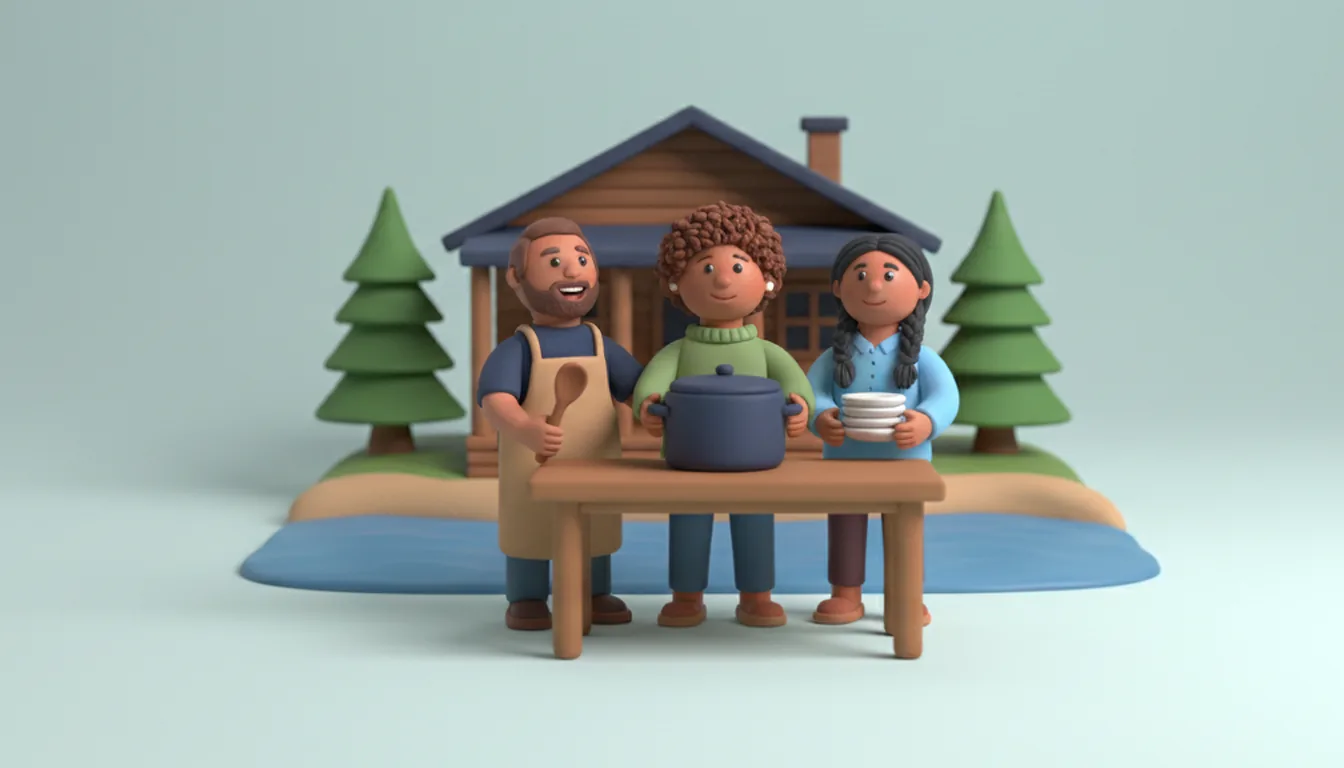
"Don't throw the baby out with the bathwater" means don't get rid of something good just because something about it is bad. You fix the part that's wrong and keep the rest. The picture is simple: when you empty the tub, you pour out the dirty water, and you're careful about what's still in it.
An example: the Okafor siblings went to the same lake every August for twelve years, and one summer they nearly stopped. The drive took six hours. The tents leaked. Theo did all the cooking for eleven people on one small stove, and by the third night he wasn't speaking to anyone. On the way home, Ada said maybe they'd outgrown it.
Kemi didn't argue about the drive or the tents. She asked what they'd miss. The swim at seven in the morning, said Theo. The long supper outside, said Ada. The lake itself. "So let's not throw the baby out with the bathwater," Kemi said.
The next August they rented a cabin, left a day earlier to break up the drive, and split the cooking so each of them took one night. On Kemi's night she carried a big pot of stew out to the table, and Theo, still in his apron, laughed that for once he got to sit down. Ada brought the plates.
What the saying means
People say it when someone is ready to drop a whole plan, a habit or even a relationship over one problem. It's a gentle warning against going too far the other way. Kemi's family had real trouble with their trip, but the trouble was the tents and the cooking, not the lake.
Sorting the water from what's in it
The hard part is that, in the moment, everything feels like dirty water. A bad week makes the whole thing seem bad. A few questions help you pull the two apart:
- What exactly went wrong? Name it as plainly as you can. "The trip was awful" can't be fixed. "One person did all the cooking" can.
- What would you miss if it ended? Say it out loud, the way the Okafors did. If the answer is "nothing," that tells you something too.
- Is the problem part of the thing, or next to it? The tents were next to the lake. You can change them and keep the lake.
- What's one change you could try? Try that one first, and see.
Often you'll find the bad part is smaller than it felt. Sometimes it isn't, and that's covered further down.
A friendship after one bad night
An example: Dev and Jonah have been friends for fifteen years. At a dinner with other friends, Jonah made a joke about Dev's job that wasn't funny, and kept going after Dev asked him to stop. Dev went home angry, and by morning he was asking himself whether the friendship was worth it.
One bad night is a real hurt. It's also one night out of fifteen years. Dev called Jonah and told him plainly what had stung. Jonah was quiet for a moment, then said he'd been showing off and he was sorry. They still bring it up sometimes, and Jonah hasn't done it again.
The answer changes if the bad night keeps coming back. A friend who puts you down every time there's an audience isn't having one bad night. Our list of friendship deal breakers is a good check on whether it's a rough patch or a pattern. If it really is over, see how to break up with a friend for ending it kindly.
The couple who nearly quit traveling together
Picture this: Mia and Tom love to travel, and three trips in a row ended in a fight. She wanted to see everything. He wanted long lunches and an afternoon with a book. By the third trip, Tom suggested they take holidays separately from now on.
They didn't, in the end. They kept the traveling and changed the shape of the day. Now they spend mornings together, split up after lunch, and meet again for dinner with stories to swap. Neither of them gave up what they liked, and the evenings stopped being tense.
Family traditions worth saving
This saying often comes up with family traditions. A tradition can stay the same for years while the family around it changes. People move away, new partners join, and the person who did all the work gets tired. At some point someone says, "Maybe we should just stop."
Before you stop, ask what the tradition is for. A summer reunion that one cousin has hosted for ten years might be worn out because of the hosting, not the reunion. Move it to a new house each year and have everyone bring one dish. The thing people loved, the whole family in one garden, is still there. The yearly family photo can survive even if nobody wants matching shirts anymore.
When throwing it all out is right
The saying has a limit. Sometimes the bad part isn't next to the good part. It runs all the way through it. Think of a friendship where you dread every meeting, a family habit that always ends with someone upset, or a plan that only one person ever wanted. There may be nothing in the water worth saving.
That's when a clean ending can be the kind choice. Our article on burning bridges looks at when cutting ties for good helps and when it closes a door you'll want later. And not every flaw needs a fix either. Some small habits are easier to live with than to change, which is the idea behind picking your battles.
A German saying, and a bath myth
The saying started in German. The satirist Thomas Murner used it in 1512, in a book called Narrenbeschwörung (Appeal to Fools), and the German form, "das Kind mit dem Bade ausschütten," is still common today. It reached English much later, through the writer Thomas Carlyle, who knew it from German. He wrote the essay that used it in 1849, and it was reprinted in 1853, which is why both dates turn up.
You may have heard a different story online: that in the Middle Ages a whole household shared one tub of hot water, the head of the house first, until the water was so murky that whoever went last could get lost in it. It's a fun story, but nothing supports it. It spread through a chain email called "Life in the 1500s" that was going around by 1999, and word-history sites call it false.
Who cuts, and who mends
When something goes wrong, some people want to start over and others want to fix what's there. Which way you lean often has to do with type. Here are six of the 16 types:
- Ideator is happy to try a whole new plan, and often brings the best bit of the old one along without noticing.
- Inspector wants to know exactly what went wrong before changing anything, and is slow to drop a habit that mostly works.
- Commander may cut quickly once something stops working, and needs someone to ask "what would we miss?"
- Strategist weighs whether a thing is worth the effort, and can walk away calmly when it isn't.
- Guardian is a natural mender, loyal to people and traditions, and will work hard to keep both.
- Craftsman goes straight for the practical fix, like renting a cabin so nobody sleeps in a leaky tent.
When one of you wants to start over
If you and a friend keep landing on different sides, one ready to drop the plan and one set on fixing it, type often explains why. Typeza can show the relationship type you two share, and which of you usually bends first. Start your side with the free friendship compatibility test, and share the link so your friend can follow.
Questions people ask
Where does "throw the baby out with the bathwater" come from?
It comes from a German saying, first recorded in 1512 in a book by Thomas Murner. Thomas Carlyle brought it into English in the 1800s.
Is the medieval bath story true?
No. The story of a household sharing one tub of water spread through a chain email in the late 1990s, and nothing from the period supports it.
How else can you say it?
You could say "don't overreact," "keep the good part" or "fix it, don't scrap it."
Sources
- Wikipedia, "Don't throw the baby out with the bathwater": the German proverb, Thomas Murner's Narrenbeschwörung (1512) and Thomas Carlyle's 1849 essay.
- The Phrase Finder, "Don't throw the baby out with the bathwater": Carlyle's essay written in 1849 and printed in 1853, and the shared-bathwater story called false.
- Grammarphobia, "Lies, damn lies, and the 1500s": the "Life in the 1500s" list as a hoax going around since 1999.
Written by Virko Kask, founder of Typeza
Written with the help of AI tools.
One question for two, every week
A question to ask your partner, friend or family, and how different types tend to answer it.
Free. Unsubscribe any time.