
Burning bridges: meaning, origin and when cutting ties is worth it
To burn bridges, or burn your bridges, means to end a relationship or leave a situation in a way that makes going back impossible. When you've burned a bridge with someone, the door is shut, usually because of what was said or done on the way out. People most often use it as a warning: "Don't burn your bridges."
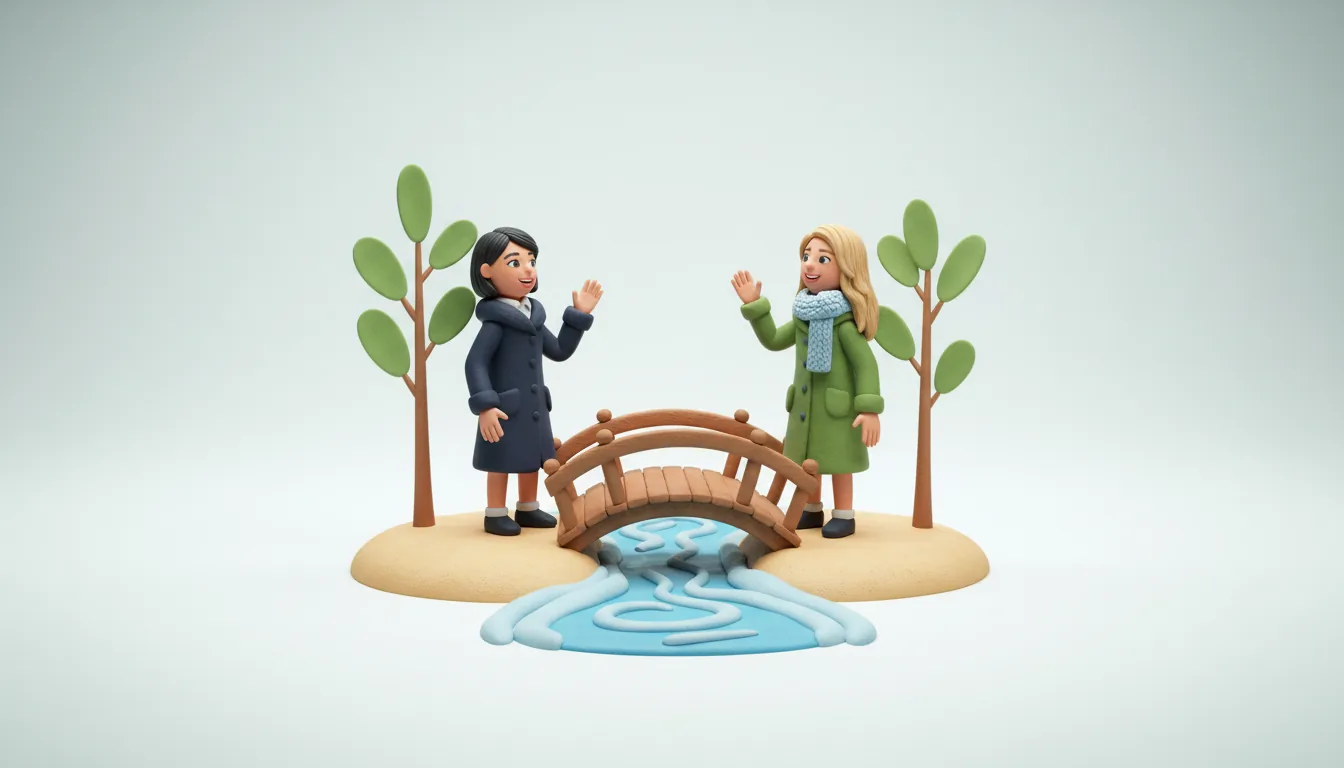
An example: Elsie had the message written for a week. It was long, and it listed everything Kim had done over fifteen years of friendship: the birthdays she forgot, the canceled weekend in Maine, the way she talked over Elsie at every dinner. More than once Elsie's thumb hovered over send. In the end she asked Kim to meet for a coffee and a walk in the park instead, the way they used to on Saturdays. They walked a slow loop and talked more honestly than they had in years. Nothing big got fixed. They agreed they had grown in different directions and that seeing each other every week had turned into a chore for both of them. At the small wooden footbridge where the path splits, Kim stepped off toward the bus stop and Elsie stayed on the far side, closer to home. Kim turned and gave a small wave, and Elsie waved back. On the walk home Elsie deleted the long message without sending it. She hadn't burned the bridge. She had just stopped crossing it every Saturday.
An army, a river and no way back
The saying comes from war. An army that crossed a river and then burned the bridge behind it could no longer retreat, so the soldiers had only one way to go, which was forward. A related saying, "burn your boats," carries the same idea. Over time the picture left the battlefield, and now it describes cutting ties for good, usually with people.
Burn, burned or burnt: using the phrase
There are a few forms of the phrase, all with the same meaning.
- "She burned her bridges with that whole friend group when she left without a word."
- "Don't burn your bridges with your brother over one bad holiday."
- "I've burned too many bridges to ask them for help now."
- "There's no going back. That bridge is burned."
Burned and burnt are both correct. Americans mostly write burned, and burnt is more common in British English. You may also hear the joke "We'll burn that bridge when we come to it," which mixes the saying with "cross that bridge when we come to it." It means someone plans to make a mess of things later and isn't worried yet.
When cutting ties for good helps
Most of the time, leaving the door open is the safer choice. Now and then, though, a clean break is kinder to everyone, including you.
- An ex who keeps pulling you back into the same fight. If every friendly text from them ends in the old argument, a clear goodbye lets you both move on.
- A friendship that only runs one way. You call, plan and listen, and they turn up only when they need something. After you've said so kindly and nothing changes, you can stop.
- A relative who crosses the same line every holiday. Say you've asked three times for jokes about your partner to stop. Seeing less of that one person can keep the peace with the rest of the family.
- A group where every evening leaves you tense. Some friend groups no longer fit, and quietly leaving can be better than forcing it.
A clean break works best when you decide on it on a calm day. If the friendship you want to end is a close one, there are softer ways to break up with a friend than a long angry message.
When it closes a door you'll want later
The trouble with a burned bridge is that you can't see the future from where you stand. Anger fades much faster than the words you said while you were angry.
- The holiday blowup. You tell your sister exactly what you think at Thanksgiving. A year later there's a wedding, and you'd give a lot to sit at her table.
- The message you can't take back. A long text listing every fault feels great for about an hour. After that it sits in their phone for years.
- Taking an ex's whole world with you. Unfollowing every shared friend after a breakup can leave you without people you liked for their own sake.
- The friend who changes. People grow. The friend who let you down at 25 may be a very different person at 35, and you won't find out if the bridge is gone.
If the hurt still stings months later, it may be worth asking whether holding a grudge is doing more harm to you than to them. Ending contact and still replaying the fight every night is the worst of both. When someone else closed the door on you, when one door closes, another opens is about finding the next one.
Clean cutters and bridge keepers
Some people close a door and never look back. Others keep every old friendship alive, even the ones that only send a card at Christmas. Personality plays a big part here. Eight of the 16 types follow, listed the way our types page lists them.
- Ideator rarely burns a bridge on purpose. They just get busy with new people and ideas, and old friendships fade on their own.
- Mentor feels things strongly and may end it in one dramatic moment, then miss the person badly a month later.
- Commander decides, says so and doesn't look back. A clean cut feels honest to them, though it can feel cold to the other person.
- Dreamer keeps every bridge standing and replays old conversations for years, wondering what could have gone differently.
- Strategist takes a long time to decide a friendship is over. Once they do, the decision holds.
- Guardian is deeply loyal, and that's exactly why a betrayal can end things for good. Trust broken once is hard for them to rebuild.
- Counselor avoids open conflict and tends to drift away quietly instead of cutting ties. Elsie is one.
- Encourager believes people can change and keeps a door open for almost everyone, sometimes longer than is good for them.
Neither style is wrong. The clean cutter saves time, and the bridge keeper ends up with more old friends at sixty.
How to leave without a scene
When you do decide to step away, how you go matters as much as the decision. A few things keep it calm.
- Wait a day before you send anything. A message written in anger reads differently the next morning.
- Keep it short. One honest line beats a list of every wrong. "I need some distance for a while" is enough.
- Talk about yourself, not them. "I'm not enjoying our time together anymore" lands softer than a verdict on their character.
- Leave mutual friends out of it. Don't ask anyone to pick a side.
- Settle the practical things. Return the borrowed jacket, pay your share of the trip and hand back the spare key.
- Skip the post. A pointed message on social media keeps the story going long after you wanted it over.
- Leave a small gap if you can. "I hope things go well for you" costs nothing and keeps one plank in place.
Can a burned bridge be rebuilt?
Sometimes. Years later, a short, friendly message with no demands can open the way again. An olive branch works best when it's small and asks for nothing back. Some bridges stay down, and that can be fine too. Not every friendship needs to last forever to have been a good one.
Find out why a friendship can feel easy and tiring at once
A long friendship can feel easy and tiring at the same time, and type often explains both parts. The friendship compatibility test is free. Send the friend you have doubts about the link from your result. Once they finish, a page on your relationship type covers the easy parts of the friendship and the places where you wear each other out.
Questions people ask
What does don't burn bridges mean?
It's advice to leave on good terms, even when you're walking away, so you can come back to that person later if you need or want to.
Is burning bridges ever a good thing?
Sometimes. With an ex who keeps restarting the same fight or a friendship that only runs one way, a clear and final goodbye can be kinder than a door left half open.
What does it mean to cut ties with someone?
It means you stop contact with someone on purpose and don't plan to start again. You can cut ties quietly and kindly, while burning a bridge usually means leaving on bad terms, so there's no way back.
Sources
- Wiktionary, "burn one's bridges". The military origin and the later sense of cutting off old friends.
- Merriam-Webster, "Burnt or Burned: Which is Right?". Both are correct, and burned is more common in American English.
Written by Virko Kask, founder of Typeza
Written with the help of AI tools.
One question for two, every week
A question to ask your partner, friend or family, and how different types tend to answer it.
Free. Unsubscribe any time.