
How to write a letter to your mom or dad (and what to say)
A letter to your mom or dad from a grown child works best when it does what you couldn't do at fifteen. Tell one memory from your side of it, thank them for something you only noticed later, and say plainly what you understand about them now. One or two pages is plenty. Write in the voice you use on the phone with them, because they will spot a greeting card voice at once.
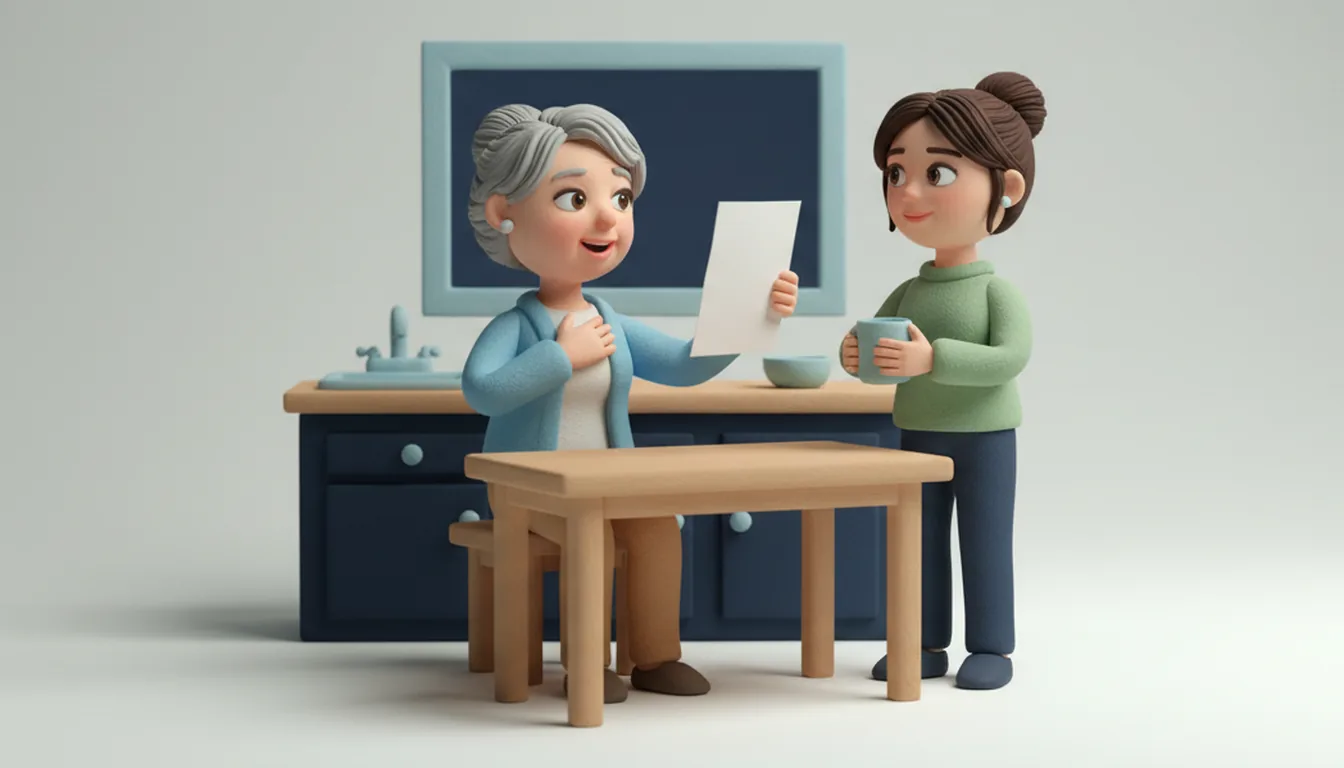
An example: Maya was 37 before she understood the Sunday phone calls. For most of her twenties her mom, Linda, called every Sunday at six, and Maya answered from the couch with the TV still on, giving one-word reports about her week. Then Maya's friends scattered across four states, and she became the one who planned the calls and sent the "how are you, honestly?" texts. Keeping people close, she found out, takes work every week. One evening she wrote her mother two pages by hand and drove them over herself. Linda read them at the kitchen table with one hand on her chest, then started again from the top.
Why a letter lands differently once you're grown
When you were small, "I love you, Mom" in crayon was the whole job. As an adult you can give your parents something rarer: proof that you see them as people. You know now what rent costs and how hard it is to stay patient at the end of a long workday. A letter lets you say you know, without making a speech in front of the family.
A letter also lasts. A phone call ends when you hang up, while a letter goes into a drawer and gets read again years from now.
A memory, a thank you, and what you see now
The memory. Pick one scene and tell it as you saw it then. "You were always there for me" is kind, but it could be about anyone. "The night my bike chain snapped two miles from home, you came in your slippers and never said a word about the time" could only be about your dad.
The thank you. Choose something your parent thinks you never noticed: the second job, the lunches packed before sunrise, the drive to every game. One exact thank you carries more weight than a list of ten.
What you understand now. Only an adult can write this part, and your parent will remember it longest. "I used to think you were strict about money. Now I pay my own bills, and I see how you fed four people on one paycheck." A line like that tells them the effort was seen.
If there was hurt between you, save the hard talk for a real conversation. A letter reads best when every line in it is both true and kind.
How to open a letter to a parent, and how to close it
Open with the name you actually use for them: Mom, Dad, Mama, Pop. "Dear Mother" sounds like it came from a lawyer, unless that's your family joke. Then get to why you're writing. "I've been meaning to tell you something, and it's easier on paper" works.
Close with something ahead of you both: a visit, the recipe you want to learn from her, the fishing trip you keep talking about. Sign it the way you sign your texts to them. "Love, your favorite middle child" is allowed.
Sample paragraphs for the parent you actually have
Take the paragraph nearest to your own parent and swap in your details. The memory has to be yours.
The parent who worked long hours
"Dad, I remember you coming home after dark in your work boots and still asking about my math test before you ate. I didn't know you had been on your feet since five. After a twelve-hour day of my own, I can barely ask the cat how it's doing. Thank you for asking me every time."
The parent who worried about everything
"Mom, you made me text you whenever I arrived anywhere, and at nineteen I thought it was the most embarrassing rule in the world. Last winter my best friend drove home through a snowstorm, and I sat up until two waiting for her message. Somewhere around midnight I understood all those texts. I'm still texting."
The parent who said it with a toolbox
"Dad, you never said much, but you fixed everything I owned. The bike, the radiator in my first apartment, the shelf I hung crooked and swore was straight. I see now that every repair was a sentence you didn't know how to say out loud. I heard it anyway."
The parent you used to argue with
"Mom, we fought about my hair, my friends and my major, and you were right about at least one of those. I won't say which. I see now that you argued because you cared, and you never once stopped showing up. I'm glad we made it to the part where we can laugh about it."
If you are hunting for one good word to build her paragraph around, words to describe your mom has example lines for every kind of mother.
A letter for Mother's Day or Father's Day
In the US, Mother's Day is the second Sunday in May and Father's Day the third Sunday in June, and both are good excuses to write more than your name under a printed verse. Tuck the letter inside the card, or mail it a few days early. A memory tied to the day itself works well, like the breakfast in bed you burned or the tie he wore to be polite. For plans on the day itself, here are Father's Day ideas that match what your dad likes doing. If your mom or dad has died, many people still write the letter on that day and keep it or read it aloud at the grave.
Mailing it, handing it over, or reading it aloud
A mailed letter gets opened alone and in quiet, which suits a parent who goes shy when feelings come up. Handing it over works if you can stand to be in the room while they read. Reading it aloud at a birthday dinner delights the parent who loves an audience and mortifies the one who doesn't.
Write it by hand if you can. Your parent has known your handwriting for decades, and that alone says something before they read a word. A letter is also one of the cheapest ways to make your mom happy, or your dad. And once you have written one, a letter to your best friend takes the same courage for the family you chose.
How your mom or dad will read it, by type
Send the same two pages to two parents, and one may call you in tears within the hour while the other says "that was nice" and changes the subject. Personality type can explain some of that. Here is how seven types tend to take it, in types page order:
- Ideator: may skim for the idea, then phone you to talk it through for an hour. A memory with a funny twist keeps them reading.
- Analyst: trusts exact words over big ones. "You taught me to check my sources" means more than "best dad in the world."
- Commander: might wave it off with "what's all this?" and then keep it in the truck for ten years. Thank them for their strength when things went wrong.
- Dreamer: reads slowly and feels the mood under every line. A paragraph on what their care made possible for you is the one they keep.
- Entrepreneur: respects effort and results. Name something they built and what it made possible for you.
- Guardian: cares about loyalty and doing right by family. Mention a value they taught you that you still live by.
- Counselor: reads between the lines. Honest feelings, plainly put, reach them best.
What Linda did with the two pages
Linda put the letter in the kitchen drawer with the spare keys, the one she opens every day. The next Sunday she called at six as usual, and this time Maya turned off the TV. Halfway through, Linda asked something Maya had wondered herself: why do the two of them talk so easily on the phone, when Maya and her dad can sit in a car for an hour and trade four words?
Find out why one parent is easier to talk to
Plenty of grown children chat for an hour with one parent and trade four words with the other, and type can explain part of it. The family compatibility test costs nothing. Mail the link on your result page to your mom or dad, and later to the other parent too. Once each of them has answered, the two of you can open a page about your relationship type, covering the easy side of the bond and the side that rubs.
Questions people ask
What should I write in a letter to my mom?
One memory told from your side, a thank you for something specific, and a line about what you understand about her now. End with a plan you both look forward to.
How do I write a heartfelt letter to my dad?
Keep it plain. Name one thing he did, what it meant to you, and one thing you see differently as an adult.
What do you write in a Mother's Day letter?
A memory tied to her, a thank you, and one hope for the months ahead. If you only need a line or two for the card, try these Mother's Day messages.
Is it strange to write your parents a letter as an adult?
Not at all. A letter from a grown child often means more, because it comes from someone who now knows what raising a family costs.
Written by Virko Kask, founder of Typeza
Written with the help of AI tools.
One question for two, every week
A question to ask your partner, friend or family, and how different types tend to answer it.
Free. Unsubscribe any time.