
National I Love You Day: when it is, and how to say it in their language
National I Love You Day falls on October 14 every year. It's an informal day with no official status, and it isn't only for couples: the idea is to tell the people you love that you love them, in words they'll actually take in. In 2027, October 14 falls on a Thursday.
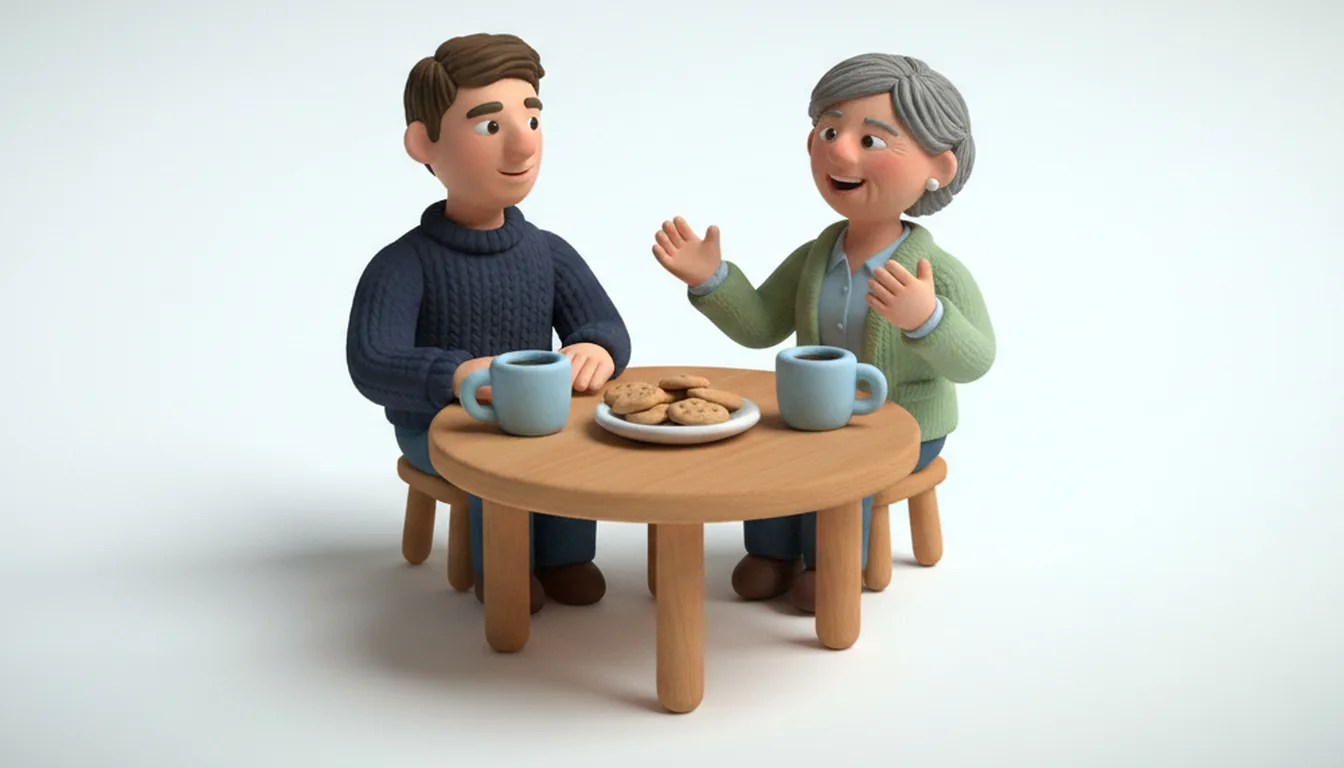
An example: Nico, 38, has never been good at saying it. His mother, Elena, ends every phone call with "Love you, sweetheart," and for years he has answered "You too, Mom," which they both know isn't quite the same. Last October he saw a post about the day on his lunch break, left work early and drove over with a bag of her favorite chocolate chip cookies. She made coffee in the blue mugs and told him, with both hands in the air, the story of his first day of school, the one where he tried to take the class hamster home. He's heard it many times. This time he just listened, one hand around his mug, and laughed in all the right places. At the door she hugged him and said it was the nicest afternoon she'd had all month. He said "I love you, Mom," and she said "I know. You came."
A day for every kind of love
Most love days are about romance. This one is wider. A partner counts, and so do a parent, a grown son or daughter, a sibling, a grandparent and the friend who drove you to the airport at 4 a.m.
That's what makes it useful. Many adults say "I love you" easily to a partner and rarely to anyone else. A day on the calendar is a gentle excuse to say it to the people you skip.
Words, a deed or your time
People hear love in different ways. Some need the actual words, said out loud and looked in the eye. For others, the words feel thin unless something comes with them, like a repaired shelf, a meal or a ride to the station. And some feel loved most when you give them your time and your full attention, with your phone in your pocket.
Elena loves the words and uses them all the time. But what reached her that day was Nico's afternoon, and the fact that he let her tell the hamster story again. If he had only texted "Love you" at lunch, she'd have been pleased. The visit is what she'll remember.
So the question for October 14 is less "what should I say?" and more "how does this person hear it?" If you're not sure, think about how they show love to you, because people may give love the way they'd like to get it. For more everyday ideas, how to show affection covers partners, family and friends.
To a partner, after years of saying it
In a long relationship, "I love you" can turn into a reflex at the end of a call. It still matters, but it no longer surprises anyone. On this day, add one reason.
Nico's partner, Leah, hears it from him every night as they switch off the light. On October 14 he said it at breakfast instead, and added: "I love how you sing in the car when you think nobody's listening." She brought it up three times that week. If one reason feels good, a whole list can be a gift, and reasons why I love you has plenty to start from.
To a parent who rarely hears it
Some grown children find it hardest to say to their parents. The words feel too big, or the family simply never said them much. You don't need a speech. A visit, a call that isn't about logistics or a small job done for them can say it first, and the words can follow at the door, the way they did for Nico.
If your parent is the one who never says it, try saying it anyway, briefly, without waiting for it back. Some parents answer with a deed, like an extra helping or an offer to fix your car. That's often their version of the same sentence.
To a grown son or daughter
Parents of adult children sometimes say "I love you" with advice attached, as in "I love you, but you need to rest more." Today, leave the advice out. Say it plainly, and if you add anything, add something you admire: "I love you, and I'm proud of how you handled this year."
A short message they can keep often means more than a long talk. Some grown children save texts like that for years.
To a friend, without making it weird
Saying "I love you" to a friend can feel strange at first, especially between men. It doesn't have to be grand. "Love you, man" after a long call works. So does "I'm really glad you're my friend," or turning up to help them move without being asked.
Nico texted his oldest friend, Jules, a photo from a camping trip they took at nineteen with one line: "Still the best week. Love you, idiot." Jules replied with five laughing faces and then, an hour later, "Love you too."
How each type likes to hear it
Personality type can shape which of the three ways lands best. Here are eight of the 16 types:
- Harmonizer feels loved through comfort. A warm meal, a blanket on the sofa and remembering how they take their tea say more than a speech.
- Vitalizer wants to hear the words, warmly and out loud. Say it with your face as well as your voice, and say it in front of people they care about.
- Analyst trusts a sincere sentence more than a flood of feeling. One clear line, like "I love how your mind works," means a great deal.
- Inspector hears love in what you do reliably. A promise kept, a task done before they ask, a plan that runs on time.
- Commander responds to action and presence. Show up, do something together and keep the words short and direct.
- Strategist likes calm and quality time. A long walk with no agenda and a few quiet words at the end feel right to them.
- Organizer values practical help done well. Fixing the dripping tap or sorting the paperwork can be the most romantic thing on the list.
- Encourager loves words about who they are. Tell them what you see in them and where you think they could go, and maybe add a small surprise.
These are tendencies. Many people like a bit of all three.
Small ways to mark October 14
You don't need a big plan. A few ideas:
- Write one line on a sticky note and leave it where they'll find it. Cute love notes has short ones to borrow.
- Call a grandparent or an aunt you haven't spoken to in a while.
- Cook someone's favorite dish, or bring their favorite cookies.
- Send a friend an old photo with one sentence about why it matters.
- Give a long hug to the people who like hugs. National Hugging Day in January is another good excuse.
- Do one chore someone dreads, without saying anything.
Learn how the people you love like to hear it
Some people say "I love you" without a thought and others find it hard, and type can explain part of that. The free couples compatibility test finds your type, and it works for a parent and a grown child as well as for a couple. Send your partner, or your mom or dad, the link from your result. Their answers open your relationship type for you both, with the places you naturally get each other and the places you misread.
Questions people ask
When is National I Love You Day each year?
October 14, every year.
Is National I Love You Day a real holiday?
It's an informal day, not a public holiday. It grew out of a 2015 hashtag campaign in the Philippines for the film Everyday I Love You, and it's now marked mostly in the US.
Is National I Love You Day only for couples?
No. It's for anyone you love, including parents, children, siblings and friends.
How is it different from Valentine's Day?
Valentine's Day in February is mostly about romance and often involves gifts. National I Love You Day is simpler and covers every kind of love.
What should I say on National I Love You Day?
Say "I love you" and add one specific reason. If the words feel hard, a visit, a favor or an hour of your time can say it too.
Sources
- Awareness Days, "National I Love You Day": October 14 every year, most popular in the US, started from a 2015 film hashtag in the Philippines.
Written by Virko Kask, founder of Typeza
Written with the help of AI tools.
One question for two, every week
A question to ask your partner, friend or family, and how different types tend to answer it.
Free. Unsubscribe any time.