
What is considered a long-term relationship, and what keeps one going
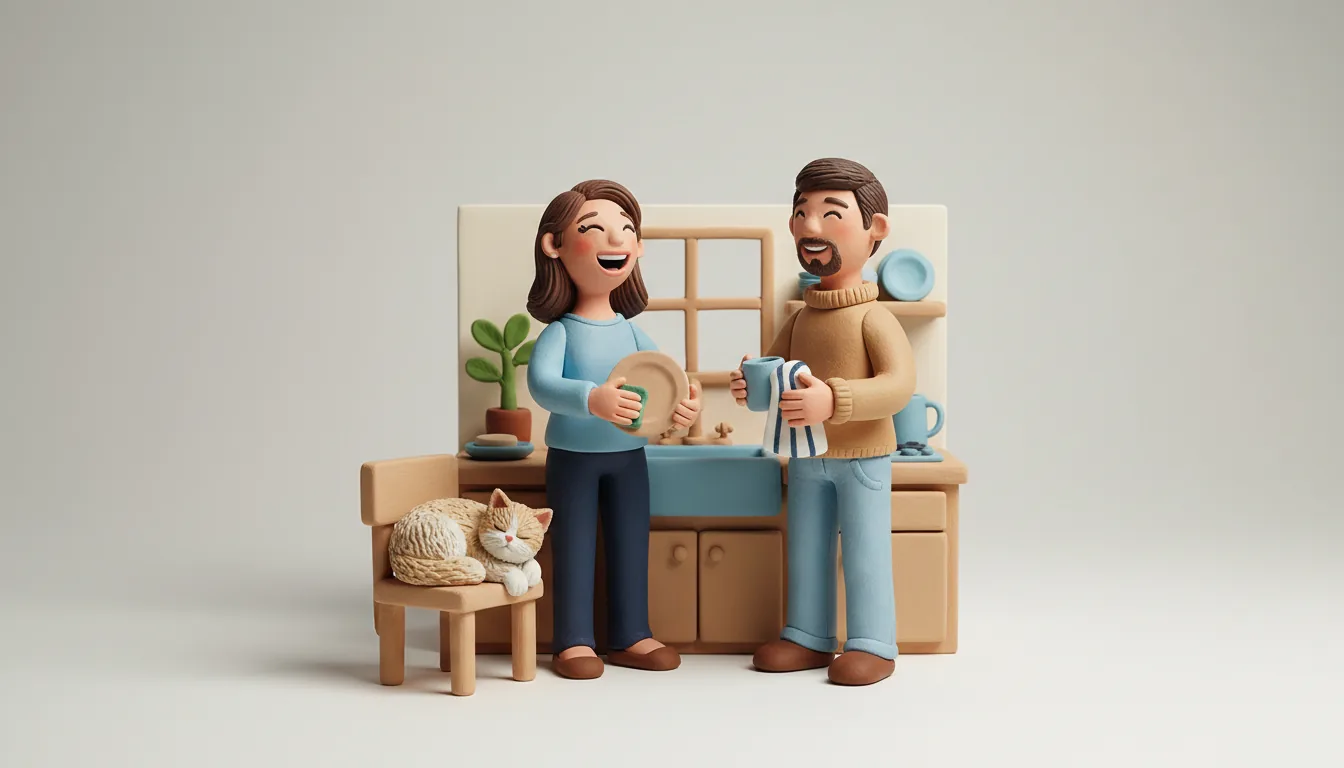
There is no official line for when a relationship counts as long term. A common rule of thumb is about a year, and few people would argue once you pass two years. Many couples feel it earlier, around six months or when they move in, and some take longer. What really marks a long-term relationship is that both people expect a shared future and have started to build daily life around each other, with plans, habits and routines that settle in once the first rush is over.
An example: Mia and Ben have been together for six years. They have a cat, a shared car and a running argument about who loads the dishwasher wrong. At her cousin's wedding last summer, an old family friend asked Mia whether it was "serious with that nice man," and Mia laughed until she spilled a little of her wine. On the drive home they tried to work out when it had become serious. Ben said the end of the first year, when they spent Christmas with his parents. Mia said it was the day they built a wardrobe from a flat box without a single fight. They still haven't agreed.
How long is a long-term relationship?
Ask ten people and you get ten answers, but they tend to cluster:
- Three to six months: the point where many people start to call it serious. You are exclusive, you know each other's friends, and you have stopped counting the weeks.
- About one year: a common answer. You have seen each other through all four seasons, a birthday each and at least one bad week.
- Two years and more: long term by almost anyone's measure. The early glow has usually faded and the relationship runs on something steadier.
- Five years and more: people start saying "a long relationship" without thinking about it, and friends either ask about a wedding or stop asking altogether.
Age changes the scale. At twenty-two, eighteen months can feel like half your adult life. At fifty, a couple ten years in may still call themselves fairly new. The number matters less than what the two of you have built in that time.
Long-term vs short-term relationships
A short-term relationship lives mostly in the present. It can be warm, fun and important, and still nobody plans much past the next few weeks. A long-term relationship assumes a future. Holidays get booked months ahead. A move to another city becomes a shared decision. You know which relative to seat your partner next to at a family dinner, and which one to keep them away from.
Plenty of long relationships start out casual, and nobody picks the exact day it changed. Like Mia and Ben, you usually notice afterwards.
Milestones that count more than months
Months are easy to count. These moments say more about where a couple really is:
- You have had the same argument several times, and you both know how it ends.
- You have seen each other ill, exhausted and grumpy, and stayed.
- Your partner's family sends you messages without going through them.
- You book a trip for next year without wondering whether you'll still be together.
- You share at least one thing that is hard to split, like a lease, a pet or a sofa.
- You can be bored together on a Sunday with nothing planned, and it feels fine.
- You know how they take their coffee and which song makes them change the station.
Moving in is often the moment all of this becomes visible. If that step is close, moving in together goes through what to talk about first.
What changes after the first year or two
The early months run on novelty. Somewhere in the first two years the honeymoon phase fades and the relationship meets ordinary life. That is normal, and in many ways it is where the long-term part begins.
- Routines replace surprises. You have a usual Friday, a usual grocery run and a usual side of the bed.
- Differences come to the surface. One of you is tidy and one is not. One wants friends over every weekend and the other wants the sofa. These differences were there from the start, and now they show.
- Fights change shape. They get shorter if you learn to make up quickly, and more repetitive if you don't.
- Love gets quieter. It shows up more in a cup of tea brought without asking than in big gestures.
Every couple moves through the stages of a relationship at its own speed and gets stuck in its own places.
What keeps a long relationship going
Couples who last tend to share a handful of ordinary habits.
- They make up fast. After a fight someone reaches out first, and it isn't always the same person.
- They stay curious. Six years in, Ben still asks Mia what she thought of a film, and listens to the answer.
- They keep some life of their own. Separate friends and evenings give each person something new to bring home.
- They share the dull work fairly. Few things wear a couple down like one person carrying the whole household in their head.
- They protect small rituals. A Saturday breakfast, a walk after dinner, the same silly greeting at the door.
- Their daily needs fit. This gets talked about least. When two people's everyday rhythms suit each other, in energy, tidiness, plans and how much time together feels right, there is far less to negotiate every week.
That last point is why some couples make a long relationship look easy, while others who love each other just as much have to work at it every day.
Why the long haul feels different for each person
Personality type has a lot to do with what someone needs from a long relationship and what they bring to it. Here are six of the sixteen, following the sequence on the types page:
- Harmonizer: builds a cozy shared home and keeps the peace. Needs comfort and a partner who notices the small things they do.
- Mentor: keeps the big conversations going long after the first year. Needs the relationship to keep its emotional spark.
- Inspector: shows love through reliability, the bills paid on time and the promise kept. Needs a partner they can count on in return.
- Dreamer: senses the mood between the two of you before anyone says a word. Needs gentleness and time to be quiet together.
- Organizer: handles the practical side of a shared life without being asked. Needs that effort to be seen.
- Counselor: listens closely and wants both of you to keep growing. Needs honesty, even when it is uncomfortable.
Over the years these needs either fit together or rub against each other. That is why the same habits feel natural to one couple and like a chore to another. A compatibility test you and your partner take shows whether your needs fit or rub.
See what your daily life together runs on
After years together, many of the habits you argue about, like how to load the dishwasher, come from type more than from stubbornness. On the free couples compatibility test each of you answers alone, about yourself. Do yours first, then hand your partner your result's link. When you have both finished, the relationship type you make shows where life together runs smoothly, where it tends to catch and how it feels from each side.
Questions people ask
Is 1 year a long-term relationship?
By the usual rule of thumb, yes. A year together is when many people start calling a relationship long term.
Is 6 months a long-term relationship?
Usually it counts as serious rather than long term. The phrase tends to come after a year or more.
When is a relationship considered long term?
When both people expect a future together and have built their daily life around each other.
What is a long-term partner?
Someone you have been in a committed relationship with for a long time, often a year or more, whether or not you are married or live together.
What is the difference between a long-term partner and a life partner?
A long-term partner describes how long you have been together. A life partner describes a choice to stay together for life, with or without marriage.
How do you make a long-term relationship last?
Make up quickly after fights, stay curious about each other, keep some life of your own, share the dull work fairly and look after the small rituals that belong to the two of you.
Written by Virko Kask, founder of Typeza
Written with the help of AI tools.
One question for two, every week
A question to ask your partner, friend or family, and how different types tend to answer it.
Free. Unsubscribe any time.