
What does cynical mean? Cynical vs skeptical, and living with a cynic
Cynical means distrusting the motives of other people. A cynical person assumes that others act out of self-interest, so a kind gesture, a compliment or a promise sends them looking for the catch. It's usually meant as a criticism, though cynics tend to call it being realistic.
The noun is cynicism, and a person who has it is a cynic. Close words are distrustful, suspicious, jaded and world-weary. The opposite is trusting, the person who takes a kind act at face value. The word goes back to the Cynics, ancient Greek thinkers who turned down wealth, fame and good manners. Their name came from the Greek for "dog-like." By the 1800s the word had drifted to the meaning we use now.
Cynical or skeptical?
The two get mixed up, and they point at different things. A skeptic doubts a claim. They want to see proof, and when the proof comes, they change their mind. A cynic doubts the motive behind a claim or a kind act, and proof doesn't move them much, because any good deed can be explained as someone wanting something.
Say a new neighbor offers to water your plants while you're away. The skeptic wonders whether she'll remember. The cynic wonders what she'll ask for in return. Skepticism is often useful, since it keeps you from believing everything you hear. Cynicism tends to do more harm, because it pushes away the people who meant well. In British English the first word is spelled sceptical.
Leaves on both sides of the fence
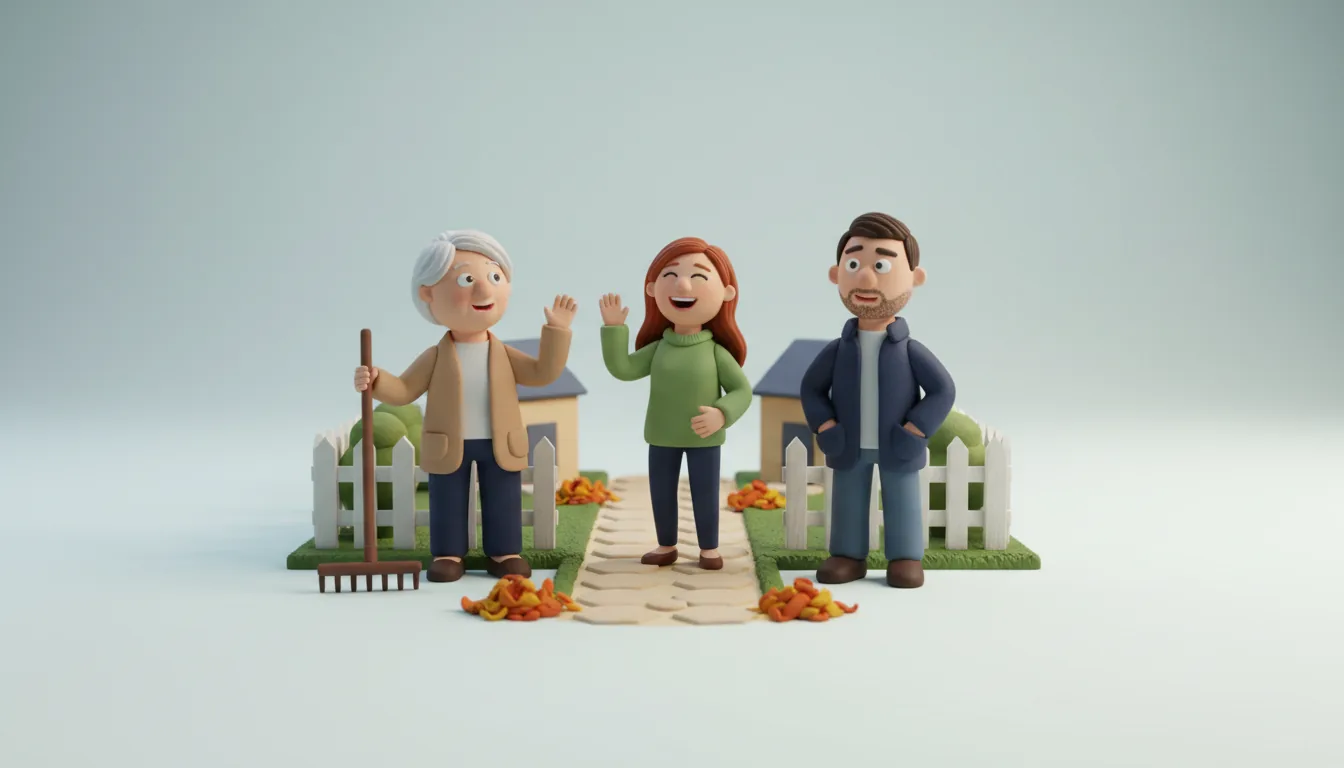
An example: Mira, 43, and Jakob, 46, moved into a small house with a white picket fence in September. One Saturday in late October they found their stone path swept clean. Their neighbor Tove, 70, had raked the orange leaves off it along with her own, and she waved her wooden rake at them from her gate.
Mira waved back and laughed. Jakob kept his hands in his pockets, gave a small half smile and said quietly, "She wants something."
Weeks went by and Tove asked for nothing. She raked their path again after the November wind. Jakob still said, "Give it time." A skeptic would have been convinced by then.
Later that winter he told Mira why. Years ago a coworker had been warm to him for months and then took credit for his project the first chance he got. Since then, kindness from someone new made Jakob wait for the request he was sure would follow.
Signs of a cynical person
Cynicism shows up most in how someone reacts to the people in front of them.
- When someone does something kind, they explain it by a hidden reason.
- Compliments make them wary, and their first thought is "What's she after?"
- They expect promises to be broken and say so before anyone has had a chance to keep one.
- They find it hard to accept help, because help feels like a debt.
- They stay out of shared things, like a street cleanup or a friend's charity run, sure that someone is getting something out of it.
- Their tone is flat and knowing, as in "Sure, he's doing it out of the goodness of his heart."
- They call all of this realism.
Their dry humor often has an edge, and it can tip into sarcasm. There's even a cynic's reading of the old saying about a friend in need, in which the friend in need is simply the one who wants something from you.
Words that get mixed up with cynical
A cynic can be cheerful, chatty and fun at a party, and still doubt your reasons for being nice. That's what sets them apart from a negative person, who complains about most things and finds the problem in every plan, and signs of a negative person covers that pattern. A Negative Nancy worries about what might go wrong, which is a different thing from distrusting motives. And a contrarian takes the other side of any argument, whatever the motive behind it.
How someone becomes cynical
Cynicism often builds from disappointments that line up. It might be a friend who was kind until there was something to gain, a string of promises at work that were never kept, or a partner who said the right things and meant none of them. Each one teaches the same lesson, and after a while the lesson turns into a rule.
Some people pick up cynicism at home, from parents who explained everyone's behavior by what they wanted. And for some, doubt simply feels safer. If you never expect good motives, you can't be fooled, which can seem like a fair trade, though it keeps warmth out too.
One checks the motive, the other gives freely
Personality type plays a part in how quickly someone trusts a kind act. Some people check the motive first. Others give and take kindness easily, and they can feel hurt when it's met with doubt.
The Vitalizer shows warmth through small favors and attention, and expects a smile back. The Strategist looks past what people say to where things are heading, and often asks what's really going on behind a gesture. The Guardian is slow to trust and watches how a person behaves over time before deciding what they're like.
When a Vitalizer does something kind for a Strategist or a Guardian, the giver may get careful questions where they expected thanks, and read that doubt as coldness. The doubter sees it as ordinary care. These are typical patterns in type theory, and real people differ. None of it is advice.
Living with a cynical partner or friend
You don't have to win every argument about whether people are good. A few things help more than debating.
- Share good things anyway. Tell them about the stranger who returned your wallet, without needing them to agree it was pure kindness.
- Ask about the story. Many cynics have one, like Jakob's coworker, and hearing it helps you see the doubt as old hurt more than as a view of you.
- Notice where the doubt protects them. A cynic who has been used before may need longer to trust new people, including your friends.
- Set a limit when it spoils your joy. "You can doubt her reasons, but let me enjoy the clean path" is a fair thing to say.
- Point out the times they were wrong, kindly and without gloating.
If the cynicism turns on you, and every nice thing you do gets questioned, say so plainly. Being doubted by the person closest to you is tiring, and they may not notice they're doing it.
How to stop being so cynical
If you saw yourself in Jakob, the habit can loosen, a little at a time.
- Catch your first thought about someone's motive, then come up with one other likely reason.
- Keep a short list of the times people surprised you by meaning well.
- Let one small kindness pass without explaining it, and just say thank you.
- Keep the person who hurt you separate from the new people in your life.
- Doubt claims as much as you like, and give motives a little more room.
- Spend time with people who do things for others with nothing to gain, and watch what happens.
That fifth step is the skeptic's way. You keep your judgment and drop the guess about what everyone is secretly after.
See where the doubt comes from
Typeza looks at both of your personality types and shows how those two types tend to get on. That includes why one of you checks the motive behind a kind act while the other simply gives. Take the free personality test, then pass it to the partner or friend who doubts, or the one who's always being doubted.
Questions people ask
What is a cynical person?
Someone who believes people mostly act for their own benefit, so they look for the hidden reason behind kindness, praise or promises.
Is being cynical a bad thing?
A little doubt can protect you. A lot of it makes it hard to accept help or get close to new people, and it can hurt those who meant well.
How do you use cynical in a sentence?
"He was cynical about the neighbor's offer and kept waiting for the catch." Or, "After two broken promises, she'd grown cynical about any plan he made."
What is cynical humor?
Jokes that assume people are selfish or that good intentions are a cover. It can be funny among friends, though a lot of it can tire the people around you.
Can a cynical person change?
Yes, usually slowly. Small repeated proof that people can be kind helps, and so does noticing their own first reactions.
Sources
- Dictionary.com, "cynical". Distrusting the motives of others, and how cynical differs from pessimistic and sarcastic.
- Wikipedia, "Cynicism (philosophy)". The Greek school that rejected wealth and custom, its name from the Greek for "dog-like," and the modern sense by the 19th century.
Written by Virko Kask, founder of Typeza
Written with the help of AI tools.
One question for two, every week
A question to ask your partner, friend or family, and how different types tend to answer it.
Free. Unsubscribe any time.