
Sarcasm: what it says about a person, and why some types love it
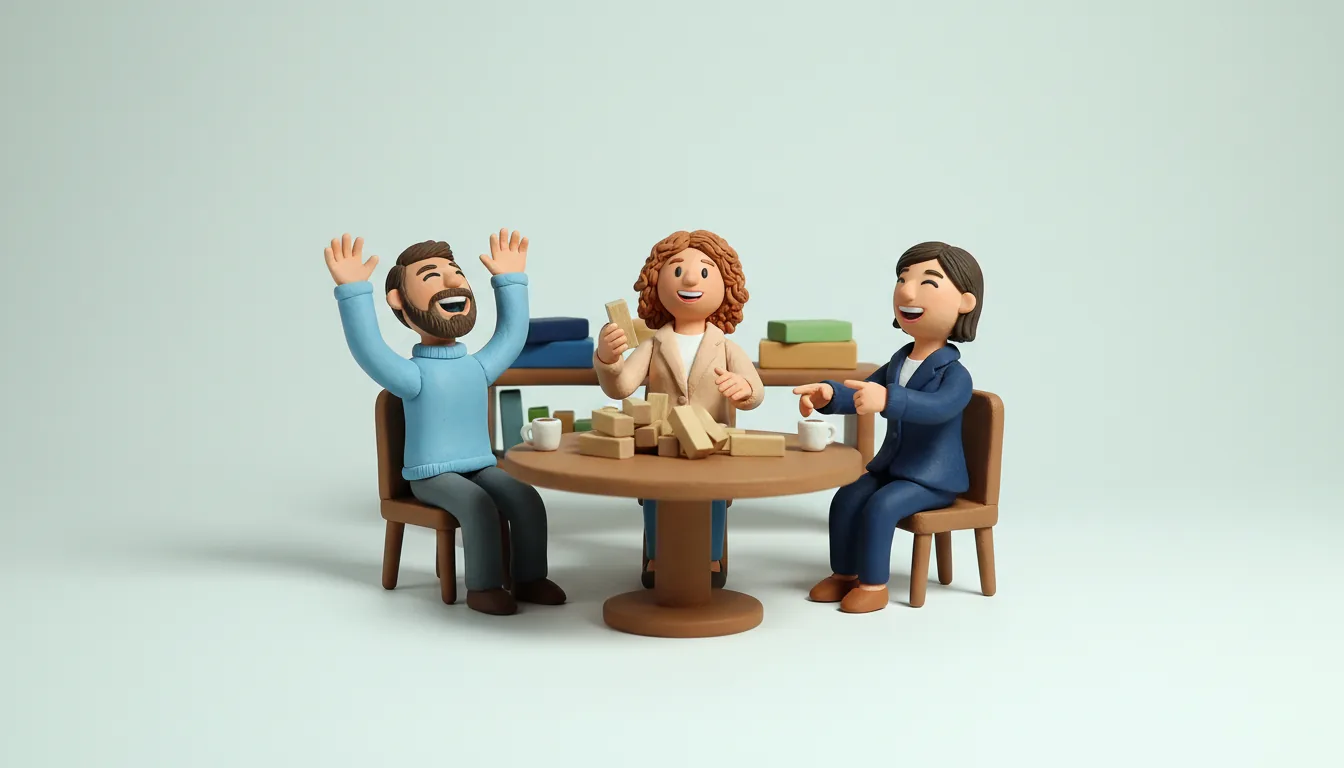
What sarcasm says about a person is often less about how kind they are and more about how they handle closeness and tension. Many sarcastic people are quick and watchful, and they use the joke to show fondness or to say a hard thing sideways. Whether it lands as play or as an attack depends on the trust between two people, and on the listener's personality as much as the speaker's words.
An example: the block tower at Marco's comes down in the ninth round, and Ana is the one holding the block that did it. Dee points at the pile with both hands and says, "Wow. Surgeon's hands." Marco throws his arms up and laughs so hard his chair rocks. Ana laughs too, the block still in her fingers. Half a year ago the same line would have spoiled her night. When she first joined the Thursday game nights, she drove home after each one replaying Dee's remarks and wondering what she had done wrong. Then one evening Dee helped her carry folding chairs to the car and said, with no edge at all, "You're the best thing that's happened to this group in years." After that Ana heard the jokes in a new way. Dee hasn't changed. Ana has learned how Dee shows she likes someone.
Sarcasm in one sentence
Sarcasm means saying the opposite of what you mean, with a tone or a look that gives the real meaning away. "Great, another Monday" is the classic. Nobody thinks the speaker loves Mondays. The word comes from the Greek sarkazein, which meant to tear flesh or to sneer, and it first shows up in English in 1579.
If you know someone with a dry sense of humor, you've seen the flat face that often comes with it. Sarcasm can borrow that face, but its trick is flipping the words around. Because it flips them, it only works when the listener can tell which meaning is the real one.
You've probably heard the saying that sarcasm is the lowest form of wit. It means sarcasm is an easy joke that takes little skill. The people who quote it are often sarcastic themselves.
What sarcasm says about the person using it
A sarcastic friend is often a sharp observer. They notice the gap between how things should go and how they actually go, and they point at it. "Love how the bus is on time today," said forty minutes into the wait, says out loud what everyone at the stop can see.
For many people sarcasm is also a family habit. If you grew up at a table where everyone teased everyone, a gentle jab feels like being included, and a quiet table would feel colder than any joke.
For others it is a safe way to say something tender or something awkward. Telling a friend "I missed you" can feel exposed. "Oh, look who finally remembered we exist" says the same thing with a grin, and nobody has to blush.
There is a harder side too. A person who uses sarcasm on everyone, always at someone's expense, may be keeping the upper hand or keeping people at a distance. People sometimes call sarcasm a sign of a clever mind. Doing it well does take a quick mind, but plenty of very bright people never use it at all.
Why one friend laughs and another feels hit
The same five words can feel like a hug or a slap, and three things usually decide which.
The first is trust. Between old friends, a sarcastic line comes with years of goodwill behind it. From someone new, it has nothing behind it, so the listener fills the gap with worry. That is what happened to Ana at first.
The second is tone. Face to face you get the raised eyebrow and the half smile. In a group chat you get bare words, which is why so many people end up typing "Are you being sarcastic?"
The third is the listener. Some people hear the play first and the words second. Others hear the words first, and the play only reaches them if they already feel safe. Neither way is wrong, but the two groups misread each other all the time.
Telling a tease from a dig
A tease and a dig can use the same sentence. What gives a dig away is the target and what happens after.
- A tease aims at something the person can laugh about, often something they're good at. Dee jokes about Ana's hands because Ana usually wins.
- A dig aims at a sore spot, like weight, money, a failed marriage or a job someone hates.
- A tease invites a comeback, and the speaker enjoys losing the next round.
- A dig repeats after someone has asked it to stop.
- A tease ends with everyone laughing, the target included.
A dig wrapped in a joke works a lot like a backhanded compliment. The words sound friendly and the point is to sting, and "I was only joking" is the usual cover. The old rhyme about sticks and stones says words can't hurt, yet many adults remember a dig long after the laugh.
Where it stings: couples, family and friend groups
In a couple, sarcasm in play and sarcasm in a fight feel very different. "Oh, thanks so much" when your partner forgets the groceries for the third time carries real anger, and the joke shape makes it harder to answer. If a sarcastic tone keeps turning up in arguments, saying the plain complaint often goes better.
In families, the trouble is often age and history. A brother's teasing about your old haircut is fine. A parent's sarcasm about a grown child's job or partner can sound like an old verdict, even if it was meant lightly.
In a friend group, the newest person is the most exposed, like Ana. Long-time members can forget that their running jokes need years of context. A kind group explains a joke once, or saves the sharp ones until the new friend has settled in.
Which types play with sarcasm, and which hear an attack
Typeza sees personality type as part of how much sarcasm someone uses and how they take it. Six of the 16 types:
- Ideator loves verbal sparring and treats a sarcastic remark as an opening move. He can forget that not everyone at the table wants to play.
- Harmonizer cares about the mood of the room. Even a jab aimed at someone else can make the evening feel tense to him.
- Commander respects people who speak plainly and stand firm. A good comeback earns more of her respect than politeness does.
- Dreamer hears a sharp tone before the words, so a sarcastic line from someone she doesn't know well can stay with her for days.
- Diplomat teases to pull people into the fun and reads quickly whether it's working. He usually drops the joke the second a face falls.
- Counselor may laugh along, yet a sharp tone stays with her far longer than the joke. Later she may quietly ask what was really bothering you.
These are tendencies, and a close friend can take a joke from you that a stranger couldn't.
Using sarcasm without losing people
If sarcasm is part of how you talk, you don't have to give it up. A few habits keep it on the friendly side.
- Aim it at situations, at yourself, or at things the other person is proud of.
- Go easy with new people until they've seen you being sincere.
- Watch the face. If someone goes quiet, say the plain version right away.
- In texts, add something that shows the joke, or skip it.
- Now and then, say the real thing straight, the way Dee did by the car.
If you're the one on the receiving end, it's fine to ask, "Was that a joke, or do you mean it?" A friend will answer honestly. You can also tell a close friend which topics are off limits, and a good one will remember.
Not every laugh needs an edge, either. A small kind gesture, like the ones in World Smile Day, can make a friend smile just as fast.
Find out how your type hears a joke
Type is often part of whether sarcasm feels like play or like a hit, both for the person joking and for the one on the other end. Take the free personality test, and it puts your type's strengths, struggles and needs into plain words. If a friend's jokes sometimes sting, your result has a link you can pass to them, so they can take the same test. Once they have done it, you can each read about your relationship type, with the spots where you click and the spots where you tend to rub.
Questions people ask
Is sarcasm rude?
It can be. Between friends who trust each other, it's often play. Aimed at a sore spot, at a stranger, or at someone who has asked you to stop, it reads as rude even when you meant it lightly.
Is sarcasm an emotion?
No. It's a way of speaking. It often carries an emotion, though, such as fondness, boredom or annoyance, and that feeling is what the listener picks up.
How can you tell if someone is being sarcastic over text?
Look for praise that doesn't fit the situation, like "perfect" after bad news. If you still can't tell, ask. Many people would rather explain a joke than have it hurt someone.
What is another word for sarcastic?
Snarky, wry, mocking and biting are the usual ones. "Wry" sits at the gentle end, close to dry humor, and "biting" or "cutting" sits at the sharp end.
Is sarcasm a literary device?
Yes. In books, plays and films it's usually treated as a sharp kind of verbal irony, and writers often give it to a character to show how that person thinks.
Sources
- Wikipedia, "Sarcasm". From the Greek sarkazein, "to tear flesh, bite the lip in rage, sneer", first recorded in English in 1579.
- Wiktionary, "sarcasm". Acerbic language to mock or show contempt, often using verbal irony.
Written by Virko Kask, founder of Typeza
Written with the help of AI tools.
One question for two, every week
A question to ask your partner, friend or family, and how different types tend to answer it.
Free. Unsubscribe any time.