
Sticks and stones may break my bones: meaning, and when a joke stings
"Sticks and stones may break my bones, but words will never hurt me." The rhyme means that names and insults can't really harm you unless you let them. People say it with a shrug when someone tries to get under their skin. Many adults say it half as a joke, because they know some words do land.
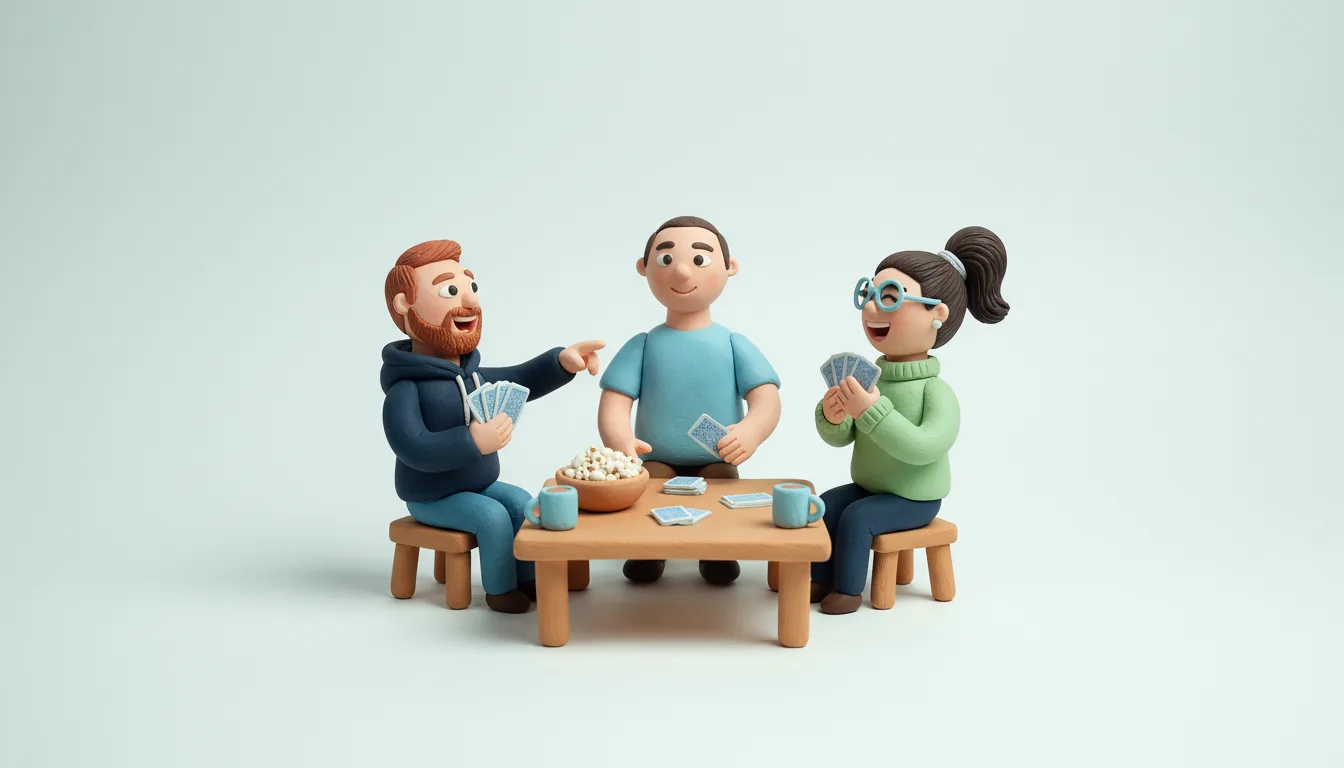
An example: every Thursday, Ollie, Bea and Sami play cards at Sami's place, with a bowl of popcorn and a pot of tea. For years Ollie has called Bea "Captain Spreadsheet," because she keeps score in a small notebook and adds it up twice. She has always laughed at it. One Thursday Ollie added a new bit. "Captain Spreadsheet plans her fun two weeks ahead, and that's why nobody calls her last minute." Sami smiled at his cards. Bea laughed along with them, then said very little until the hand was over.
Will, may or won't: the ways people say it
A common version is "sticks and stones may break my bones, but words will never hurt me." Plenty of people say "will break my bones" instead, and some end it with "names will never hurt me." All of them mean the same thing.
You'll also hear "sticks and stones won't break my bones." That one gets the rhyme backward, since the point is that sticks and stones do hurt and words don't. People often stop halfway, too. Saying just "sticks and stones" after a rude remark is enough, and everyone knows the rest.
Do words really bounce off?
The rhyme is a brave face more than a fact. Many adults can repeat a sentence someone said to them ten years ago, word for word. A joke from a friend, a remark from a parent or a line from an old boss can stay with you much longer than a bruise would.
Still, the rhyme has a point. You get some say over how much weight a remark gets. A comment from a stranger on a bus doesn't need a place in your evening. A comment from your best friend probably does, and that's when it's worth talking about.
Between friends, the words that stay are often small, careless lines from someone whose opinion you care about.
Where the rhyme comes from
Nobody knows who made it up. The earliest known print is from a Liverpool newspaper in July 1857, which called it "the schoolboy's rhyme." The version people quote most often appeared in March 1862 in The Christian Recorder, a weekly paper in Philadelphia:
> "Remember the old adage, 'Sticks and stones will break my bones, but words will never harm me'."
Look at "the old adage." Even then the writer treated the rhyme as something everyone already knew. The early versions mixed "may" and "will," "names" and "words," "harm" and "hurt."
Where words land between adults
Teasing in a group of friends
Teasing works when the person being teased laughs too and could tease right back. A nickname like "Captain Spreadsheet" is a sign of closeness. The trouble starts when a fond joke picks up an edge, often without the teaser noticing. A fair check is whether you'd be happy to hear the same joke made about you. Sarcasm sits right on that line, and the same words can sound playful to one friend and sharp to another.
A joke at the family table
Families keep jokes for decades. Your uncle still brings up the year you dyed your hair orange, and your sister still calls you by a name from when you were nine. Much of it is affection. Some of it is a small dig with a laugh around it, like "You look so much better than last year." The piece on backhanded compliments has more of those.
A line said in a fight
Couples know this one best. In a heated moment someone says "you always do this" or "you're just like your father," and the fight ends but the sentence stays. Taking it back plainly the next day helps more than hoping it was forgotten. A short "I didn't mean that, and I'm sorry I said it" does more than a long talk about who started the fight.
Letting a remark slide, for real
Shrugging something off works best when you're not pretending. A few questions help:
- Did they mean it as a joke, and would they be sorry to know it stung?
- Does it still bother you tomorrow?
- Is it a one-off, or the third time this month?
If it's gone by morning, let it go. If it isn't, say it once, calmly and without a speech. For the first part, the piece on how to not take things personally has a few habits that make it easier.
If your joke landed wrong
Say sorry for the part that stung, and skip explaining why it was funny. "That came out meaner than I meant. Sorry" is enough. You can often keep the nickname and drop the extra bit. When Bea texted Ollie the next day that the part about nobody calling her stung, he wrote back, "Sorry. It's out," and Captain Spreadsheet stayed.
When you're on the other side and your friend says sorry, take it. A simple "Thanks, we're good," said like you mean it, lets you both get back to the game.
If you notice a joke forming that only works by poking at someone's sore spot, the old advice about saying nothing at all is worth remembering.
Who shrugs and who remembers, by type
Some people let a sharp word go before the next card is dealt. Others carry it home and think about it all week. Personality type plays a part. Here are eight of the 16 types:
- Vitalizer shows a sting on their face right away and says so. Once it's talked through, it's truly over.
- Mentor feels words deeply and remembers the tone more than the words. They also know how to land a sharp line themselves.
- Inspector takes words at face value. If a joke crosses a line, they name the line plainly.
- Commander teases hard, takes it just as hard and respects a friend who pushes back.
- Strategist has a dry wit and rarely shows a hurt. They may simply go a little quieter around the person who caused it.
- Entrepreneur jokes fast and moves on fast, and may not notice a line went wrong until someone tells them.
- Guardian remembers who said what, especially between people close to them, and tells you directly when it wasn't fair.
- Craftsman lets most remarks slide off and dislikes a fuss, though a joke about their work gets a cool look.
Ollie jokes like an Entrepreneur, and Bea has a Guardian's memory for a line that wasn't fair.
Find out how you and a friend joke with each other
Some friends can tease each other all evening and nobody gets hurt. Others need more care. With Typeza, you and a friend learn which relationship type you make, which jokes land as fun between you and where one of you might hear an edge. Take the free friendship compatibility test and pass the invite from your result page to the friend who gave you your nickname.
Questions people ask
What does "sticks and stones may break my bones" mean?
It means insults and names can't really hurt you, so you don't have to let them bother you.
What is the rest of the rhyme?
"...but words will never hurt me." Older versions end with "words will never harm me" or "names will never hurt me."
Where does "sticks and stones" come from?
Nobody knows who made it up. A Liverpool paper called it "the schoolboy's rhyme" in 1857, and The Christian Recorder in Philadelphia printed it as an old adage in March 1862.
Is it true that words can't hurt you?
Not quite. Many people carry an unkind remark around for years. The rhyme is more useful as a reminder that you choose how much weight to give one.
How do you use "sticks and stones" in a sentence?
"He called my plan boring, but sticks and stones. I'm still going."
Sources
- Word Histories, "sticks and stones may break my bones but names will never hurt me": the 1857 Liverpool Northern Times "schoolboy's rhyme" and the 1862 Christian Recorder in Philadelphia.
- Wikipedia, "Sticks and Stones": the 1862 "old adage" wording and later variants with "names" and "harm."
Written by Virko Kask, founder of Typeza
Written with the help of AI tools.
One question for two, every week
A question to ask your partner, friend or family, and how different types tend to answer it.
Free. Unsubscribe any time.