
If you don't have anything nice to say: meaning, and when to speak up
"If you don't have anything nice to say, don't say anything at all" means that when the only thing you could say would hurt someone, it's better to stay quiet. Many people learn it as children. It works well for things that can't be changed and that nobody asked about. It works much less well when a friend asks for your opinion while there's still time to fix something.
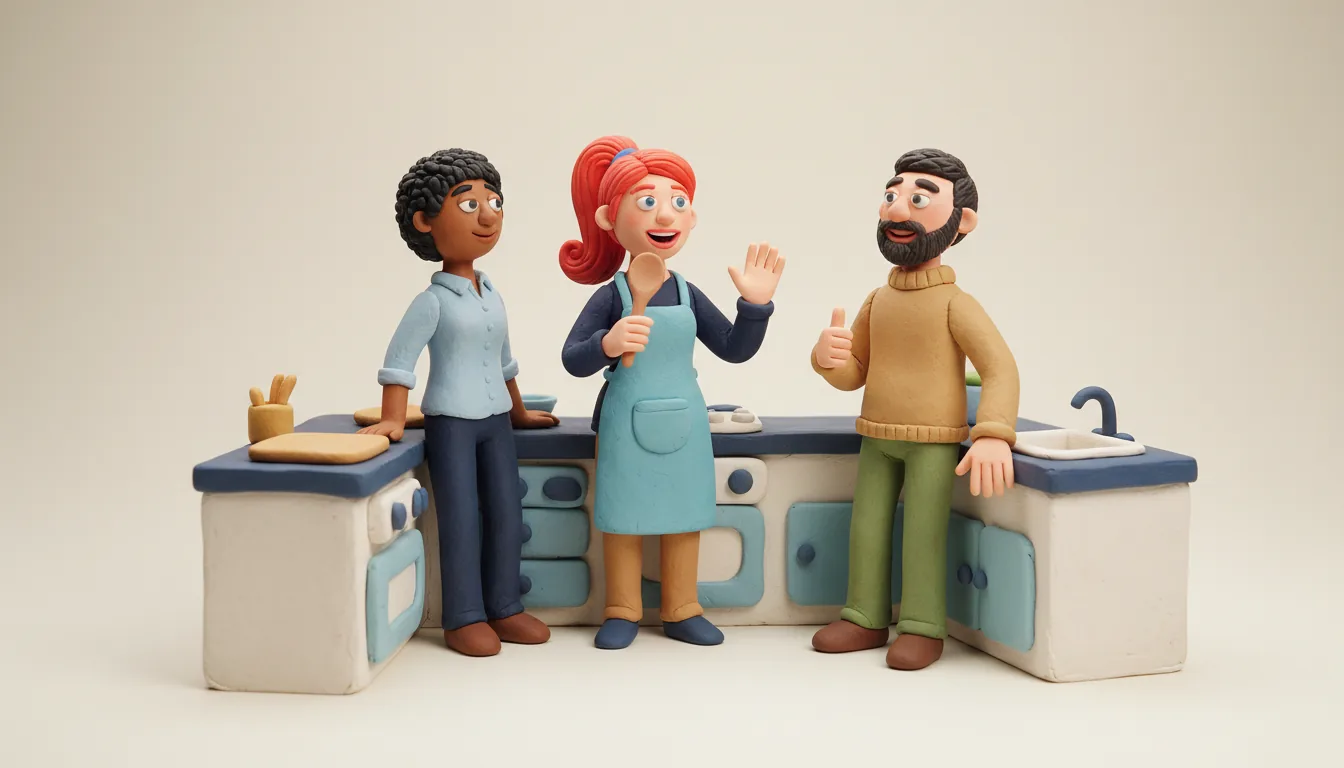
An example: Tess had signed up for her first open mic. On the Sunday before, she ran her five-minute set in Nadia's kitchen, with a wooden spoon as a microphone, while Nadia and Ben leaned on the counter. The jokes went on too long, and two punch lines came after everyone had guessed them. Nadia knew it, but she heard her mother's old rule in her head, so she said, "You're so brave to do this." Ben gave a thumbs up. On Thursday the set fell flat in front of forty strangers. Out on the sidewalk, Tess asked them, "You heard it on Sunday. Why didn't either of you tell me?"
What does "if you don't have anything nice to say" mean?
The saying asks you to choose silence over a hurtful remark. If a neighbor shows you a new haircut you don't like, you don't have to say so. If your aunt's casserole is bland, nobody needs a review of it. In those moments a kind word, or no word at all, keeps the peace and costs nothing.
People use the line in three main ways:
- As a rule for themselves. They bite back a comment because it would only sting.
- As a warning to someone else. A parent says it to a child who just called a cousin's drawing ugly, or a friend says it at a table when the gossip is getting mean.
- As a reason to avoid a hard talk. This is the use that went wrong in Nadia's kitchen. Silence felt kind on Sunday, and it cost Tess on Thursday.
The first two are about kindness. The third is often about comfort, and usually the comfort of the person who stays quiet.
The rabbit who made the line famous
Many Americans know the saying from the 1942 animated film Bambi. A young rabbit, Thumper, makes a rude remark about the newborn Bambi, and his mother makes him repeat what his father told him that morning: "If you can't say something nice, don't say nothing at all." Who said it first is not known.
Other ways people say it
The wording changes a little depending on who is saying it:
- "If you can't say something nice, don't say anything at all."
- "If you can't say anything nice, don't say anything."
- "If you have nothing nice to say, say nothing."
- "If you have nothing good to say, keep it to yourself."
They all mean the same thing. There's also a well-known joke version. A famous Washington hostess of the last century kept a pillow in her sitting room that turned the rule upside down and invited anyone with gossip to come and sit next to her. People still bring up that twist when someone clearly enjoys a bit of mean talk.
Why some people keep quiet and others speak up
Nadia stayed silent. Ben gave a thumbs up because he honestly thought the set was fine. A third friend, had she been there, might have stopped Tess after the first joke. Everyone was taught the same rule, yet people follow it very differently, and personality type explains part of that. Here are six of Typeza's 16 types, listed as on the types page:
- Harmonizer: wants everyone comfortable and hates spoiling the mood. Very likely to stay quiet, and likely to feel bad about it later.
- Analyst: cares about what's accurate. Will point out the weak joke because it's true, and may not notice how it lands.
- Inspector: believes a job worth doing is worth doing properly. Will give a clear list of fixes, in order.
- Diplomat: reads the room before speaking. Finds a light way to say it, or waits for a better moment.
- Guardian: cares a lot about what's fair. Will speak up if staying quiet means letting a friend get hurt.
- Counselor: wants to help a friend grow. Says the hard thing gently, often as a question.
Neither habit is wrong. The quiet friend looks after feelings, and the outspoken friend looks after the plan, and each could use a little of the other.
When staying quiet is the kind choice
The old rule is good advice more often than people admit. Silence is usually the kinder option when:
- It can't be changed. The haircut is done, the house is bought, the wedding was yesterday.
- Nobody asked. Your view on someone's baby name or holiday plans may be unwelcome, however sure you are. There's more on this in unsolicited advice.
- It's about taste. You hate the color of their new couch. They love it, and that settles it.
- You're angry. Words said in the middle of a fight are rarely the ones you'd choose an hour later. Wait.
- It's about someone who isn't there. Talking behind someone's back can feel like honesty, but it's gossip. Happy news is different, and spill the tea sorts the harmless kind from the hurtful.
A simple test: if your friend couldn't fix it in a few minutes, and they didn't ask, let it go.
When an honest word to a friend is kinder than silence
Silence stops being kind once it leaves a friend worse off. That's usually the case when:
- They asked you directly. "Be honest, is it funny?" is a real question. A vague compliment in reply lets them down.
- There's still time. A speech before the wedding, a business plan before the lease, a set before the open mic.
- The stakes are high. Money, health, safety, or a relationship that's clearly hurting them.
- It keeps happening. If a friend's habit is slowly hurting the friendship, saying nothing lets resentment build on your side.
- Everyone else is thinking it. Sometimes a friend is the only person who can say it without it turning into gossip.
The gap between being pleasant and actually doing someone good is the whole subject of kind vs nice, and it sits right in the middle of this saying. Whether honesty is the best policy in every case is the same question seen from the other side.
How to say a hard thing kindly
Speaking up doesn't mean swinging to the other extreme. A few habits keep honesty gentle:
- Ask first. "Do you want my honest take, or do you want a cheerleader today?" Both are fine answers.
- Start with what works. Point to something real you liked, then name the one thing that isn't working yet.
- Pick one or two points. A list of eleven problems buries the person under it.
- Talk about the thing, not the person. "The ending runs long" is easier to hear than "you're not funny."
- Offer help. "Want to run it again tomorrow? I'll time it."
- Choose the moment. Not in front of others, and not an hour before it's too late.
If you tend to overshoot, the line between honest and harsh is covered in brutally honest. And if you're on the receiving end, try to remember that a friend who risks an awkward moment for you is usually being generous.
Back in Nadia's kitchen
The next Sunday, Tess ran a new version of the set, and this time Nadia said what she thought, one point at a time.
Learn what kind of honest friend you are
Some friends keep quiet to protect the mood, some cheer, and some want to fix the problem, and your type is part of the reason. The free friendship compatibility test gives your type a name, with your strong sides and the places you trip up. Then share the link on your result with the friend whose opinion you trust most, or with the one who rarely hears the plain truth from you. Once they finish, your relationship type is there for both of you, showing what comes naturally between you and where honesty takes more effort.
Questions people ask
Is "if you don't have anything nice to say" good advice?
Often, yes. It's good advice for things that can't be changed, things nobody asked about and matters of taste. It's weaker advice when a friend asks for your honest opinion, or when silence would let them walk into a mistake.
Who said "if you can't say something nice, don't say anything at all"?
Who said it first is not known. Many people know it from the 1942 animated film Bambi, where the young rabbit Thumper repeats it.
What is the rest of the saying?
The usual full version is "If you don't have anything nice to say, don't say anything at all." Some people shorten it to "If you can't say something nice, say nothing."
Is it better to be honest or nice?
You rarely have to choose. Honesty said with care is both. When a friend asks, or when something important is at stake, gentle honesty is usually the kinder option.
Sources
- Wikipedia, "Thumper (Bambi)". Thumper's line in the 1942 film, prompted by his mother and taught by his father.
- Quote Investigator, "If You Can't Say Something Good About Someone, Sit Right Here by Me". The joke version on a pillow in the sitting room of Alice Roosevelt Longworth, a Washington hostess, first in print in 1965.
Written by Virko Kask, founder of Typeza
Written with the help of AI tools.
One question for two, every week
A question to ask your partner, friend or family, and how different types tend to answer it.
Free. Unsubscribe any time.