
Kind vs nice: the difference, and why it matters in friendships
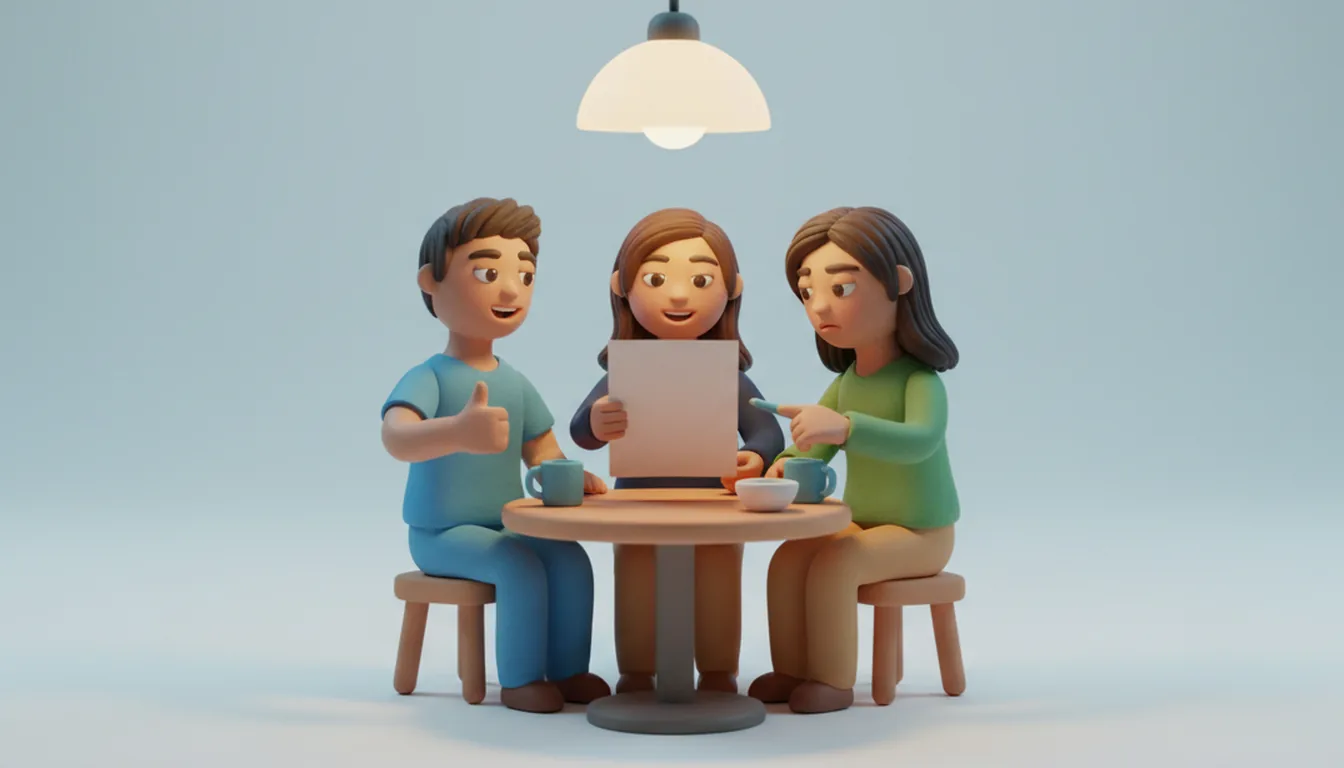
Being nice means being pleasant and easy to have around. Being kind means acting for another person's good, even when that is awkward or costs you something. Nice looks after the mood in the room. Kind looks after the person, and sometimes that means saying what nobody wants to hear. Many of us manage both on a good day. The gap opens on the hard days.
An example: the night before her brother's wedding, Greta reads her toast to two friends at the kitchen table. Dana laughs at every line and says it is perfect. Noor waits until the end, then says the joke about the groom's first marriage will make his mother cry. Greta's face falls. Then Noor pulls her chair closer, picks up a pencil and stays until one in the morning to help her write a better ending.
Both friends love Greta. Dana was nice. Noor was kind.
What is the difference between nice and kind?
Nice is about how you come across. A nice person smiles, agrees, says thank you and steers around friction. Niceness is useful. It gets a family dinner or a first meeting through without trouble.
Kindness is about what you do for someone. A kind person notices what you need and acts on it. They will drive you to the airport before sunrise. They will also tell you that your partner talks down to you, if they think you need to hear it.
Three checks help tell the two apart:
- The person it serves. Niceness often shields the nice person as well, from a fight or an awkward silence. Kindness is aimed at the other person.
- The cost. Being nice is usually cheap. Kindness often costs an evening, some comfort or the risk that someone gets upset with you.
- How it looks a month later. A nice answer feels good tonight. A kind one still looks right after the dust settles.
Five moments where nice and kind split
Friendship is full of small choices. Here is how the two answers tend to sound.
- Your friend shows you a haircut they hate. Nice: "It looks great!" Kind: "It's shorter than you wanted, I can tell. It will grow back fast, and the shape suits your face."
- A friend asks to borrow money for the third time. Nice: you hand it over and quietly resent it. Kind: you say no to the money and offer to go through their budget with them.
- A friend says "I'm fine" in a flat voice. Nice: you accept the answer and change the subject. Kind: you message them the next morning to ask again.
- Your friend's new partner makes jokes at their expense. Nice: you laugh along to keep the evening smooth. Kind: you find a quiet moment later and ask how those jokes land with them.
- A friend is moving house on Saturday. Nice: "Shout if you need help!" Kind: "I'll be there at nine with my car and a roll of tape."
In the last two moments the kind answer is simply more work. Kindness keeps going after the easy reply is over.
Kind but not nice, and nice but not kind
Some people are kind but not nice. They may be blunt, short on small talk and slow with compliments. They also show up. They fix your sink, tell you the truth about the flat you are about to rent and remember the date of your mother's operation. People often find them cold at first and loyal for life. Their bluntness is easy to mistake for meanness, and why are people mean shows how to tell the two apart.
Others are nice but not kind. They are warm to your face and vanish when helping gets inconvenient. They praise a plan they privately think is a mistake, then share their real opinion with someone else, which is how two-faced behavior usually starts. Often this comes from fear more than from falseness, because disagreement feels so uncomfortable to them.
Many of us sit in between, and our lean shows when we are tired or rushed.
Signs a friend is kind, not only nice
- They tell you hard things in private, never in front of others.
- They remember what you told them last month and ask how it went.
- They help with the boring jobs, like the dishes, the forms or the long drive.
- They say no when they mean no, so you can trust their yes.
- They speak about you the same way when you are not in the room.
- They will risk an awkward evening to keep you from a bad decision.
None of these needs a warm manner. A quiet friend who never says "love you" can do every one of them.
Why kindness counts for more in a friendship
Niceness is enough for neighbors and the people you meet once at a party. A friendship asks for more, because a friend sees you at your worst and gets asked to help in ways that are not pleasant. Over the years, the friends we keep tend to be the ones who said a hard thing carefully and then stayed to help.
Too much niceness wears a friendship down. If you only ever hear yes, you stop believing it. Small annoyances go unspoken and grow. Some friendships that end in silence ended that way because both people were too polite to say what bothered them. Learning to be a good friend often means learning to be a little less nice and a lot more kind.
Honesty without care has its own cost, though. Truth used to score points helps nobody. Reading how a friend feels before you speak is part of emotional intelligence, and it is what turns a blunt truth into a kind one.
Why nice comes easier to some people, and kind to others
Personality type shapes which of the two comes first. In Typeza no type is unkind, and every type can learn both, from different starting points.
Some types find niceness easy and the harder kind of kindness a stretch:
- Harmonizer: they make everyone comfortable and smooth over tension. Telling a friend "I think this is a mistake" can feel like breaking the peace they work so hard to keep.
- Vitalizer: they shower friends with warmth and favors. Their growth edge is the kind "no" to a request that would wear them out.
- Counselor: they feel what others feel and want nobody hurt. When a friend needs a firm word, they tend to soften it until the message gets lost.
Other types are often kind before they are nice:
- Inspector: reliable to the letter. If they promised to help, they arrive on time with the right tools, and they can seem cool to a friend who mostly wanted a hug.
- Commander: when a friend is in trouble, they act at once, make the call and drive over. The help is real, and the words around it can be rough.
- Strategist: they see where a plan will go wrong and say so. To them, a warning is a gift. To a friend who wanted support, it can sound like doubt.
- Organizer: they care through doing, so the leak gets fixed and the boxes get carried. A free Saturday spent on your problem comes easier to them than warm words.
Each of these is a lean. A Harmonizer can be fiercely honest when a friend is in danger, and a Commander can be the gentlest person at the table.
How to be kind, not just nice
- Pause before the easy answer. Think about what your friend will need next week, and only then about what feels good tonight.
- Say hard things early and in private. A small word now saves a big talk later.
- Offer something specific. "I'll bring dinner on Thursday" is worth more than an open offer nobody takes up.
- Let your yes and no mean something. If you agree to everything, nobody can tell what you think.
- Check your reason for staying quiet. Silence to keep yourself comfortable is niceness, even when it looks like the old rule about having nothing nice to say. Silence because your friend needs comfort more than advice right now is kindness.
Kindness keeps its manners, too. The friends people treasure give the truth gently, with a hand on your shoulder. If you lean the other way and want to be a nicer person, the same list works in reverse: put a warm sentence before the honest one, ask before you give advice and say thank you out loud.
What kind of kindness do you give?
Noor's kindness was a pencil and a late night. Someone else's might be a hot meal, a warning or the space to be alone for a while. Your personality type points to the kind you give without trying and the kind you have to work at. In the free personality test, every question is a pair of statements, and you tap whichever sounds more like you. When you finish, your type appears with your position on four base traits, and one of them shows whether logic or feelings lead your decisions. Its profile costs nothing to read and spells out what that type gives the people around it and what it needs back. You get all of this before any sign-up.
If your kindness and a friend's keep missing each other, invite them to the same test from your result page. Inviting someone takes a free account. Once your friend has answered too, the two of you get your relationship type, with what each side tends to offer the other unasked.
Questions people ask
Is it better to be kind or nice?
Kind, when you have to choose. Niceness makes moments easier, and kindness makes lives better. The friends and partners people value most usually manage both, with a warm way of saying honest things.
What does "be kind, not nice" mean?
It asks you to put a person's real good ahead of keeping the mood pleasant. Politeness stays welcome, as long as it does not replace honesty or real help.
Is being too nice a bad thing?
It can be. Agreeing to everything leaves you tired and resentful, and friends stop trusting your praise. Part of being kind is being honest about your own limits.
When is Random Acts of Kindness Day each year?
In the US it falls on February 17, and many people mark the whole week around it as Random Acts of Kindness Week. For a friend, take one small chore off their list without being asked, like clearing the snow from their car before work.
Sources
- Random Acts of Kindness Foundation, "The history of Random Acts of Kindness Day": the day falls on February 17, inside a week of the same name.
Written by Virko Kask, founder of Typeza
Written with the help of AI tools.
One question for two, every week
A question to ask your partner, friend or family, and how different types tend to answer it.
Free. Unsubscribe any time.