
Two-faced people: the signs, why people do it, and what to do
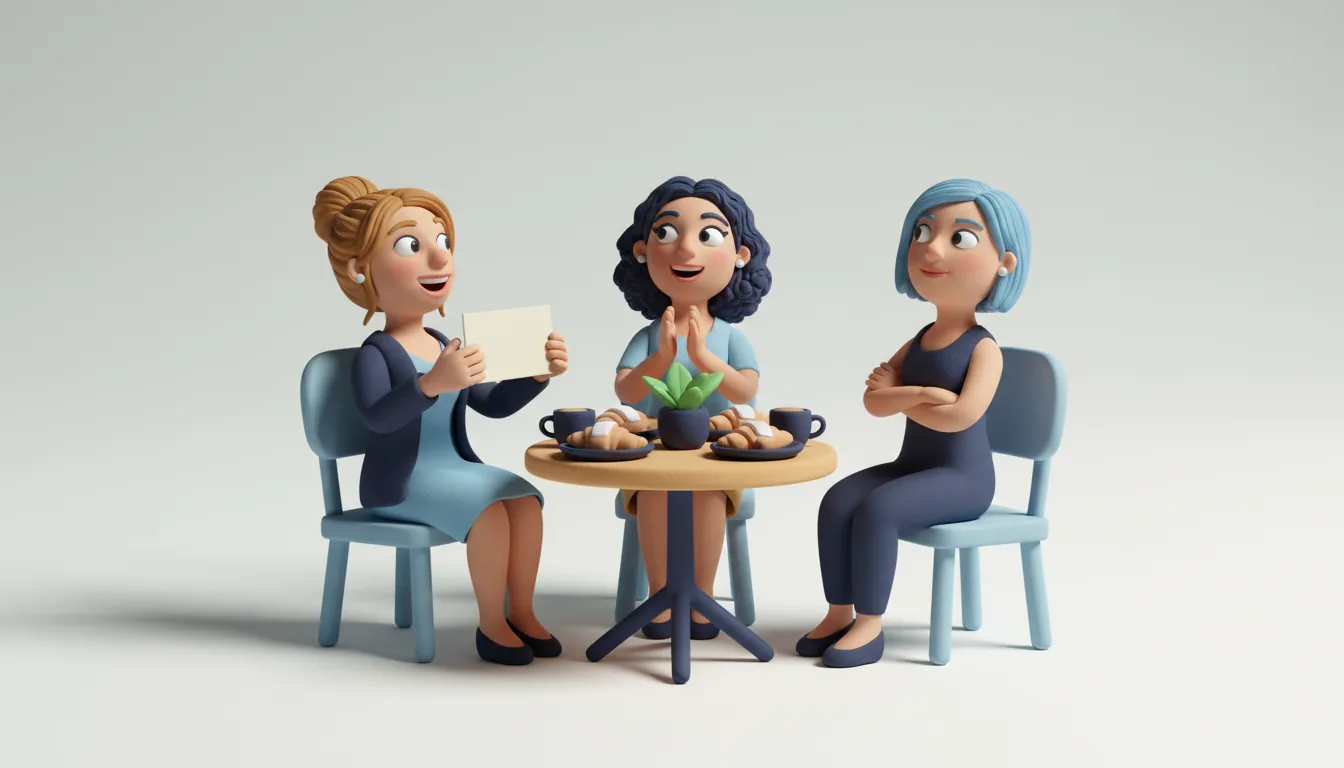
A two-faced person acts one way to your face and another way behind your back. They are friendly, agreeable or full of praise when you are there, and critical or mocking when you are gone. Among adults it is often small and everyday. It tends to come from wanting to dodge an awkward moment or to fit in with whoever is in the room, more often than from a plan to hurt anyone.
An example: Priya tells her two oldest friends about her wedding plans over brunch: a small barn, one long table, her grandmother's recipes. Jess claps and says it sounds perfect. Lou smiles and asks about the cake. Two weeks later, Lou quietly shows Priya a message Jess sent to a different group chat: "The barn thing is so try-hard." Priya can live with Jess not liking barns. What keeps her awake is the clapping.
What does two-faced mean?
The word paints a simple picture: a head with a face on each side, one smiling at you and one turned the other way. When people call someone two-faced, they mean the person's words change with the audience. To you, your new haircut is great. To the next person, it's a mistake. A fancier word for it is Janus-faced, after the Roman god with two faces.
People also say someone is fake, insincere or a backstabber, or that a person is "all smiles to your face." Many of these sound harsher than the everyday version, which is often just one friend saying different things to different people.
Everyday signs of a two-faced person
A single odd comment proves little. A pattern says more. Some signs people often notice:
- They agree with everyone. They nod along with you, then nod along with the person who thinks the opposite.
- They bring you news about others. If someone tells you what everyone else did wrong, they may be telling others about you.
- Stories come back to you changed. You hear from a third person that they said something very different from what they told you.
- Their warmth depends on who's watching. They are lovely when the right people are around and cool when they aren't.
- They back a plan and then sink it. They say yes to your idea at dinner and complain about it to someone else the next day.
- Their compliments leave a strange aftertaste. The praise sounds rehearsed, as if they say it to everyone. Sometimes it's a backhanded compliment with a small dig tucked inside.
Different with different people: is that two-faced?
Everyone changes a little depending on the company. You probably sound one way with your grandmother and another way with your college roommates, and you share different things with each. That is ordinary. People show different sides in different settings, a bit like the masks we wear at a family dinner or a party, and none of that makes them dishonest.
It becomes two-faced when the opinions change along with the tone. A friend who is louder with her sister and softer with you is just adapting. A friend who calls your wedding plans perfect to you and try-hard to others has two stories about the same thing. One question settles most cases: would this person be embarrassed if the two people they spoke to compared notes? If yes, that's two-faced.
Why people act two-faced
Knowing the reason won't take the sting away, but it helps you decide what to do next. Some common reasons:
- Avoiding conflict. Saying "I love it" is easier than saying "I'm not sure." The real opinion comes out later, somewhere that feels safer.
- Wanting to belong. In a group that teases someone, joining in feels like being part of the group, even when the person being teased is a friend.
- Wanting everyone to like them. Some people tell each person what that person wants to hear, and the stories pile up.
- Rivalry. A friend who feels behind you in life may praise you in person and shrink your wins when you're not there.
- Venting. People sometimes complain about someone they love to let off steam. From the outside it looks two-faced, even when the friendship is solid.
- Gossip as glue. Sharing a little dirt about someone who isn't there is a fast way to feel close to the person who is.
A two-faced friend
Friends are where it hurts most, because you chose them. Start by asking whether this happened once or keeps happening. One snide message after a long week is different from a habit of praising you in person and picking at you elsewhere. If the friend also competes with you and seems to enjoy your bad news, that is closer to a frenemy, a friendship with a rival mixed in.
With a good friend, the direct way often works best, and it can be calm. Priya picks a quiet moment and says: "I saw what you said about the barn. I'd honestly rather hear it from you." Jess goes red, apologizes and admits she felt left out of the planning. The talk is awkward for ten minutes, and the friendship is better for it.
Whatever you decide, keep private things private until trust is back, and don't recruit the rest of the group to your side. What the friend does over the next few months will tell you more than the apology.
Two-faced relatives
Families are harder. You can't step back from an aunt the way you can from a friend, and every story travels through the whole family. The patterns are familiar: an aunt who praises your cooking at the table and criticizes it to your mother in the kitchen, a sibling who agrees with each parent in turn, an in-law who is sweet in person and cool on the phone. A relative who stirs up scenes on purpose is closer to a drama queen, and that's a different problem.
A few habits keep family life calmer:
- Don't carry messages. When a relative says "Don't tell her I said this," you can answer, "Then maybe tell her yourself."
- Check the story at the source. Before you react to something your brother supposedly said, ask him. Family news that has passed through three people needs a grain of salt.
- Talk to your siblings directly. If a parent passes tales between grown children, the children can simply call each other.
- Keep the big holiday light. Save hard talks for one on one, when nobody has an audience.
How to stay straight yourself
Many people have been a little two-faced at least once. You praised a friend's new boyfriend and rolled your eyes later, or you said yes to a plan you didn't like. A few honest phrases that are still kind make it easier: "It's different from what I'd pick, and I can see it makes you happy." "Can I think about it?" "I'd rather not talk about her when she isn't here."
The simplest rule is to say nothing about a person that you wouldn't say if they walked into the room. And before you call someone else two-faced, check that it isn't the pot calling the kettle black.
Why some people say yes to your face
For some people, disagreeing face to face is easy. Others will do almost anything to avoid it, and their real opinion comes out later, somewhere safer. Typeza sees personality type as part of that difference. Six of the 16 types:
- Harmonizer: keeps the peace in the moment, because conflict drains them. They'd rather not be asked to pick a side.
- Vitalizer: puts feelings into words and wants the room warm. A disagreement said kindly and face to face lands well with them.
- Analyst: goes still and says less when pushed for an answer on the spot. Give them time and a plain question, and their real view often comes out.
- Diplomat: knows within minutes who matters to whom in a room, and stays loyal to people who are loyal back. They hear more gossip than you'd think.
- Guardian: has little patience for people who say one thing to their face and another behind their back. Once their trust is broken, it is slow to come back.
- Counselor: needs honesty said gently and in private. A sharp tone stays with them far longer than the point you made.
These are tendencies, and none of these types is two-faced by nature.
Learn how you and a friend handle honesty
If a friendship keeps leaving you unsure what the other person really thinks, type is often part of it. Try the free friendship compatibility test. You go first. Your type is on the screen right away, with a free sketch of its strong and weak spots, and you can see it without signing up.
Bringing your friend in takes a free account, and the invite link is on your result page. Anyone 16 or older can join. When your friend has answered too, you get the relationship type between you, plus where you click and where you snag.
Questions people ask
Is being two-faced the same as being fake?
They overlap. Two-faced means saying different things to different people about the same matter. Fake is wider and can also mean pretending to feel something you don't, even when everyone hears the same thing.
What does disingenuous mean?
Disingenuous means pretending to be more sincere or open than you are. It can also mean saying less than you know, like acting surprised by news you heard a week ago.
Sources
- Wiktionary, "two-faced". Deceitful or hypocritical, with Janus-faced as a synonym.
- Wiktionary, "disingenuous". Not frank or open, or putting on a pose of naivety to make a point or to deceive.
Written by Virko Kask, founder of Typeza
Written with the help of AI tools.
One question for two, every week
A question to ask your partner, friend or family, and how different types tend to answer it.
Free. Unsubscribe any time.