
Signs of high emotional intelligence, and what it looks like every day
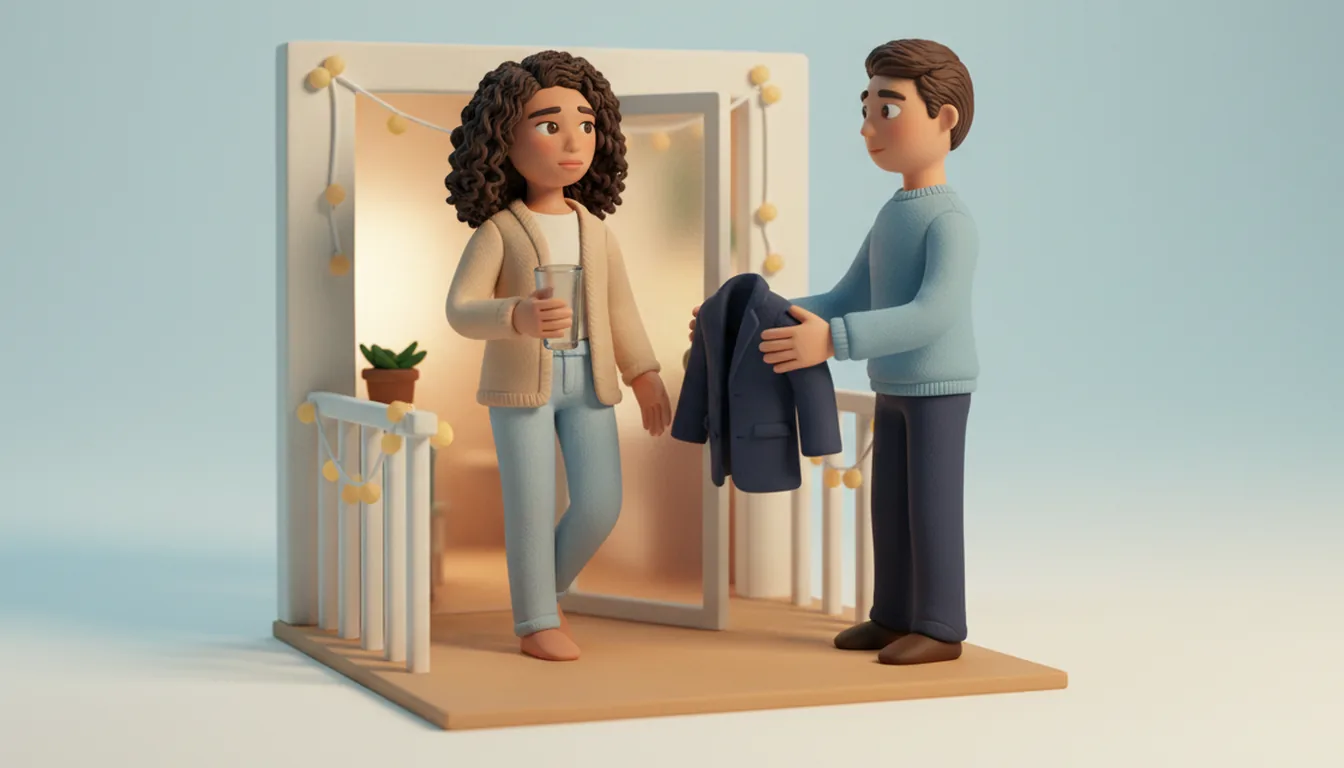
Being emotionally intelligent means you notice feelings, your own and other people's, you understand what they are telling you, and you use that to choose what you say and do. It shows in small moments, like a pause before a sharp reply or a question asked at the right time.
An example: at a friend's birthday dinner, Omar notices that Jess has gone quiet. She laughs a beat after everyone else and keeps checking her phone. He doesn't ask "what's wrong?" across the table. He waits until the cake, then asks if she wants some air. On the balcony she tells him her mother is in the hospital. Later Jess says to a friend, "Omar just gets people." What she means is that Omar has high emotional intelligence.
What does emotionally intelligent mean?
Psychologists described emotional intelligence as a set of skills in 1990, and a 1995 book made the term widely known. In plain words, an emotionally intelligent person is good at four things:
- Noticing their own feelings as they happen, and naming them with more than "fine" or "stressed".
- Handling those feelings, so a bad mood colors the day without running it.
- Reading other people's feelings from their face, their voice and what they leave out.
- Using all of that with people: knowing when to talk, when to listen and how to say a hard thing kindly.
Emotional intelligence is a set of habits, and most people are stronger in some of them than in others. One person reads a room in seconds and still loses their temper at home. Another stays calm in any storm and misses that a friend is hurting.
Signs of high emotional intelligence
Nobody shows all of these all the time. If most of them sound like you, or like someone you admire, this is what high emotional intelligence looks like.
- You can name what you feel, and often why.
- You notice when someone's mood changes, even if they say nothing.
- You can stay calm in an argument and keep listening.
- You apologize for the specific thing you did, without a "but".
- You can hear criticism and look for the part that is true.
- You don't take every bad mood around you personally.
- You know what upsets you, and you can tell people before it happens.
- You can be happy for a friend's good news even when you feel a little jealous.
- You let people finish their story before you give advice.
- You can say no kindly.
- People come to you when something is wrong.
Examples of emotional intelligence in daily life
You can spot emotional intelligence most easily in ordinary moments like these.
- Your partner snaps at you after a long day. You don't snap back. You ask, "Rough day?" and the evening can turn around.
- A friend cancels plans for the third time. You feel hurt, and you tell her so calmly the next day instead of going cold for a month.
- Your brother is nervous about a hard talk with his landlord. You skip the "it will be fine" and help him practice what he wants to say.
- You feel your voice rising in a family argument, so you say, "Give me ten minutes," and go for a walk.
- At a party, you notice someone standing alone by the snacks and bring them into your group.
Emotional characteristics of emotionally intelligent people
The signs above grow out of a few emotional characteristics that tend to go together.
- Self-awareness: they know their own patterns and moods. What is self-awareness covers this part in more depth.
- Self-control: they feel anger and fear like everyone else, and they choose what to do with them.
- Curiosity about people: they wonder why someone acts the way they do before they judge.
- Warmth: people feel safe telling them things.
- Patience: they give others time to say what they mean.
- Honesty: they can say what they feel without blaming anyone.
- Flexibility: they change how they talk to suit the person in front of them.
Being emotional vs being emotionally intelligent
People often mix these up. An emotional person feels things strongly and shows it. They cry at films, laugh loudly and get angry fast. That tells you how big their feelings are. Emotional intelligence is about what a person does with them.
A very emotional person can have high emotional intelligence: they feel a lot, know what they feel and choose how to show it. A calm, quiet person can have low emotional intelligence if they miss what others feel or shut down every hard conversation.
If people tell you that you are too emotional, nothing is wrong with you. Strong feelings often point to something that matters to you. The skill is to notice the feeling, give it a name and decide what to do with it before you act.
What emotional intelligence is not
A few things look like emotional intelligence from a distance and turn out to be something else.
- Always being nice. Emotionally intelligent people can be blunt. They pick the moment and the words.
- Never getting upset. Hiding every feeling is different from handling it. Hidden feelings can come out later, somewhere else.
- Reading minds. A good guess about a feeling is still a guess. Emotionally intelligent people check: "You seem quiet. Are you okay?"
- Using feelings to get your way. Some people read others very well and use it to push them around. That is a talent for reading people, used without kindness.
How each personality type shows emotional intelligence
Emotional intelligence looks different from one person to the next. Some people show it with words about feelings. Others show it with calm, fairness or a practical favor at the right moment. In Typeza, each of the 16 types has its own natural way:
- Ideator: lifts a heavy mood with a new idea or an unexpected joke, and helps a stuck friend see another way out.
- Harmonizer: senses tension in a room early and softens it, often with food, comfort or a quiet word.
- Vitalizer: feels the mood of a group and lifts it, and shows up for friends again and again.
- Analyst: stays calm and fair when others get heated, and helps people see a problem clearly.
- Mentor: reads what moves people and puts feelings into words that others can't find.
- Inspector: shows care through reliability. When they promise to help, they help, on time.
- Commander: takes charge in a crisis, so the people around them feel safe.
- Dreamer: senses a change in someone before anyone says a word.
- Diplomat: reads the room in seconds and knows how to lift people in the moment.
- Strategist: sees where a conflict is heading and gives honest advice before it gets worse.
- Entrepreneur: helps by acting, and finds a way to fix what is weighing on you.
- Guardian: reads people's character well and stands by the people they trust.
- Organizer: shows love through practical help, from fixing a sink to cooking for a sick friend.
- Counselor: notices quiet feelings in a room and gives people a calm space to put them into words.
- Encourager: sees potential in people and makes them feel accepted as they are.
- Craftsman: shows care with their hands and their time more than with words, and notices when you are cold, tired or hungry.
Each type also has a side where it takes more effort. An Analyst may need to say out loud what they feel. A Commander can push past other people's feelings to get things done. A Counselor may put off a needed hard talk to keep the peace. Knowing your type shows you where your emotional intelligence comes easily and where it needs practice.
How to grow your emotional intelligence
Emotional intelligence grows with practice, a little at a time. Pick one of these and try it for a week.
- Name one feeling a day. Stop once a day and name what you feel in one precise word, like "let down" or "restless".
- Pause before you reply. When a message makes you angry, wait an hour before you answer it.
- Ask before you fix. When someone brings you a problem, ask whether they want your ideas or just your ear.
- Check your guesses. If you think someone is upset, ask them instead of assuming.
- Watch someone you admire. Notice what they do in a tense moment, and borrow one thing.
Your type and the way you read people
Omar reads a quiet friend. Someone else reads a tense room, or knows which practical fix will calm things down, and your personality type shapes which kind comes to you first. In the free personality test you pick one of two statements each time, and with no neutral option your real leanings come through. The result names your type and shows your four base traits, one of which is whether you weigh how people feel or what is true first. Your type's profile, free to read, covers where that type shines with people and where it struggles. You see your type without an account.
If someone close to you reads you better than anyone, or not at all, send them the same test from your result. After you both finish, Typeza shows your relationship type and how it feels from where each of you stands.
Questions people ask
Can you learn emotional intelligence?
Many researchers think it can be strengthened with practice, while others see part of it as inborn. Naming your feelings, pausing before you react and asking people how they feel are good places to start.
Why are some people more emotional than others?
People are built differently. Some feel things strongly and show it at once, and others feel just as much and keep it inside. Your personality type, your family and what is going on in your life all play a part.
Do emotionally intelligent people get angry?
Yes. They feel anger like anyone else. The difference is that they notice it early, and they choose how and when to say what made them angry.
What is the difference between sensitive and emotional?
Sensitive is about how much you take in, such as a sharp tone or a sad face. Emotional is about how strongly you feel and show it. Many people are both.
What do you call a very emotional person?
Expressive, passionate or tender-hearted all fit, and none is an insult. They describe how strongly someone feels.
Sources
- Wikipedia, "Emotional intelligence". Peter Salovey and John Mayer's 1990 model, Daniel Goleman's 1995 book Emotional Intelligence that made the term widely known, and the open debate on whether it can be learned.
Written by Virko Kask, founder of Typeza
Written with the help of AI tools.
One question for two, every week
A question to ask your partner, friend or family, and how different types tend to answer it.
Free. Unsubscribe any time.