
Emotional baggage: what it is and how it shows up in a relationship
Emotional baggage, also called relationship baggage, is the old habits, fears and expectations a person carries from past relationships or the family they grew up in into a new one. Everyone has some. Much of it is small and harmless, and a lot of it can be talked about calmly at home.
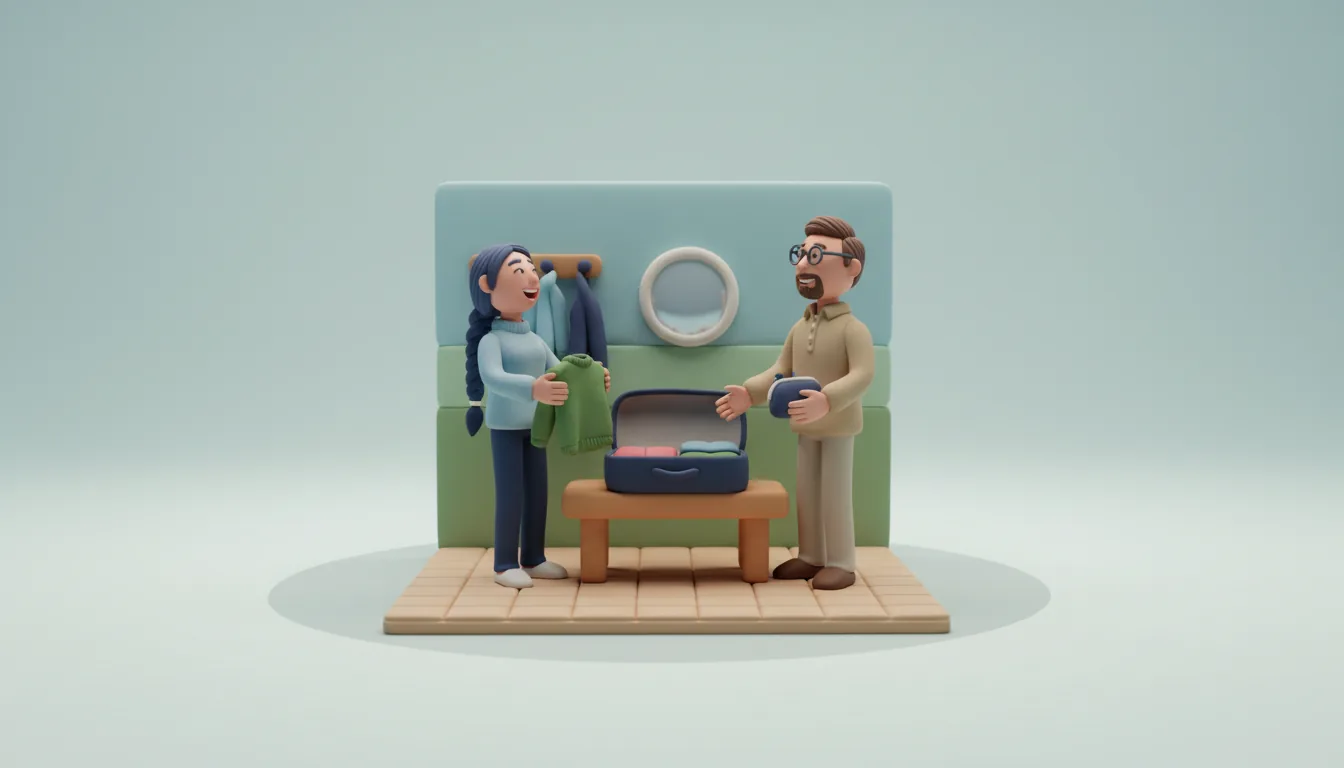
An example: Ines and Dev got back on Sunday evening from a weekend at his sister's and started unpacking the suitcase in the hallway. Both were still thinking about the drive there. On Friday they had argued about which exit to take. It was a small thing, but Ines couldn't let it go until she had proved her way was faster. In her family, whoever won the argument at dinner got listened to. Dev had stopped talking for most of an hour. In his last relationship, every disagreement turned into a long fight, and saying nothing had felt safer. Holding his wash bag, he nodded at the suitcase. "We packed more than clothes for that trip," he said.
Where it comes from
Baggage in a relationship often starts somewhere ordinary.
- The family you grew up in. How your parents argued, made up, showed love and handled money becomes your idea of normal. Ines learned to win at the dinner table. Someone else learned that nobody raises their voice, ever.
- Past relationships. A partner who was often late, or who checked your phone, or who went cold when upset, can leave you watching for the same signs in the next person.
- Old friendships. A friend who dropped you suddenly can make you slow to trust a new one.
- Small letdowns that added up. Being the one who always planned, or the one who was always told to calm down, stays with you too.
None of this makes a person damaged. It makes them someone with a history, which is everybody past a certain age.
How old habits show up between partners
Baggage is rarely obvious. It shows up as a reaction that seems a bit bigger than the moment calls for.
- A jealous flash. Your partner mentions a coworker twice and something tightens in you, because someone once lied about a coworker.
- Going quiet. Like Dev in the car, some people stop talking when a disagreement starts, because silence once kept the peace.
- Needing to win. Like Ines, some people can't drop a small argument until they've been proven right.
- Expecting to be let down. A plan gets moved and you're sure it means they've lost interest.
- Saying sorry for everything. Apologizing before anyone is upset, out of an old habit of keeping someone else calm.
- Keeping things to yourself. Not asking for help, because asking once led to being told you were too much.
When your partner reacts like this, it often has little to do with you. If a reaction like that stings anyway, these habits for not taking things personally can help you stay steady while you work out what's going on.
Baggage between friends
Friendships carry baggage too. A friend who was left out of a group once may get very quiet when plans are made without her. Another may still feel hurt, years later, about a birthday nobody remembered. Old hurts between two friends can turn into a slow distance if nobody mentions them, and some people end up holding grudges about things the other person forgot long ago. The fix is the same as with a partner: say what happened, how it felt and what you'd like now.
Why different types carry it differently
Two people can go through the same kind of letdown and come out of it with very different habits. Personality plays a part in that. Here's how eight of the 16 types often carry the past.
- Harmonizer wants calm at home. An old hurt can make them avoid any argument at all, even a small and useful one.
- Analyst tends to make a rule from a bad experience and keep to it. Their baggage can look like distance.
- Mentor feels things strongly. An old fear can flare up fast in a tense moment and fade just as fast.
- Inspector remembers exactly what went wrong last time and builds trust slowly, one kept promise at a time.
- Commander may hate to look weak. An old loss can show up as a need to stay in charge.
- Dreamer reads moods closely. A silence from a partner can feel like the start of something bad, because once it was.
- Guardian is deeply loyal. When trust was broken before, it takes them a long time to give it fully again.
- Counselor feels things deeply and may blame themselves first. They want to feel safe before they open up.
Is it baggage or just who they are?
Not every habit is baggage. Some people are quiet by nature. Some like to argue for fun. Some need a lot of time alone. Those are parts of personality, and they don't need fixing.
A useful test is whether the reaction fits the moment. If your partner goes quiet whenever they're tired, that may just be them. If they go quiet only when a disagreement starts, and seem tense rather than calm, there may be an old story behind it. Someone who keeps every partner at a distance for years may be closer to emotionally unavailable, which is a different and bigger question than a habit picked up along the way.
Talking about it with your partner
Baggage often gets lighter once two people can name it together.
- Pick a calm moment. Not in the car, mid-argument. A quiet evening or a walk works better.
- Start with your own. "I think I need to win because of how my family argued" is easier to hear than "You shut down because of your ex."
- Name what you'd like. Dev could say: "If I go quiet, give me ten minutes, then ask me again."
- Agree on a phrase. Some couples use a word like "suitcase" to say "I think this is old stuff, not about you."
- Be patient. Habits built over years don't change in a weekend.
Knowing each other's old stories is part of a long-term relationship that lasts.
See which of your habits come with your type
Some of what feels like baggage is simply how you are made, and your type helps you tell the two apart. The free couples compatibility test shows yours. Pass your partner the link once you have your result. When your partner has finished, the page on your relationship type describes what usually goes smoothly between your two types and what needs effort.
Questions people ask
What is emotional baggage?
The past you bring into a new relationship: things that once hurt or once worked, and that still shape how you react.
What is baggage in a relationship?
It's when something from the past shapes how someone reacts now, like a jealous flash, going quiet in an argument or needing to win.
Is it a red flag if someone has baggage?
Not by itself. What matters is whether they can talk about it and are willing to work on the habits that hurt the relationship.
How do you know if you have emotional baggage?
Look for reactions that feel bigger than the moment, and for patterns that repeat with different people. Ask someone close to you what they notice.
Can emotional baggage go away?
It usually gets lighter rather than disappearing. Naming it, talking it through and building new habits with a patient partner helps a lot.
Sources
- Dictionary.com, "baggage". The sense "things that encumber one's freedom, progress, development, or adaptability," with "emotional baggage" as the example.
Written by Virko Kask, founder of Typeza
Written with the help of AI tools.
One question for two, every week
A question to ask your partner, friend or family, and how different types tend to answer it.
Free. Unsubscribe any time.