
Give them an inch and they'll take a mile: setting the line kindly
"Give them an inch and they'll take a mile" means that if you let someone have a little, they may keep asking for more until they're taking far more than you meant to give. An inch is tiny. A mile is 63,360 inches. The gap is the point.
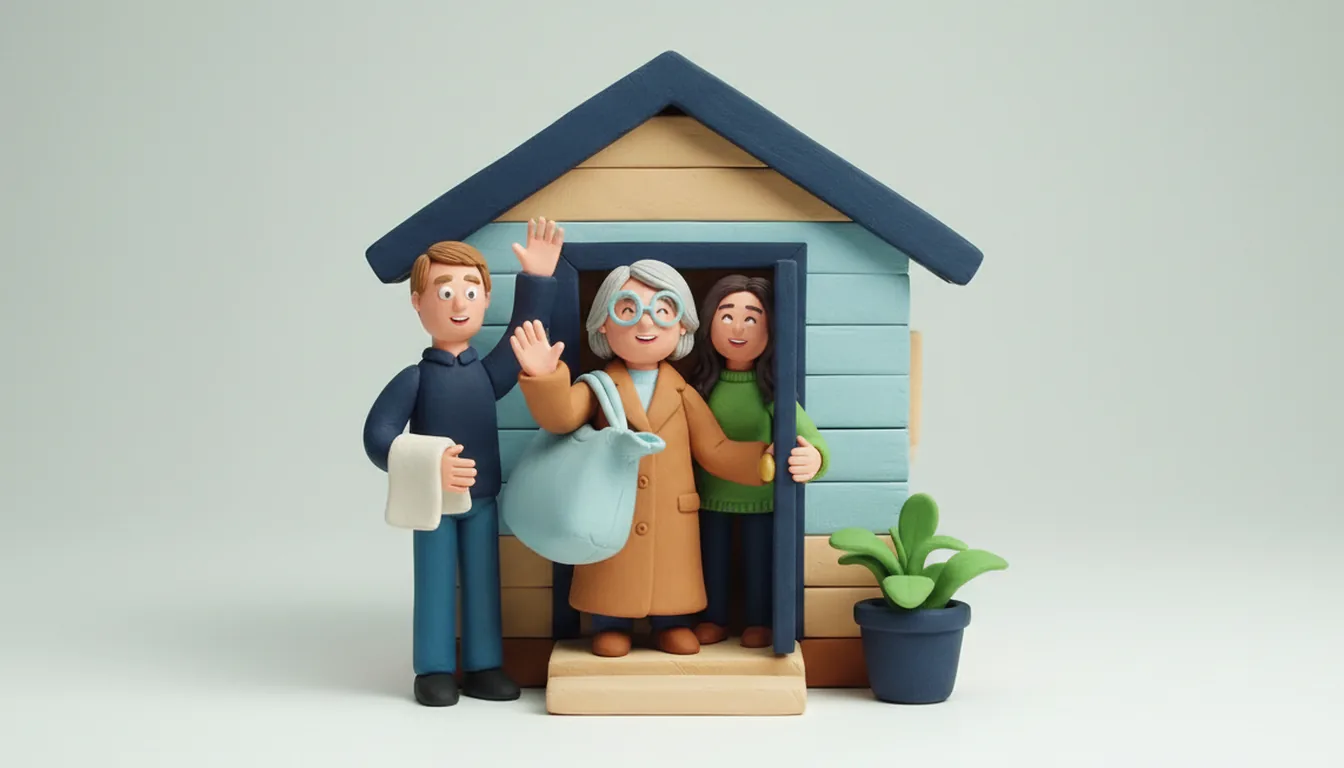
An example: every Sunday at noon, Aunt Rena rings Nina's doorbell with a bag of laundry over her shoulder. It started with one lunch, then a second one with a cake. When her washing machine broke, she asked if she could run "one small wash" while they ate, and Nina said of course. The machine is fixed now, but the bag keeps coming, and so does a list of small jobs for Nina's husband Joel. A shelf that wobbles. A door that sticks. This Sunday Joel stands in the hall with a dish towel in his hands, looks at the bag, and then looks at Nina. She is holding the door open and smiling the way you smile when you can't think what else to do.
Nobody planned any of it. Rena is a kind woman, and Nina likes having her around. The favors just grew.
How people use the saying
You'll hear it as "give an inch, take a mile," "give him an inch and he'll take a mile" or "if you give her an inch." People usually say it as a warning before they agree to something, or with a sigh afterward. It can sound harsh about the other person, but often nobody is scheming. Favors just tend to grow when no one says where they stop.
How a favor grows without anyone deciding
Each step on the way to the mile is small. One wash is small. One shelf is small. Because each step is only a little bigger than the last, there's never an obvious moment to say no. And once something has happened three Sundays in a row, it starts to feel like the way things are.
There's another reason it's hard to stop. Saying no to a new favor feels easy. Saying no to an old one feels like taking something away. Nina could have said "the laundry stays home" in the first week without much trouble. Saying it months later feels like starting a fight.
The relative who borrows a bit more each time
Families are where this often happens, because the ties are long and nobody wants to be the difficult one. Think of a cousin who borrows a little money for a train ticket, then a bit more for a weekend, then asks again before the first two are paid back. Each time the amount is small enough that refusing seems mean.
You can keep helping family and still set a limit. Decide, before the next request, what you're glad to give and what you're not. Nina is happy to have Rena for lunch every Sunday. She isn't happy to do her laundry. Those are two separate things, and only one of them has to go.
The friend on the sofa
Say Leo's friend Marcus needs somewhere to sleep for one night while his new flat is being painted. One night becomes the weekend. Then the painters are late, and then Marcus says the place still smells of paint. Five weeks later he is still on Leo's sofa, eating Leo's cereal and leaving his shoes in the hall.
A sofa stay grows fast because the first yes didn't have an end date. "One night" sounds clear, but it's easy to stretch, and asking a friend to leave feels rude. The kindest version starts at the beginning: "You're welcome till Sunday." If you're already in week five, a date still works. "We need the room back by the end of the month" is clear, warm enough and gives your friend time to sort something out.
When one exception becomes the rule
With a partner, the inch often starts as kindness. Say Lina does all the dishes for a week because Sam is working late on a big project. The project ended months ago, Lina is still doing the dishes, and Sam honestly thinks that's just how they split the jobs.
Nobody tricked anyone here. One exception quietly turned into the new normal, and the person who made the exception is the one who has to undo it. That's easier if you name it as an exception when it happens: "I'll do them this week, since you're swamped." Then it has a built-in end.
Drawing the line without a fight
Setting a limit doesn't have to mean a scene. A few things help:
- Decide what you're glad to give. Lunch every Sunday, yes. The laundry, no. Knowing this makes the conversation shorter.
- Say it sooner rather than later. Every week you wait, the mile feels more like a right.
- Keep the warm part. Tell them what you're still happy to do. It shows you're only pulling back from the extra.
- Be clear, then stop talking. A long explanation sounds like an invitation to argue.
If speaking up is hard for you in general, our guide on how to be more assertive goes through it step by step. For a partner's parents, boundaries with in-laws covers the extra care that takes.
Lines you can borrow
Here's what each of the people above might say:
- Nina to Rena: "We love having you for lunch. The laundry needs to go back to your place, though. Your machine's working again, isn't it?"
- Leo to Marcus: "It's been great having you, but we need the sofa back by Sunday. Can I help you look for a place?"
- Lina to Sam: "I took over the dishes while you were busy with the project. Can we go back to taking turns?"
- To the cousin: "I can't lend any more right now. Let's sort out what's already owed first."
If the request is an invitation rather than a favor, see how to politely decline an invitation for gentle ways to say no.
Are you the one taking the mile?
It's worth asking the other way round too. Many people who take a mile don't notice they're doing it. If a friend has gone quiet, or a relative's yes sounds tired, check whether something that started as a favor has become a habit on your side. Our article on being selfish has a few honest questions to ask yourself, and none of them mean you're a bad person.
From an ell to a mile
The saying is old, but the mile is newer. In his 1546 collection of proverbs, John Heywood wrote, "For whan I gaue you an ynche, ye tooke an ell." An ell was a measure for cloth, usually 45 inches in England, so the original jump was from one inch to almost four feet. As the ell fell out of use, the mile took its place. Sources differ on when that happened. Word Histories finds the mile in Ralph Waldo Emerson's journal in 1837, while Dictionary.com dates it to about 1900.
Who gives way, and who says no straight away
Typeza sees personality type as part of how fast someone notices the inch turning into a mile, and how easily they say so. Six of the 16 types:
- Harmonizer wants everyone comfortable and avoids a row, so they may keep hosting long after it stops feeling good.
- Analyst spots the pattern early and likes a clear rule, though they may forget to say it warmly.
- Dreamer often senses early where a favor is heading, then waits for the right moment to say so. A gentle push from someone they trust helps.
- Entrepreneur notices fast when a favor eats too much time, and says so plainly, often with a practical fix.
- Organizer prefers firm arrangements from day one, like a clear end date for the sofa.
- Counselor is kind and gentle, and a pushy request can make them freeze. A friend's calm help with the practical side makes the line easier to set.
Why one of you gives and the other takes
If the same person in your family always ends up giving the mile, type is often part of it. Typeza maps which relationship type links you to a parent, sibling or other relative, and why one of you finds it harder to say no. The free family compatibility test comes first, and the relative you're thinking of can join through your link.
Questions people ask
What was the original saying?
"Give him an inch and he'll take an ell." The ell was a cloth measure of about 45 inches, and the mile came later.
Is there a similar saying?
People also talk about "the camel's nose under the tent." Both sayings mean a small yes can grow into a big one.
Sources
- Wikiquote, "John Heywood". The 1546 line, from his Proverbs, Part II, chapter 9.
- Wikipedia, "Ell". The English ell was usually 45 inches.
- Word Histories, "give someone an inch and they'll take a mile". The earliest mile examples it found, starting with Emerson's journal of 8 October 1837.
- Dictionary.com, "give an inch and they'll take a mile". The meaning, and the mile dated to about 1900.
Written by Virko Kask, founder of Typeza
Written with the help of AI tools.
One question for two, every week
A question to ask your partner, friend or family, and how different types tend to answer it.
Free. Unsubscribe any time.