
Hindsight is 20/20: what it means, and why some people replay the past
Hindsight is 20/20 means it's easy to see the right choice after you know how things turned out. Looking back, you notice what you couldn't see while you were deciding. The number comes from the eye chart, where 20/20 stands for normal, clear sight. People say it to go easy on someone, often themselves, after a choice that went wrong.
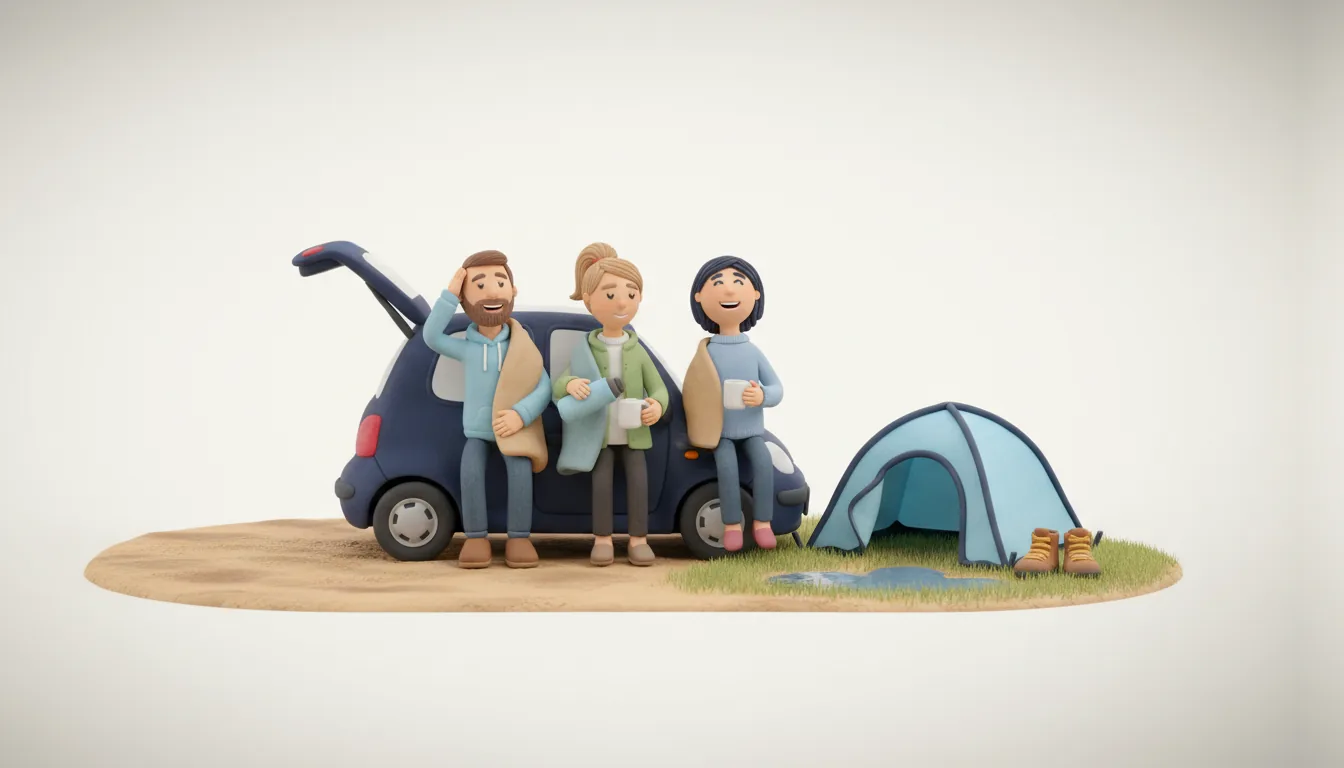
An example: Leo picked the campsite, the flat, grassy spot right by the lake, with the best view of the water. Ana mentioned once that the ground looked a bit soft. At two in the morning the rain started, and by four a stream was running under the tent. The three friends spent the rest of the night in Ana's hatchback with the seats folded down. In the morning the sun came out, and a wide puddle sat in front of the tent. Leo stood by the open hatch with a blanket over his shoulders and one hand on his head. Ana poured coffee from the thermos, handed him a mug and said, "Well, hindsight is 20/20." Mia laughed so hard she spilled hers. On the drive home Leo went over the night three more times. Mia had stopped thinking about it before lunch.
Hindsight in a sentence, and sayings like it
You'll see it written as "hindsight is 20/20," "hindsight is always 20/20" or "20/20 hindsight." Some people type "hindsight is 2020," and it means the same thing. Here's how it sounds in everyday talk.
- "In hindsight, we should have checked the weather."
- "Hindsight is 20/20. Nobody knew the road would be closed."
- "I know that now. 20/20 hindsight, right?"
- "Looking back, I'd have moved a year sooner, but hindsight is always 20/20."
Other sayings mean much the same. "It's easy to be wise after the event." "Live and learn." "Shoulda, woulda, coulda." In the US, a "Monday morning quarterback" is the person who explains how the game should have gone once it's over. Hindsight and retrospect mean almost the same thing. Hindsight carries a small sense of "if only I'd known," while "in retrospect" sounds more neutral. A close cousin, don't cry over spilled milk, tells you to stop going over a small mistake once it can't be fixed.
Where you'll hear it with friends, family and your partner
The campsite by the lake
Friends use it the way Ana did, to close a story instead of keeping it open. A bad route, a restaurant everyone hated, a trip planned in the wrong month. Said with a grin, the phrase tells the other person no one is keeping score.
The house that was too far out
Families look back on bigger choices. Parents who bought the house an hour from everyone, or the brother who never made the move to Denver. Years later someone says, "Well, hindsight is 20/20," and it can sound kind or it can sting. Who says it, and how many times, makes the difference.
The couch that didn't fit
Couples replay small decisions for years. The couch that never fit through the door, the cheap flight with two stops, the weekend you didn't visit her parents. In a couple the phrase works best when the person who made the call says it first.
Who replays the past and who moves on
People look back in very different ways, and type can explain some of it. Below are six of the 16, following the order on the types page.
- Harmonizer cares most about how everyone feels right now. Once the friends are warm and fed, last night's tent is already a funny story.
- Analyst replays a mistake to find the rule behind it. When the logic is clear, the matter is closed, and they may share the rule with you.
- Dreamer turns the night over quietly and wonders what it says about where things are heading. A gentle "we're here now" helps more than a list of lessons.
- Entrepreneur wants the lesson fast. What did it cost, and what's the better choice next time? Then they're done, which can sound cold to friends who are still upset.
- Organizer goes over what should have been checked and adds it to next year's plan. The packing list will have a new line.
- Craftsman deals with what's in front of them. While the others talk, they're already digging a little trench around the tent.
Leo, replaying the night all the way home, and Mia, who forgot it by lunch, were each looking back the way their types tend to.
Talking about a past choice without "I told you so"
"I told you so" is the moment when a warning becomes a point scored. Even when it's true, it makes the other person defend the choice instead of learning from it. Its older cousin, you made your bed, does the same damage. If you gave the advice, it often helps to read our piece on unsolicited advice before you bring it up again. A few things keep the talk kind.
- Wait until things are fixed. Nobody wants a lesson while they're still wringing out a sleeping bag.
- Say "we." "We didn't check the forecast" is easier to hear than "you didn't."
- Name what made sense at the time. "That spot had the best view. I'd have picked it too."
- Ask what they'd keep. Many choices that went wrong still had a good part.
- Bring it up once. A story told at every family dinner starts to feel like an accusation.
- If you made the call, say it first. Owning a bad choice with a laugh makes it easier for everyone.
What looking back is good for
Hindsight is useful when it teaches you something about the next choice. Leo now checks how low the ground is before he unpacks the tent. It also turns bad moments into shared stories, and friends who can laugh about the flooded tent tend to plan the next trip together. Seeing the good part of a bad day once it's over is close to the saying that every cloud has a silver lining.
It's less useful as a way to punish yourself. Going over the same choice a hundred times doesn't change it. Whether people really grow from looking back is a bigger question, and our article on whether people can change takes it on.
Is hindsight really 20/20?
Not quite. Psychologists call this hindsight bias, or the knew-it-all-along effect. Once you know the ending, your memory tends to tidy up the story. You remember the warning signs more clearly than you saw them, and you forget the things you couldn't have known. Ana's "the ground looks soft" sounds like a clear warning now. At the time, it was one remark among many on a sunny afternoon. Being fair to your past self, or a friend, means remembering what the view looked like before the rain.
See why one friend replays a mistake and another moves on
After the same bad night, one friend goes over it for days while another has let it go by lunch, and type is often part of the reason. Start with the free friendship compatibility test. Send the friends from your trip the link from your result. For each friend who answers, you get a relationship type page on the easy parts of your friendship and the parts where patience helps.
Questions people ask
What does hindsight is 20/20 mean?
It means a choice is easy to judge once you know how it turned out. People say it to admit a mistake without blaming anyone too hard.
Where does hindsight is 20/20 come from?
It comes from the eye chart, where 20/20 means normal, clear sight. Looking back, you see clearly what was blurry while you were deciding.
Is it hindsight is 20/20 or 2020?
Both mean the same thing. "20/20" with a slash matches the eye chart, so it's the usual spelling.
What is the difference between hindsight and retrospect?
They're close. Hindsight hints that you wish you had known sooner, while retrospect simply means looking back.
Is it rude to say hindsight is 20/20?
Not usually. About your own choice, it's a light way to own a mistake. About someone else's choice, right after it went wrong, it can sound like "I told you so" in nicer words, so wait until they can laugh about it too.
How do you use hindsight in a sentence?
"In hindsight, I should have called her that week." Start the sentence with "in hindsight" and say what you'd do now.
What is the opposite of hindsight?
Foresight, which means seeing what might happen before you decide. Hindsight looks back once the ending is known, while foresight looks ahead without it.
What does "with the benefit of hindsight" mean?
It means "now that we know how it turned out." People use it to admit that a past choice looks worse today than it did then: "With the benefit of hindsight, we should have left earlier."
Sources
- Wiktionary, "hindsight is 20/20": the meaning, and 20/20 as the term for normal visual acuity.
- Wikipedia, "Hindsight bias": the knew-it-all-along effect, seeing past events as more predictable than they were.
Written by Virko Kask, founder of Typeza
Written with the help of AI tools.
One question for two, every week
A question to ask your partner, friend or family, and how different types tend to answer it.
Free. Unsubscribe any time.