
Love-hate relationship: what it means, the signs, and why it happens
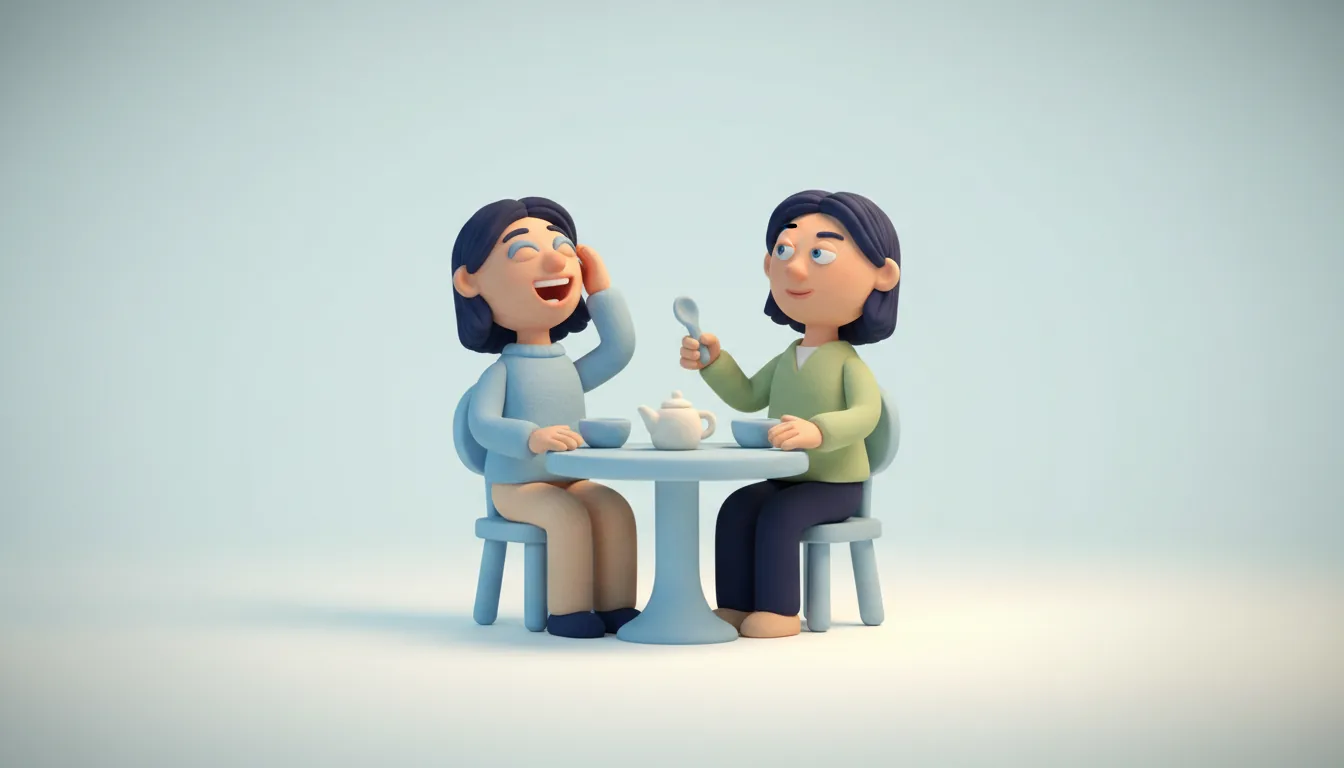
A love-hate relationship is a bond with someone you care about who also gets on your nerves like nobody else. Many people have one: a sibling, an old friend, a partner or a parent.
An example: a woman calls her older sister every Sunday. Within ten minutes they are arguing about something small, like how to cook rice or whose turn it is to visit their parents. She hangs up annoyed and tells her partner she is done. By Wednesday she misses her and wants to tell her about her week. The next Sunday, the same call.
What does love-hate relationship mean?
It means you feel strong affection and strong irritation for the same person, often in the same hour.
The "hate" in the phrase is almost never real hate. People use it as a joke for frustration, eye-rolling and the urge to leave the room.
Some write it as love hate relationship or love and hate relationship. The meaning is the same.
Can you love and hate someone at the same time?
Yes. Feelings about the people closest to us are rarely simple. The more someone matters to you, the more their habits, comments and choices affect you, for good and for bad. A stranger who interrupts you is a small irritation. A brother who has interrupted you for thirty years is a love-hate relationship.
Often the love is about who the person is, and the irritation is about how the two of you work together. You love your friend's humor and loyalty. You cannot stand the way she plans a holiday. Both are true at once.
Signs of a love-hate relationship
- You miss them when you are apart and get annoyed within an hour of meeting.
- You defend them to others, then complain about them yourself.
- Small things they do bother you more than the same thing from anyone else.
- Your talks swing between great and tense with little warning.
- You often say "never again" and never mean it.
- People describe the two of you as an old married couple, even when you are friends or siblings.
- Short visits go well and long ones do not.
Love-hate relationship examples
Friends. Two friends who have known each other since school tell each other everything and argue about everything, from politics to where to eat. Nobody else is allowed to criticize either of them.
Partners. A couple make each other laugh like nobody else and fight about the same few topics every month. They are fond of each other and often tired of each other.
Family. A mother and her adult son talk every week, love each other deeply and still manage to start a disagreement on every visit. Two brothers who live in different cities get along better on the phone than in the same house.
In each example, both people are fine on their own. The friction lives in the pair.
Is a love-hate relationship healthy?
A love-hate relationship can be perfectly normal. Friction with people you love is part of most close bonds, and plenty of siblings and old friends have bickered happily for decades. It is healthy when both of you feel safe, the arguments stay about small things and you both come back to each other freely.
It is a different thing when the "hate" side means someone puts you down, controls you, scares you or hurts you. That is not a love-hate relationship, whatever people call it. If that is your situation, talk to someone you trust outside the relationship.
Many love-hate relationships sit in between: real affection, real irritation and a sense that the two of you do better in some doses than in others.
Why do you love and hate the same person?
Typeza gives every two people one of 16 relationship types, drawn from socionics, and a few of them come with a mix of pull and friction built in. You are drawn to the other person and they get under your skin, and both feelings come from the same place. A compatibility test you take with the other person shows whether yours is one of them.
The person you admire from a distance and clash with up close
Picture a Harmonizer and a Strategist who met at a friend's wedding and talked for hours. She admired how calmly he could see where things were heading. He loved how she made everyone at the table feel at home. Then they shared a flat for a summer. His warnings about the future made her feel she was drifting through life, and her fuss about meals, blankets and a tidy kitchen made him feel nagged. This is Super-ego, where each person is strong exactly where the other feels weakest. From a distance, that strength is what you admire. Up close, it starts to sound like a judgment. Dinners and trips still go well for them. Sharing a flat did not.
The sister whose every remark lands on your sore spot
Two adult sisters, a Vitalizer and a Dreamer, adore each other. The Vitalizer fills every weekend with people and plans. The Dreamer, younger and quieter, sees where it leads: "You will be exhausted by Monday again." She is usually right, and she says it kindly. It still stings more than criticism from anyone else. In this pair the Dreamer is the Supervisor, who sees the other's weak spot and touches it without meaning to. The Vitalizer is the Supervisee, who feels watched. The love is real, and so is the sting. Their calls go better when the Dreamer says less than she sees and the Vitalizer hears it as care.
The friend who is so like you and still drives you mad
An Analyst and a Strategist have been friends since their first job. Both love ideas, both read the news with a skeptical eye and both prefer one long talk to a big party. On paper they are the same kind of person. Yet most debates end with both of them feeling misunderstood. For the Analyst, the point is whether an idea holds together. For the Strategist, the point is whether it will work out in real life. They are a Quasi-identity pair: alike on the surface, with their strengths aimed at different things. They love the likeness and get tired of the near misses. A quick "how do you mean?" saves a lot of their evenings.
The spark that turns into friction
Two more relationship types often feel like love and hate at once, and both depend on the dose. In Activation, two people lift each other's mood within minutes, and too much time together tips that energy into irritation. Conflict can pull hard, since each person feels confident right where the other feels shaky, yet day to day each one's way of talking misfires with the other. In both, the same person can be the best company in the world on a Friday night and impossible by the end of a long holiday.
Love-hate feelings are less common in Duality, which suits partners and friends best. The differences between the two mostly feel like help, because each person easily gives what the other needs. It can seem ordinary at first and gets warmer with closeness.
The love is real in every one of these pairs, and nobody is to blame. The pattern only shows where the friction comes from.
How to deal with a love-hate relationship
- Find your dose. Notice when it goes well: a phone call, a lunch, a weekend. Plan more of what works and less of what does not.
- Name the pattern. Saying "we always clash about plans" takes the heat out of the next clash.
- Pick your battles. Let small things go and save your energy for what matters to you.
- Stop trying to change them. The habit that annoys you is often part of what you love about them.
- Say the good things out loud. In a love-hate relationship, complaints can easily outnumber praise. Balance it.
- Leave on a good note. Ending a visit while it is still fun beats staying until the argument starts.
Chemistry vs compatibility explains why a strong pull and an easy life together are two different things.
How to see why you feel this way about one person
The Sunday calls with the sister will probably keep their mix of love and arguing. Knowing the relationship type can at least explain it, and it never shows from the outside. Start with the free compatibility test. Then invite the person you love and argue with from your result. Anyone you invite has to be 16 or older, like every Typeza user. Once they finish, you both see your relationship type and where the friction usually starts.
Questions people ask
What is a love-hate relationship?
A close bond where affection and irritation come from the same person, like a sibling you miss all week and argue with on every call.
Can love turn into hate?
Strong affection can turn into strong anger after a betrayal or a long run of hurt. In many love-hate relationships, though, the "hate" is everyday irritation, and the love stays.
Is it normal to have a love-hate relationship with a sibling?
Yes. Siblings share a long history and often have very different personalities, so friction is common. Many adult siblings get along better with some distance and shorter visits.
What is another word for a love-hate relationship?
People say mixed feelings, a push and pull, or an on and off relationship. Between friends, some say frenemy, though that word usually means less love and more rivalry.
What does "I love you but I don't like you" mean?
It means you still care deeply about someone while you dislike how they are acting right now. People say it to siblings, parents and sometimes a partner after a rough week. The love is the bond, and the not liking is about behavior.
What does it mean to love to hate someone?
It means you enjoy disliking them, like a TV villain or a rival you secretly like to grumble about. There is little real anger in it, and the dislike is part of the fun.
Written by Virko Kask, founder of Typeza
Written with the help of AI tools.
One question for two, every week
A question to ask your partner, friend or family, and how different types tend to answer it.
Free. Unsubscribe any time.