
People in glass houses shouldn't throw stones: what it really means
People in glass houses shouldn't throw stones means that if you have faults of your own, you should be careful about attacking someone else's, because they can easily hit back. Since everyone has a few weak spots, the saying is really a warning to criticize gently or not at all. The idea is old. Chaucer wrote in the 1380s that anyone whose head is made of glass should watch out for stones in a fight, and the glass house version shows up in English collections of sayings in the 1600s.
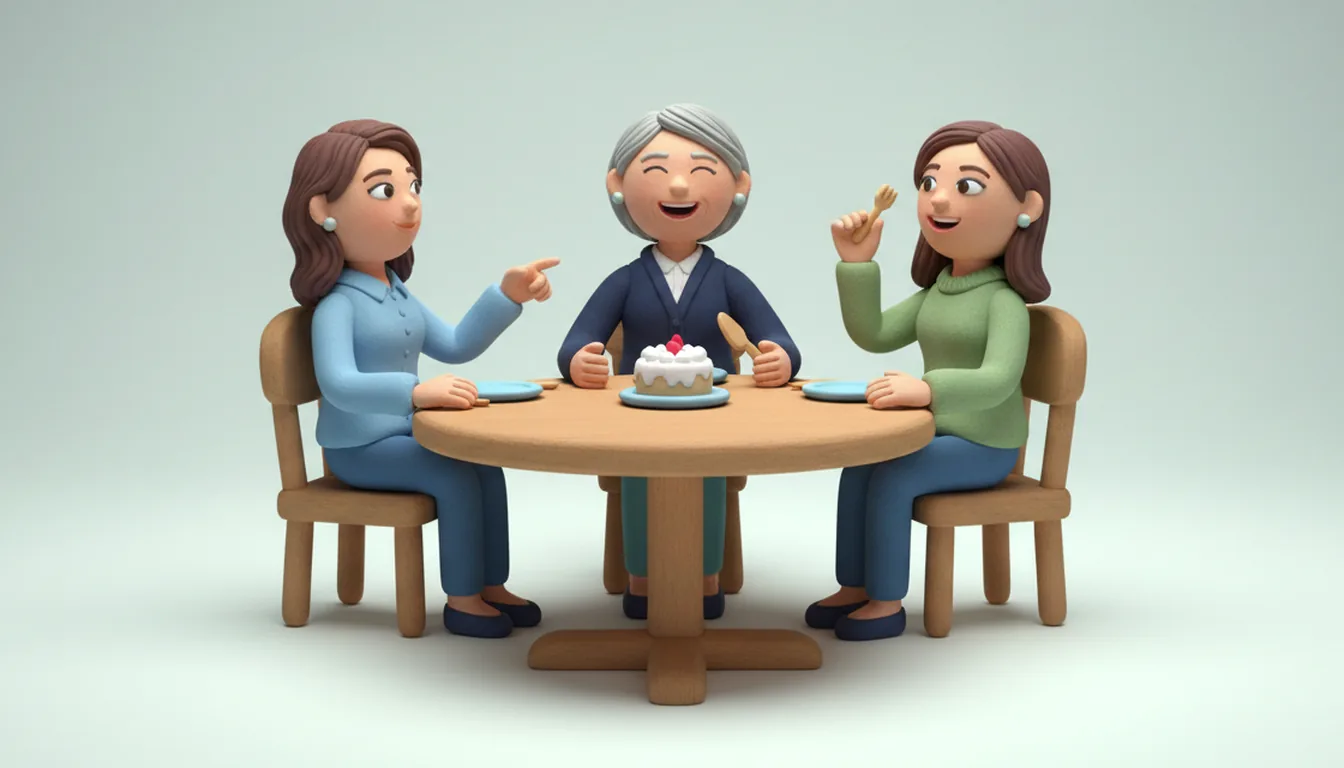
An example: their mother's seventieth birthday was three women and one small cake at the kitchen table. Halfway through the first slice, Grace pointed across at her younger sister. "You know Hannah hasn't called Mom in two weeks?" Hannah raised her fork. "And when did you last drive her to the doctor, Grace?" Their mother laughed and cut herself a second piece. "People in glass houses, girls. Eat your cake."
The warning inside the saying
The saying is about what happens after you throw. A stone from a glass house tells everyone that stones are now allowed. The other person picks one up, and they don't need to aim well, because your walls are thin.
That's the difference from the pot calling the kettle black, which is about blaming someone for the exact fault you have yourself. The glass house is wider. Your weak spot can be anything at all, and the person you criticized will usually find it. Grace complained about phone calls, and Hannah answered with doctor visits. The faults were different, and the result was the same.
Close family can see right through the walls
A stranger can't see much of your house. Family, a partner and old friends can see straight in. They know about the late rent, the birthday you forgot, the time you promised to quit and didn't. That is why the saying comes up most at kitchen tables and on long car rides. Everyone there already knows where your windows are.
It also means the stones hurt more. A coworker's comment fades by evening. A sister's comment can sit with you for a week, because she knows exactly what she is talking about.
Why the stone flies in the first place
Throwing stones often has nothing to do with meanness. A few ordinary things set it off.
- Feeling behind. When you are tired and doing more than your share, someone else's slip looks huge.
- Getting in first. If you point at their window, maybe nobody looks at yours. Grace had missed three doctor visits and knew it.
- A request that comes out wrong. "You never help" is often a clumsy way of saying "I need help."
- An audience. Criticism said in front of others feels like a throw, even when it was meant as a joke.
A fault you fight in yourself can be easy to spot in others. It looks familiar, so it stands out. When throwing stones turns into a daily habit, people start to call the thrower judgmental.
Three examples of stones that came straight back
Leo and the gas money
On a road trip, Leo told the whole car that Sam was cheap because he never offers to pay for gas. Sam waited until the next stop. "I'll pay for gas when you pay me back for the concert tickets from March." Leo's point was fair, but nobody remembered it after that.
Nina and the football
Nina told her husband Marco he spends every Sunday glued to football. Marco didn't argue about the football. He brought up the three new pairs of boots in the hall closet. Ten minutes later they were arguing about money, and the Sundays were forgotten.
The birthday cake
Back at the table, both sisters had a point. Hannah should call more, and Grace had stopped doing the doctor runs. Once the second stone flew, neither point could be heard, and their mother ended it.
In each story the first remark had some truth in it. That is what makes throwing stones such a waste, since the true part gets buried under the answer.
How each type takes a hit
People react very differently when a stone lands on their house. Some throw one back before you finish speaking, and some go quiet and remember it for years. Six of the 16 types make the point:
- Mentor: feels it deeply and may answer with a lot of feeling. Give them a minute before you expect a calm reply.
- Inspector: answers with facts and dates. "Actually, I called on the fourth." Being treated unfairly bothers them more than the criticism itself.
- Diplomat: throws back fast, in the moment, and often forgets the whole thing by dinner.
- Guardian: goes quiet and files it away. A careless remark can turn into a long grudge if nobody comes back to it.
- Organizer: points to everything they have done for you lately. Being called lazy or careless stings them more than most.
- Encourager: laughs it off at the table, then turns it over in their head later that night.
Catching a stone without throwing one back
When someone criticizes you and you know their windows well, the urge to answer in kind is strong. A few things work better.
- Take the true part and give it a date. "You're right, I haven't called. I'll call her Sunday." It ends the fight in one sentence.
- Hold your stone for a day. If their fault still matters tomorrow, bring it up then, on its own, in private.
- Hear the request under it. Grace meant "I'm tired of driving Mom alone." Answer that, and the remark loses its edge.
- One window at a time. If both of you have a complaint, say so and take turns. "Yours first, then mine."
- Name it with a smile. "Careful, we both live in glass houses" works between people who tease each other.
Walk around your own house first
Before you criticize someone close, take a slow look at your own walls.
- Guess their answer. If they replied with your worst habit, which one would they pick? If it comes to mind at once, think again.
- Talk about what they did instead of who they are. "Can we split the gas?" is a request. "You're cheap" is a stone.
- Pick the place. At a birthday table, even a fair point turns into a show.
- Ask for help instead of keeping score. "Could you call Mom this week? I've got the doctor runs" is easier to say yes to than a list of misses.
Learn why you and a sibling keep throwing stones
Siblings often trade jabs where their types differ. The free family compatibility test works out your own type from your answers. Then send your result's link to the sibling you trade jabs with. After they answer, your relationship type shows both of you what goes smoothly between you and what tends to rub.
Questions people ask
What does people in glass houses shouldn't throw stones mean?
Don't criticize others for faults when you have some yourself.
Where does the glass houses saying come from?
The idea goes back to the late 1300s, in a poem warning that someone with a head of glass should keep away from stones. The wording about a glass house appeared in English sayings a couple of centuries later.
Is it the same as the pot calling the kettle black?
They are close. The pot and the kettle share the exact same fault. The glass house saying is wider: any weak spot of yours makes it risky to attack someone else.
What does living in a glass house mean?
It means your own faults are easy for others to see, so it's risky to criticize anyone. The longer saying is "People in glass houses shouldn't throw stones," and many just say "glass houses."
Sources
- The Old Farmer's Almanac, "Where did the saying 'people who live in glass houses' come from?": the idea in Chaucer's Troilus and Criseyde (1385), and George Herbert's later "Whose house is of glass, must not throw stones at another."
- Wiktionary, "people who live in glass houses shouldn't throw stones": the meaning, and the link to the pot calling the kettle black.
Written by Virko Kask, founder of Typeza
Written with the help of AI tools.
One question for two, every week
A question to ask your partner, friend or family, and how different types tend to answer it.
Free. Unsubscribe any time.