
What does reliable mean? A reliable friend, partner, and how to be one
Reliable means you can count on someone. A reliable person does what they said they'd do, at the time they said they'd do it. You don't need to remind or check on a reliable person, since what they promise tends to happen.
Reliable is pronounced ri-LY-uh-bul. The adverb is reliably, as in "she's reliably early," and the noun is reliability. Close words are dependable, trustworthy, steady and solid. The opposite is unreliable, and among friends the everyday word for it is flaky. Calling someone "old reliable" is a fond way of saying they've never let you down.
How you can tell someone is reliable
Reliable people aren't always the loudest or the most fun in a group. You notice them over time, often when something goes wrong.
- When they say "I'll call you tonight," you get that call tonight.
- They give back what they borrow, in good condition.
- They answer messages, even if only to say "I'll get back to you tomorrow."
- They tell you early when they can't make it, so you're not left waiting.
- They treat you the same way whether their own week is going well or not.
- They remember what you told them last time and ask how it went.
None of these is a big thing on its own. It's the many small kept promises together that people mean when they call someone reliable.
The evening the flat fell through
An example: Ida, 36, has never been late to anything in her life. Her friend Mona, 35, is late to almost everything. For years Ida thought of Mona, quietly, as the friend you couldn't count on.
Then on a Thursday in March, two weeks before Ida had to leave her old place, the flat she was about to move into went to someone else. She sat on the floor among her packed boxes and sent Mona one message. "The flat fell through."
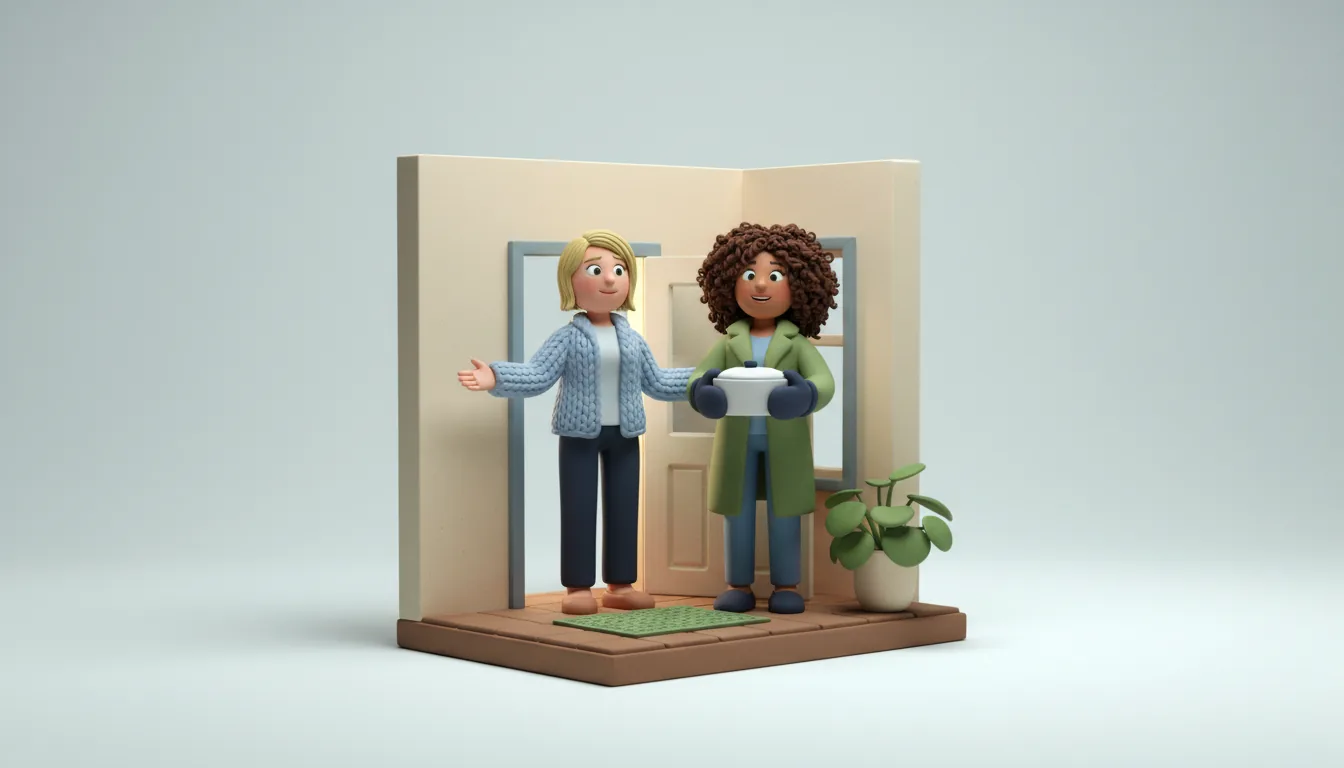
Mona wrote back "On my way." Twenty-five minutes later the doorbell rang. Mona stood on the doorstep in her green coat, holding a white covered dish in thick navy oven gloves, because she'd taken it straight out of the oven. Ida opened one arm and laughed, tired and relieved. They ate on the floor, and Mona stayed until eleven, scrolling through flats with her.
Ida said later that she'd had it the wrong way round. She was reliable about time, and Mona was reliable about people.
A reliable friend and a reliable partner
In a friendship, reliable mostly means you can ask someone for help and know they'll come. They turn up when they said they would, keep what you tell them to themselves, and still answer when you've been quiet for months. It's one of the characteristics of a good friend. If you're looking for the right word for a friend like that, words to describe a friend has plenty of others.
In a couple, it's the steady, daily version. A reliable partner does the part of the week they agreed to, follows through on small plans and doesn't change mood toward you without saying why. Trust grows out of that more than out of big gestures. The quotes on consistency put the same idea in a few lines.
Reliable doesn't mean perfect. A reliable friend or partner can still forget a birthday once. What makes them reliable is that misses are rare, and when one happens they say so and make up for it.
On time, or there when it counts
Personality type can help explain why two people can both be reliable and still think the other isn't. For one person, reliable means being exactly on time and keeping every small promise. For another, it means being there the moment feelings run high.
The Harmonizer shows up with comfort when someone is low and makes sure they're warm and fed. The Inspector keeps exact times and expects others to do the same. The Dreamer may lose track of the hour but will sit with you all evening when you're upset. The Organizer keeps every promise exactly and remembers yours.
So an Inspector or an Organizer may see a late Dreamer as unreliable, while a Harmonizer or a Dreamer may find the punctual friend a little absent when it gets emotional. Type theory sketches general tendencies, and a real friend may not fit them at all. Nothing in it is advice about any one friendship.
Why reliable people go unnoticed
The trouble with being reliable is that people stop noticing it. The friend who's always on time gets no thanks for it, while the late friend gets a cheer when they finally walk in. Reliable people also get asked first, for everything, because everyone knows they'll say yes and do it.
If that's you, it's fine to say no now and then. A clear no keeps you reliable, since what you do agree to still happens. And if you have a reliable person in your life, tell them once in a while that you see it.
When a reliable person lets you down
Because you count on them, one slip from a reliable person can feel bigger than it is. You may wonder what's wrong, or feel more hurt than you would with someone who's often late. Usually the reason is ordinary, like a full week or a mix-up over the day. Ask what happened before you decide what it means. Reliable people tend to feel bad about a miss and are quick to fix it.
Reliable vs dependable
The two words mean almost the same thing, and many people use them the same way. If there's a difference, reliable leans toward doing the job well each time, like a reliable car or a reliable memory. Dependable leans toward someone you can lean on in hard moments. You'd call a friend who always helps you move dependable, and a friend who always replies within the day reliable. In everyday speech, either word works for both. Trustworthy is a little different again, since it's more about honesty and keeping secrets than about turning up.
How to be more reliable
Being more reliable is mostly about promising in a way you can keep.
- Promise a little less. Say yes to the things you can fully do, and you'll keep all of them.
- Write it down right away. The moment you say "I'll send it," note it, because many broken promises are simply forgotten ones.
- Put a time on every yes. "I'll call you Sunday afternoon" is easier to keep than "I'll call you soon."
- Keep the list short. Three promises for the week fit in your head, and ten usually don't.
- Say when it's done. A short "Sent it" means nobody has to ask.
- Speak up early when you can't. Offer what you can do in its place.
- Mind the small things. Give back the book, return the call, remember the date.
Reliability is one of the positive personality traits that anyone can build, and it's part of what makes a good person.
See what reliable means to each of you
Typeza shows two people how their types fit together, including what each of you counts on the other for and where those ideas differ. Try the free personality test, and invite the friend or partner you most want to understand.
Questions people ask
What is a reliable person?
Someone who does what they say, when they say. You can count on them without reminding them, in small things and in hard moments.
What does reliably mean?
It means in a way you can count on, every time. "He reliably answers within the hour" means he almost always does.
What is an unreliable person?
Someone whose promises often don't happen. They may cancel late, forget or go quiet, so you learn not to count on them.
Is reliable a personality trait?
It's partly a trait and partly a habit. Some people are naturally more careful with time and promises, but anyone can become more reliable with a few small habits.
How do you pronounce reliable?
Say it ri-LY-uh-bul, with the stress on the second part. That part sounds like the word "lie."
What is another word for reliability?
Dependability is the closest. Trustworthiness and steadiness are also used, depending on whether you mean keeping promises or staying the same over time.
Sources
- Dictionary.com, "reliable". Meaning, pronunciation, the forms reliably and reliability, and the note that trustworthy stresses honest dependability.
Written by Virko Kask, founder of Typeza
Written with the help of AI tools.
One question for two, every week
A question to ask your partner, friend or family, and how different types tend to answer it.
Free. Unsubscribe any time.