
Small gestures that keep a friendship strong, by type
Small gestures in friendship are the little things you do without being asked: a message on an ordinary day, a practical hand, a detail you remembered, an hour with nothing else going on. They matter because they show you're paying attention when nothing special is happening.
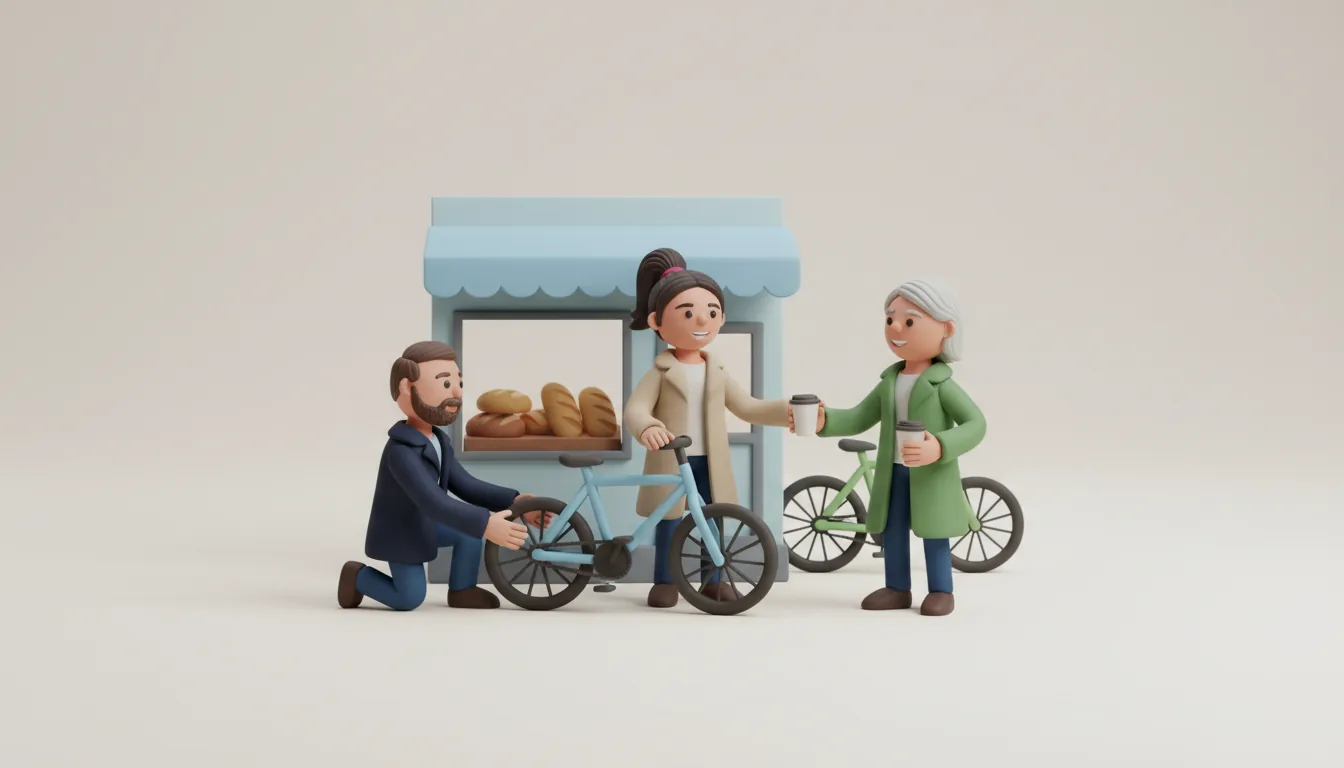
An example: every Sunday morning for six years, Mia, Ben and Sasha have ridden to the same small bakery on the edge of town. Last week Mia's chain slipped off a block from the door. Ben knelt on the pavement, put it back on in about a minute, wiped his fingers on his jeans and never mentioned it again. Sasha went inside and came out with three paper cups. She handed Mia hers, and it was mint tea. Two weeks earlier, halfway through a conversation about something else, Mia had said she'd given up coffee. She had said it once.
Mia was grateful for the chain. The tea was what she told her sister about that evening, though. On Wednesday Sasha also sent her a voice message for no reason, thirty seconds about a dog she'd seen wearing little boots. Mia played it twice.
Why the small things carry a friendship
Big moments are rare in a friendship, and most of it happens in between: a text on a Tuesday, a lift to the station, a question about the thing you mentioned last time. Each one is tiny, and together they add up to the feeling that someone is on your side. Most characteristics of a good friend first show up in acts this size. Friends who drift apart often never fight at all. The small gestures stop one by one, and nobody notices until the friendship feels thin.
Four kinds of small gesture
Small gestures sort into four groups, and many people feel one of them most.
A message that needs no answer
A picture of a yellow door, because they collect them. A voice note about a dog in boots. "Good luck today" on the morning of their half marathon, because you remembered the date. The best ones ask for nothing back, so they never turn into a chore. If you're stuck for words, these thinking of you messages are a good place to start.
A practical hand
Fixing a bike chain, carrying the other end of a sofa, picking up a parcel while they're away or dropping off soup when they're stuck at home with a cold. These say "I've got you" without many words.
A detail you remembered
Mint tea instead of coffee. The name of their new neighbor. The fact that today is their sister's wedding, or their first night in a new flat. A remembered detail tells a friend you were really listening, and few things feel as good to hear.
An hour with nothing else going on
A walk with both phones in your pockets, a slow breakfast, or sitting with them in the garden while they repot plants. Time on its own is a gesture, especially when everyone is busy.
None of these cost much. For ways to thank the people close to you in words as well as deeds, see how to show appreciation.
Which gestures each type notices most
Personality type shapes which of the four means the most. Here are seven of the 16 types:
- Mentor: feels close through words with feeling in them. A message saying what the friendship means to you can carry them for weeks.
- Commander: values the friend who turns up fast when something needs doing. Practical help without fuss means more to them than a long talk.
- Dreamer: notices remembered details and small beautiful things, like a song you sent because it fit their mood or a postcard of a place they once mentioned.
- Entrepreneur: appreciates help that saves them time, such as a lift to the airport or a useful tip passed on at the right moment.
- Guardian: treasures steady loyalty. Keeping what they told you in confidence, and showing up on the hard day, means everything to them.
- Organizer: shows care through practical help and loves it when someone notices. "You fixed that fence beautifully" is a gesture too.
- Encourager: lights up when a friend shares a discovery or asks about their latest plan. A message that starts "I found this and thought of you" is perfect.
The catch is that many of us give the gesture we'd like to get. Ben fixes things because that's how he shows care, and Sasha remembers things because that's how she does. Mia turned out to be a detail person, which is why the tea reached her in a way the chain didn't.
How often is often enough?
There's no rule, and a close friendship doesn't need a timetable. A rough rhythm helps, though. One to try: a small message every week or two, a practical hand when life gets heavy and real time together about once a month. Steady small gestures count for more than one big one a year. A friend who texts on an ordinary Wednesday often means more than one who throws a big party and then disappears for months.
Let the friendship set the pace. If your friend has a hard week, the rhythm speeds up. If you're both busy and happy, it can slow down without anyone feeling dropped. For the bigger habits around it, read how to be a good friend.
Small gestures from another city
Distance changes which gestures are possible. It doesn't stop them. When a friend lives far away:
- Send voice notes, because a voice feels closer than a line of text.
- Post a card or a small parcel now and then, like a bar of the chocolate they love from your town.
- Call on the day of their big thing, even for two minutes.
- Watch the same film in the same week and talk about it afterward.
- Send a photo whenever you see something that's "so them."
- Keep track of the names in their life, from their partner to their best friend at the climbing gym.
A practical hand is the hardest gesture to give from far away, so the other three have to do more of the work. A friend who can't carry your sofa can still remember that you moved and ask how the first week went.
How to stop forgetting
Missed gestures often come from a busy mind. A few habits fix that.
- Write details down right away. After a catch-up, note them in your phone, like the date of her trip or the name of his new dog.
- Put their dates in your calendar, with a reminder two days early, and add National Best Friends Day on June 8.
- Tie a gesture to a habit you already have. If you always have coffee on Sunday morning, that's when you message one friend.
- Act in the moment. When something reminds you of a friend, send it then, because later rarely comes.
- Keep a short list of friends you don't want to drift from, and look at it once a month.
See which small gestures each friend notices
Friends show care in different ways, one with their hands and another with their memory, and type explains much of that. The free friendship compatibility test can give you your type. Share your result's link with the friends you see most often. For each one who answers, you get a relationship type that shows why their care looks the way it does.
Questions people ask
How do small gestures strengthen friendships?
Each one proves you noticed. Over time that builds trust.
What are some small gestures for a friend?
A message with no reason, a photo that reminded you of them, help with a practical job, remembering a detail they mentioned, or an hour together with phones away.
What is a kind gesture?
A small act done for someone else's sake, without being asked and without expecting anything back, like bringing soup to a friend with a cold.
Do small gestures matter more than big ones?
Often, yes. A big gesture is memorable, but steady small ones keep a friendship warm between the big moments.
How do you respond when a friend makes a kind gesture?
Thank them and say what it meant: "You remembered I gave up coffee. That made my morning." Being specific shows the gesture landed.
Written by Virko Kask, founder of Typeza
Written with the help of AI tools.
One question for two, every week
A question to ask your partner, friend or family, and how different types tend to answer it.
Free. Unsubscribe any time.