
Characteristics of a good friend, and why good friends differ
The characteristics of a good friend are easy to list. A good friend keeps your secrets, turns up when it matters, tells you the truth, listens and is glad when life goes well for you. What lists often leave out is that these qualities rarely look the same in two people.
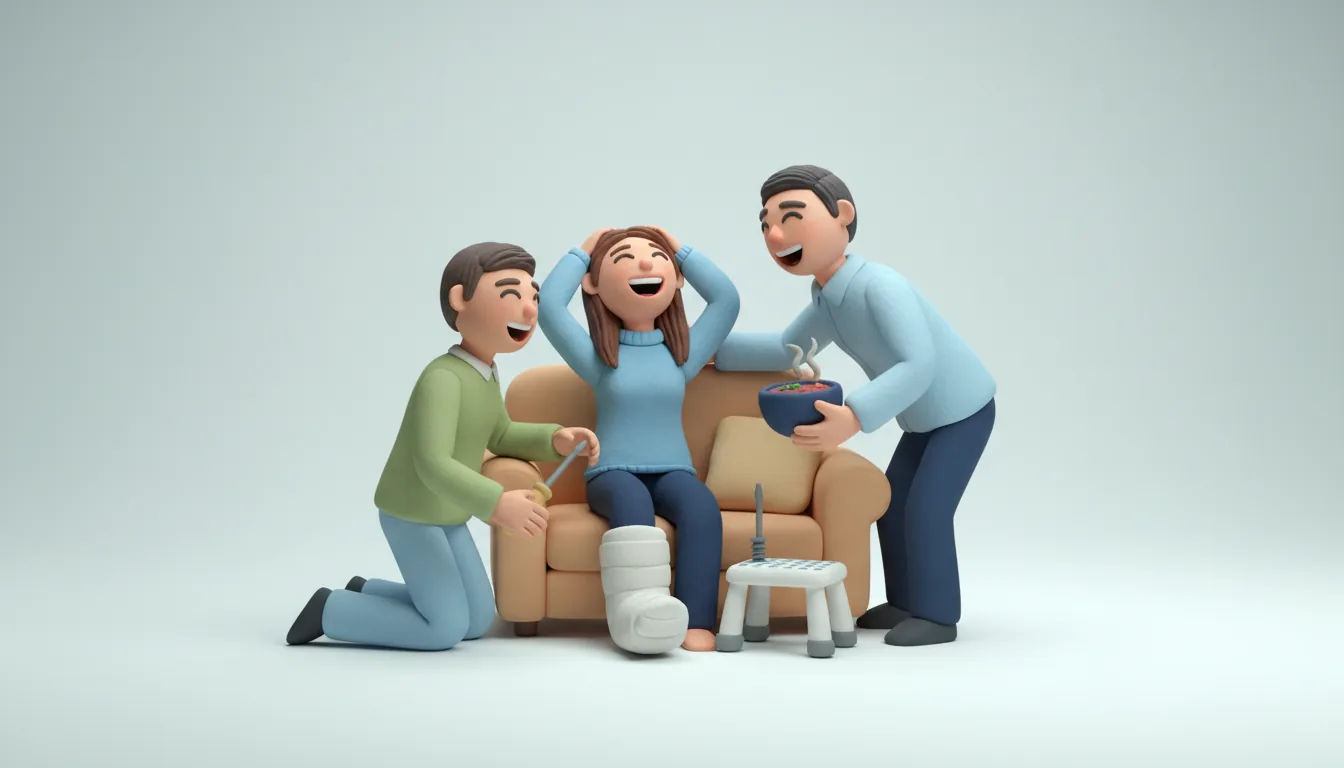
An example: when Hedda broke her ankle in March, three friends turned up for her in three very different ways. Wren arrived the next morning with soup, a shower stool and a drill, and fixed a grab rail by the bath without being asked. Dario never came over that first week, but he sent a voice note every evening, long and silly, until she laughed. Imke visited once, sat on the arm of the sofa and said, "You know you can't climb in sandals, right?" Hedda was annoyed for an hour. Then she ordered proper boots.
All three are good friends. One showed care with a drill, another with a voice note, a third with a blunt remark about sandals.
What makes someone a good friend?
A good friend makes your life lighter to carry and more fun to live. You would tell them the embarrassing story and the real worry, and you would hand them your house keys.
Ask a room of adults what they want in a friend and the same words come back: someone who is there, who is honest and who does not gossip about you. When only one person keeps the promises, the friendship wears thin. If you want the plain definition first, and how a friend differs from family or a partner, what is friendship starts there.
12 characteristics of a good friend
- They show up. For the birthday dinner, the move and the hospital visit. When they cannot come, they say so and offer something else.
- They keep your secrets. What you tell them stays with them, even after a falling out.
- They tell you the truth. Gently where they can, plainly when they must. They would rather annoy you than watch you make a mistake they can see coming.
- They are glad for you. Your good news makes them happy, with no quick turn to a story about themselves.
- They listen. They remember the name of your difficult neighbor and ask how the visit to your mother went.
- They are reliable in small things. They return the book, arrive roughly on time and do what they said they would do.
- They stand up for you when you are not there. If someone mocks you at a party, they say something, or at least they do not laugh along.
- They accept you as you are. They do not try to turn you into a tidier, louder or calmer version of yourself.
- They give as well as take. Over months, the calls, the favors and the listening go both ways.
- They apologize when they get it wrong. And they forgive you when you do, without keeping score.
- They respect your other people. Your partner, your family and your other friends are no threat to them.
- They make ordinary time better. Errands, waiting rooms and a wet Tuesday are easier with them around.
Nobody scores twelve out of twelve. Good friends tend to be strong in a few of these, fine in most of the rest and weak in one or two. You are probably the same.
Good qualities of a best friend
A best friend has all of the qualities above, only deeper. Three things tend to set them apart from other good friends.
- History. They knew you years ago, and they still like the person you turned into.
- Ease. You can be quiet, messy or sad around them and nothing needs explaining.
- Priority. When something big happens, their name is near the top of your list.
Why many people have only one or two is covered in what makes a best friend.
What a true friend does when it counts
Every friendship looks good on an easy day. The traits of a true friend show when something goes wrong. A true friend calls back the same day when you leave a short, strange message. They tell you the thing nobody else will say, and then they help you deal with it. They stay loyal when loyalty costs them something, such as an awkward talk with a mutual friend. And they notice when you are struggling, even when you insist you are fine.
Why good friends show the same quality in different ways
Back to Hedda's ankle. Wren, Dario and Imke care about her roughly the same amount. What differed was the form their care took.
Care comes in several forms. Some people give it as practical help: they fix, carry, cook and drive. Some give it as warmth, with a call, a joke or a mood lifted. Some give it as honesty, telling you what they see so the next time goes better. And some give it as presence. They sit with you, and nobody has to say much.
Many people give care in one or two of these forms easily and find the others awkward. The friend who fixes your shelf may be clumsy with words. The friend who sends the perfect message may forget that you have nothing in the fridge. If you hold every friend up against one picture of a good friend, someone always falls short. Look at the form instead, and you see how much each one gives.
It also explains why honest words from one friend land as help, while the very same words from another land as a jab. The types of friends people have each work in their own way.
How each personality type tends to be a good friend
Personality type shapes which form of care comes easily. Here are eight of the 16 types:
- Harmonizer: the friend whose home feels good. They feed you, make you comfortable and smooth over tension in a group.
- Vitalizer: the friend who lifts the mood. They gather people, remember birthdays and turn up again and again for the people they love.
- Analyst: the friend with the clear head. They help you think a problem through and will not tell you what you want to hear just to please you.
- Inspector: the friend you can count on. If they say Saturday at ten, they are at your door at ten with whatever they promised.
- Guardian: the loyal protector. They read people well, warn you about the ones who mean you no good and stand by you for decades.
- Organizer: the practical helper. They show care by doing, often before you have thought to ask.
- Counselor: the friend who understands. They sense how you feel and make it safe to say it out loud.
- Craftsman: the quiet doer. They will not say much about feelings, but your bike works and your shelf is level.
None of these is the one right way to be a friend. Each type gives something the others find hard, and each has a blind spot. On a bad day the Analyst's honesty can feel cold. The Vitalizer can feel hurt when nobody notices how much they give. Knowing a friend's type helps you spot their care in the form they actually give it.
Which of these do your friends get from you?
The list works as a mirror too. Read it again and ask which characteristics you bring without effort and which ones you tend to skip.
Many people are strongest in the form they would most like to receive. Practical helpers hope for practical help back. Talkers hope for a call. So if a friend seems to give you less than you give them, check whether they give in a form you are not used to noticing. For ideas on bringing more of what you skip, read how to be a good friend.
Find out what kind of friend you are
Hedda could have guessed which friend would bring a drill. Your personality type puts a name on the form your own friendship takes. Start with the free friendship compatibility test. Each step offers two statements and you take the closer one. The finished test shows your type and where you fall on the four base traits, reserved or outgoing among them. The profile of your type costs nothing to read and tells you what your type brings to friendships and where it tends to stumble. None of that asks you for an account.
To see how you and a friend fit, make a free account and send them an invite from your result. When your friend's answers are in, the two of you get the name of your relationship type, one of 16, with the parts that run on their own and the parts that need a little care.
Questions people ask
What qualities make a good friend?
A good friend is honest, loyal and reliable. They listen, keep your secrets and are happy when your life goes well. They also accept you as you are and, over time, give about as much as they take.
What are the characteristics of a best friend?
A best friend has the qualities of a good friend plus history, ease and priority. You can be yourself around them without explaining, and they are among the first people you call with big news.
What are the traits of a true friend?
A true friend shows up when things go wrong, tells you hard truths kindly, stays loyal when it costs them something and notices when you are not fine.
What is the most important quality in a friend?
Many people name trust: knowing that a friend will keep your secrets, stand up for you and mean what they say. Without trust, the other qualities do not hold for long.
Written by Virko Kask, founder of Typeza
Written with the help of AI tools.
One question for two, every week
A question to ask your partner, friend or family, and how different types tend to answer it.
Free. Unsubscribe any time.