
Advice for newlyweds: the best marriage advice depends on you two
The best advice for newlyweds is simple to say and harder to do: be kind on purpose, talk about small problems while they are still small, and make the big money and family decisions as a team. Much other marriage advice depends on the two people getting it. A tip that saves one couple can quietly wear another one down, which is why the guests at one wedding can disagree so completely.
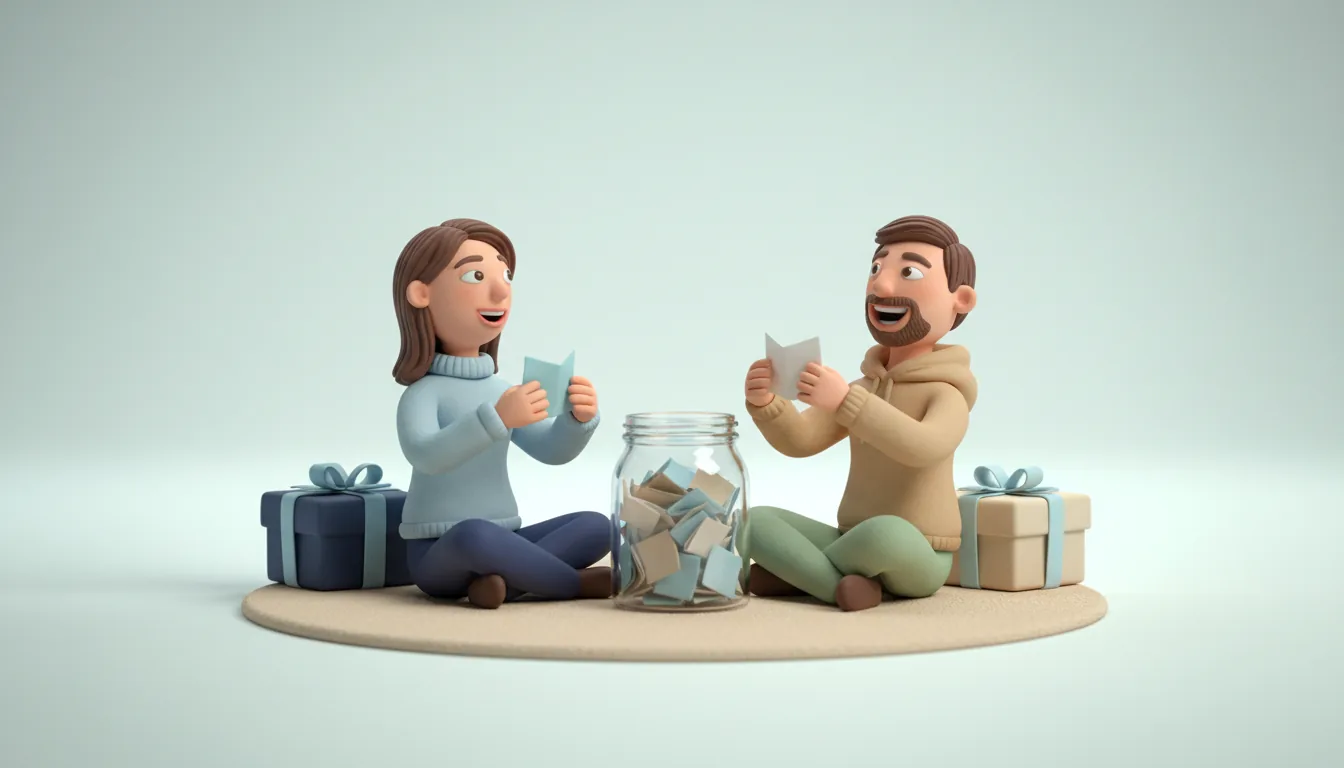
An example: six weeks after the wedding, Ana and Theo finally open the advice jar. Every guest wrote a card at the reception, and the jar has sat on the bookshelf since then, full of folded paper. They take turns reading. Ana's grandmother wrote "Never go to bed angry." Two cards later, Theo's uncle wrote "Go to bed angry. Everything looks smaller after breakfast." One friend says "Do everything together." Another says "Keep one night a week that's only yours." By the bottom of the jar they have forty pieces of advice and about a dozen pairs that cancel each other out.
Advice that works for nearly every couple
Some tips came up again and again in Ana and Theo's jar, from friends and relatives who agreed on little else:
- Say thank you for ordinary things. Taking out the bins, making the coffee, remembering the dentist. Couples who keep noticing each other's effort tend to stay generous with each other.
- Learn how your partner feels cared for. One person feels loved when you help with a chore. Another needs you to say it out loud. Ask, and don't guess.
- Complain about the thing, and leave the person out of it. "The dishes have been in the sink for three days" starts a conversation. "You never help" starts a fight.
- Keep going on dates. They don't need to cost money. A walk with phones left at home counts.
- Protect your sleep. Some arguments that feel huge at midnight are really about being tired.
- Laugh at yourselves. The first year has plenty of small disasters, and couples who can find them funny get through them faster.
Never go to bed angry, or sleep on it?
The two cards from Ana's grandmother and Theo's uncle fight about this one, and both have a point.
Settling an argument before bed works well for people who can't sleep with something unresolved. Left alone, the worry grows overnight, and the next morning starts badly too.
Sleeping on it works well for people who need time to cool down. A tired brain at one in the morning tends to say things it regrets, and a calmer one at breakfast often finds the problem much smaller.
A middle path suits many couples. Agree that you can pause an argument, but say out loud that you'll come back to it, and that you're still on the same side. "I love you, I'm too tired, let's talk tomorrow" is enough. Then actually talk tomorrow.
Money advice for the first year
Money is a common reason newlyweds argue, often because each person grew up with different habits around it. A few habits help:
- Show each other everything. Debts, savings, monthly costs, the subscription you forgot about. Surprises hurt more than numbers do.
- Pick a system that fits you both. Some couples share every account, some keep everything separate, and many use a shared account for bills plus their own money for the rest.
- Set a spending limit for checking in. Agree on an amount above which you talk before buying.
- Have a short money talk once a month. Fifteen minutes with a cup of tea beats a big fight every six months.
- Save for something you both want. A trip, a sofa or a bigger flat gives the budget a shared point.
Time together, and time apart
"Do everything together" and "keep one night that's only yours" can both be true, and the right mix depends on the couple. Some people feel closest when they share almost every evening. Others love their partner more after an afternoon alone with a book or a night out with friends.
Talk about this early. Ask each other how much time alone feels right in a normal week, and what a perfect Saturday looks like. A light way to start is a round of newlywed game questions, which often reveals how much you guessed right about each other, and how much you didn't.
Families, in-laws and holidays
Marriage joins two families, and each one has its own habits, holidays and expectations.
- Decide together, then tell your own family. Each partner speaks to their own parents about plans and limits. This keeps the in-law from becoming the bad guy.
- Plan the holidays early. Alternating years, splitting the day or starting your own tradition all work. Pick one before the invitations arrive.
- Keep private things private. Small fights shared with parents tend to be remembered long after you have made up.
- Make room for your own traditions. The first year is a good time to start one, even something small like a pancake breakfast on the first Sunday of each month. A quiet evening on National Spouses Day, January 26, is an easy one to begin with.
Funny marriage advice that is still true
Some cards in the jar were jokes, and a few of them turned out to be the most useful. Funny marriage advice works well on a wedding card because people laugh first and nod a second later.
- "Take turns being the grumpy one. Two at once is too many for one kitchen."
- "Before any serious talk, check whether one of you is just hungry."
- "There is a right way to load the dishwasher. It's whichever way ends the argument."
- "You'll never agree on the thermostat. Keep a blanket on the sofa and let it go."
- "Leave your spouse the last bite of dessert. It counts as a love letter."
- "When your partner says 'I'm fine,' ask one more time."
- "Learn each other's snack order. It saves more evenings than any book."
Ana and Theo laugh hardest at the hungry card, and Theo sticks it on the fridge.
Why the same advice lands differently for every couple
Ana is quick and talks things through as they happen. Theo goes quiet when upset and needs an hour before he can explain how he feels. "Never go to bed angry" fits Ana perfectly and leaves Theo cornered. His uncle's advice is the reverse. Neither card is wrong. Each was written by someone describing a marriage that worked for them.
This is also why the honeymoon phase ends differently for different couples. As the newness fades, two people's natural habits come out more clearly, and the advice that suits them starts to look different from the advice that suits their friends.
Which advice fits which type
Typeza sees personality type as part of which marriage advice helps and which one gets in the way. Seven of the 16 types:
- Ideator: needs new things to do together. "Keep dating" works best for them when the dates are actually new.
- Vitalizer: likes to clear the air quickly and directly. "Never go to bed angry" suits them well.
- Analyst: does better with a calm talk about a problem than with an emotional one. A monthly money meeting feels natural to them.
- Mentor: feels things strongly and needs them to be heard. "Say it out loud" matters a lot here.
- Diplomat: decides in the moment and gives warmth and loyalty freely. A short, warm word about a cost ahead, like a loan or a big trip, works better for them than a long talk point by point.
- Strategist: needs time alone to recharge and to think a problem through. "Sleep on it" often works better for them.
- Organizer: shows love through practical help and needs to hear it's noticed. "Say thank you for ordinary things" goes a long way.
What the longest-married guests wrote
Ana's grandparents have been married fifty-two years, and their cards were the shortest in the jar. Her grandfather wrote "Pick the same team, every time." Her grandmother, apart from the warning about bedtime, added "Stay curious about each other. You'll both change." A neighbor married forty-four years wrote "Apologize first, even when you're only half wrong."
None of these cards gives a rule for every situation. They describe habits: picking each other, staying curious, letting pride go. The details of how a couple does that are theirs to work out. If you're the guest still facing a blank card, what to write in a wedding card gives you lines to start from.
Learn how you work together as newlyweds
The first year of marriage gets easier when you know why your spouse reacts the way they do, and type is often part of the answer. Take the couples compatibility test. It is free, and at the end you can share the invite link from your result with your husband or wife. With both results in, your relationship type spells out what comes easily for newlyweds like you and where you are likely to clash.
Questions people ask
How long are you considered newlyweds?
Many people use the word for the first year of marriage. Some stretch it to two years, or until the couple stops feeling new to married life.
What do you say to a newly married couple?
Something warm and short works best: "Congratulations, I'm so happy for you both" or "Wishing you a long, happy life together." A personal memory of the couple makes it even better.
What is the hardest year of marriage?
Many couples name the first year, because money, families and daily habits all need sorting out at once. For others the first year is easy and the harder stretch comes later, with moves, new jobs or a busy season at work. There's no single hardest year that fits every marriage.
What should I write on a card for the bride and groom?
A short wish plus one piece of advice that you have lived yourself. Keep it personal and simple.
Written by Virko Kask, founder of Typeza
Written with the help of AI tools.
One question for two, every week
A question to ask your partner, friend or family, and how different types tend to answer it.
Free. Unsubscribe any time.