
All bark and no bite: loud people, quiet people, and who means it
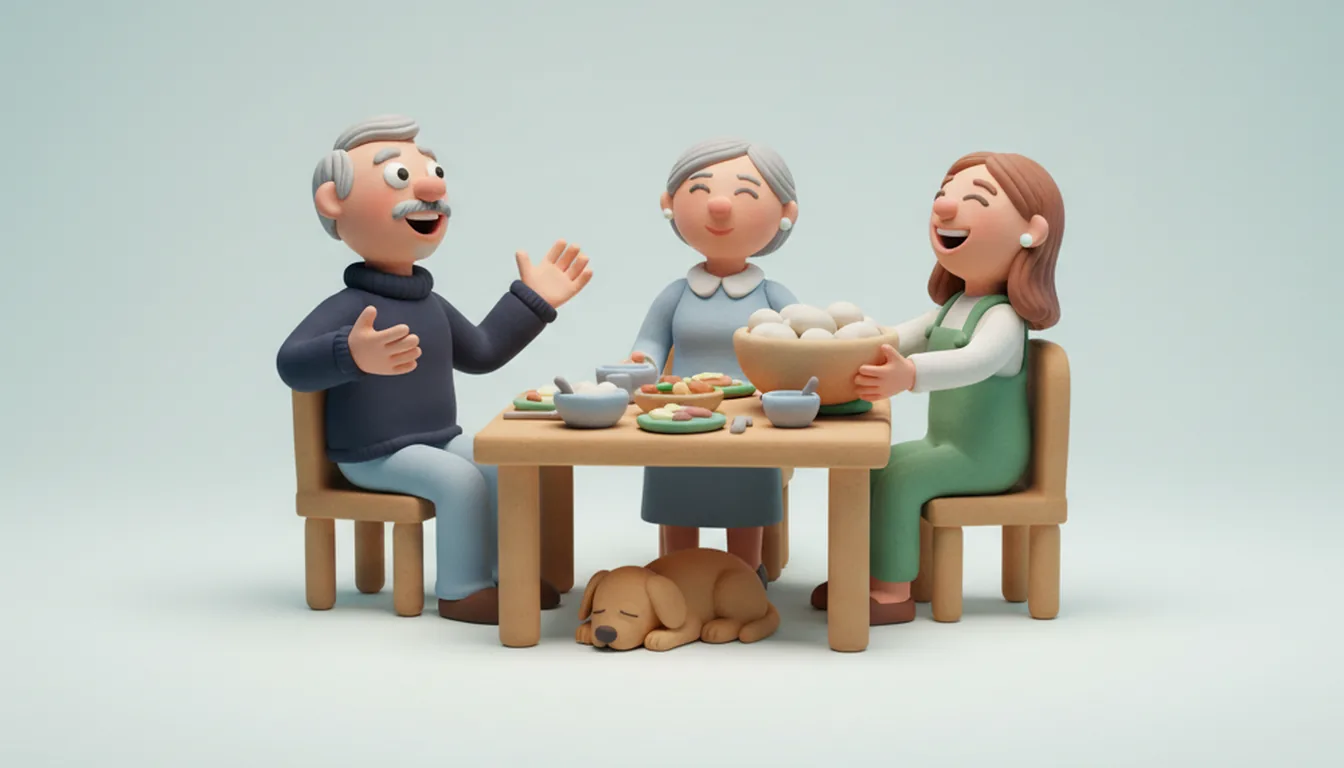
All bark and no bite describes someone who makes a lot of angry noise or big threats but rarely follows through. The picture is a dog that barks at everyone who walks past, the same one behind the old proverb "barking dogs seldom bite," which means people who make threats rarely carry them out.
An example: every Sunday for nine years, Hannah's father Rob has threatened to sell the lake cabin. The dock is falling apart, nobody helps, and he's had enough. He says it over the roast with both hands in the air, loud enough to wake the dog. Then he asks for more potatoes. Hannah, 34, stopped worrying about the cabin somewhere around year two. Her mother Carol hardly ever raises her voice. One spring she says, quietly and only once, that if the dock isn't fixed by June she will hire someone and pay for it out of Rob's new fishing boat fund. On the first of June a man with a truck pulls up at the lake. "Your mother," Rob tells Hannah, "is no bark, all bite."
Many families have a Rob and a Carol. One person's anger is loud, fast and over by dessert. Another's is quiet, slow and very much meant. Neither way is better than the other. Knowing which one you're dealing with saves a lot of wasted worry, and the odd nasty surprise.
How people use the phrase
- "Don't mind Uncle Joe, he's all bark and no bite."
- "She sounds fierce on the phone, but she's all bark."
- "His bark is worse than his bite." This form makes the same point.
You'll also see it written as "all bark no bite," and "all talk and no action" means much the same. It's usually said kindly, to tell someone there's nothing to be scared of. Said to a person's face in the middle of a row, though, it sounds like a dare, and that rarely ends well.
No bark, all bite: the quiet ones
The reverse, "no bark, all bite" or "all bite and no bark," describes someone who gives very little warning. They don't shout or threaten. They go quiet, think it over and then act. By the time they say something, it has usually been decided.
Quiet people like this are easy to underestimate. Because they seldom complain, others assume all is well, and the first sign of a problem turns out to be the last one. With them, one calm sentence said once deserves more attention than ten loud ones from someone else.
Why some anger is loud and short
For some people, anger works like a summer storm. It builds fast, it makes a lot of noise, and then the sky clears. They say what they feel while they feel it. They need to let it out before they can think straight. They forget the row long before anyone else does, and they're often surprised that people took the noise so seriously.
The good side is that their feelings are never a mystery. The hard side is that the people around them can feel worn down by the volume, even when the words mean little. A loud temper is a different thing from a strong personality, which can be very quiet indeed.
Why other anger is quiet and long
For other people, anger is more like a slow change in the weather, and you might not notice it at first. They go silent instead of loud. They think it through before they say a word. They remember what happened, sometimes for years, and they act on it without much announcement.
You can count on them to mean what they say. The catch is that by the time you notice, they may be halfway to a decision, or halfway through fixing the dock without you. Plenty of quiet people are simply easygoing, though. A calm person and a quiet biter can look alike from across the table, and only one of them is keeping score.
Loud and quiet tempers, type by type
Typeza sees personality type as part of how someone's anger shows. Six of the 16 types:
- Vitalizer: feels everything out loud. A flash of temper, a few tears, a hug, and it's over within the hour.
- Inspector: keeps it calm and factual. They note the broken rule, say plainly what needs fixing and expect it done.
- Commander: loud and quick, and they do follow through. With them the bark usually comes with a plan attached.
- Diplomat: reacts in the moment and says it face to face. Once they see the harm, they tend to fix things quickly.
- Strategist: pulls back to think and may say nothing at first. A day later they often come back with a fix.
- Guardian: stays calm until a line is crossed. When someone is treated badly, the quiet turns into action very fast.
Rob is a lot like the Diplomat. Carol is closer to the Inspector, and she would add that she gave him nine years of warning.
What to do with a barker
- Listen for the request under the noise. Rob's threats are loud, but he really does want help with the dock.
- Don't match the volume. Two loud people make a louder room, and nothing gets solved.
- Let the storm pass. Ten minutes later many barkers are ready for an ordinary talk.
- Tell them how the noise lands. Many have no idea it tires or scares people, and would like to know.
- Don't wave it all away. If every complaint gets laughed off as bark, the barker ends up feeling nobody listens, and that wears out even the warmest person.
What to do with a quiet biter
- Ask early. "You've gone quiet. Is something on your mind?" invites them to talk before they decide.
- Take the one calm sentence seriously. If they've said it out loud, they've already thought about it.
- Give them time. Pushing for an answer on the spot gets you a short "fine" and a longer silence.
- Keep your promises. Quiet people often keep a private count, and broken promises go on it.
When a loud one and a quiet one share a home
Rob and Carol have been married 38 years, and it works partly because each knows how the other's anger runs. Carol lets the Sunday speech wash over her and asks him later, in private, what he actually needs. Rob has learned that when Carol goes quiet, it's time to stop talking and start asking. A loud person who lives with a quiet one does best by turning the volume down and checking in more often. A quiet person who lives with a loud one does best by saying the small things out loud before they turn into big ones.
Find out if you bark or bite
Some people let off steam out loud, and others go quiet and keep count, and type is often part of which way you lean. Start with the free compatibility test. Then pass your result's link to the parent, partner or friend you keep misreading. When they finish, the two of you read your relationship type, which covers what comes naturally to you as a pair and where friction starts.
Questions people ask
Is "all bark and no bite" an insult?
It can be. Said kindly, it reassures someone that a loud person is harmless. Said to the loud person during an argument, it comes across as a dare or a put-down.
What is another way to say all bark and no bite?
"All talk and no action," "his bark is worse than his bite" and "full of hot air" mean much the same.
Sources
- Wiktionary, "all bark and no bite". The senses, the forms "all bark no bite" and "all bark but no bite", and "all talk and no action" as a synonym.
- Wiktionary, "barking dogs seldom bite". The proverb's sense: people who make threats rarely carry them out.
Written by Virko Kask, founder of Typeza
Written with the help of AI tools.
One question for two, every week
A question to ask your partner, friend or family, and how different types tend to answer it.
Free. Unsubscribe any time.