
Don't bite the hand that feeds you: meaning, and honest thanks
"Don't bite the hand that feeds you" means don't harm, insult or turn against the person who helps you. The saying warns you not to hurt the people who support you, and many people agree with it. The harder part is knowing where gratitude ends and handing over your own choices begins.
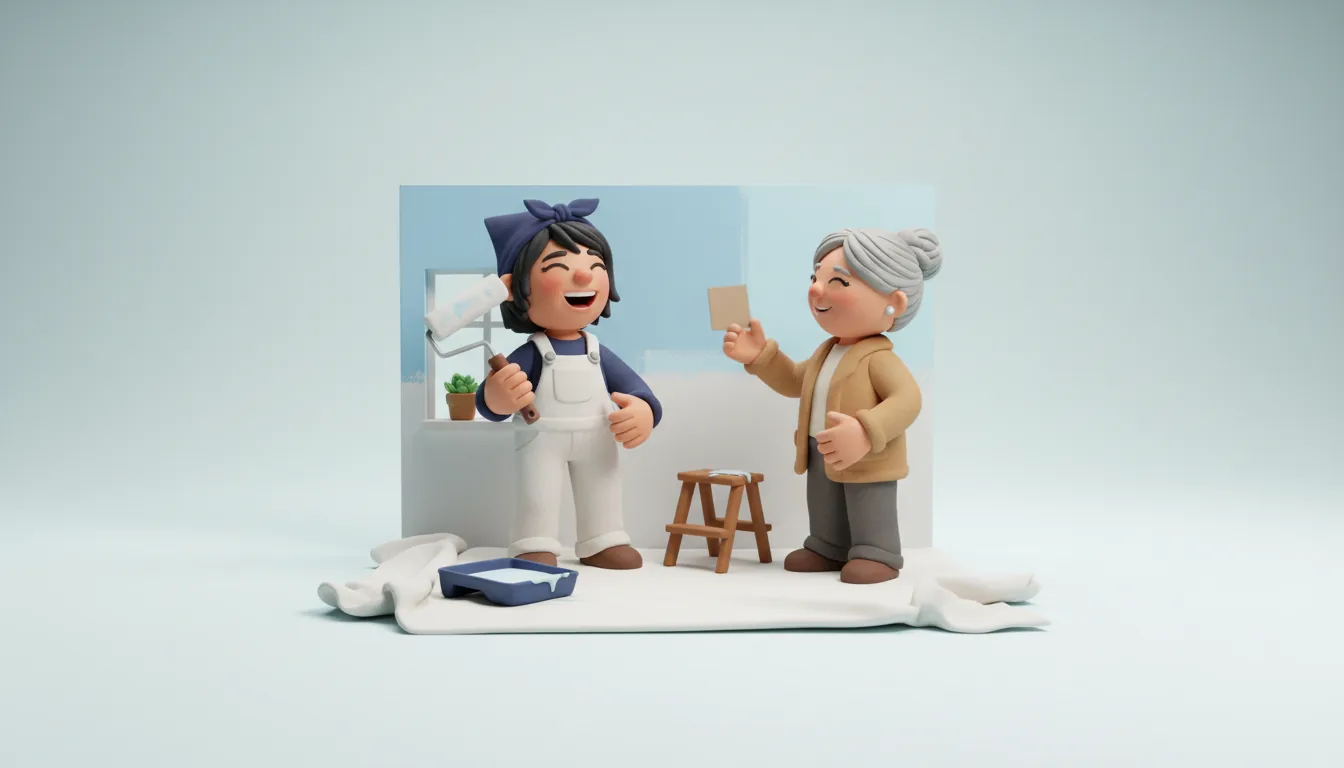
Picture this: your parents helped with the down payment on your first home, and now you're painting the living room. You've picked a pale blue. Halfway up the wall, your mother holds up a little sand-colored card from the hardware store and says it would look warmer. You laugh, and so does she. But part of you wonders whether the money came with a vote on the paint.
What does the saying mean?
The saying is usually said as a warning, often by someone watching from the side: a sibling, a friend, now and then the helper. You'll also hear "don't bite the hand that's feeding you" and, less often, "don't bite the hands that feed you." Said without the "don't," "he bit the hand that feeds him" describes someone who already did it.
Getting help in the first place is a skill of its own, and asking for help covers that part. This saying is about what happens after you've got it.
Who is the hand?
In adult life, the hand that feeds you usually belongs to someone close.
Parents who helped with a down payment
Money for a first home is one of the biggest gifts parents give a grown child. It can also blur lines. A parent who paid for part of the house may feel they have a say in the paint, the garden or who gets the spare room at Christmas.
Living in your parents' house as an adult
Moving back home at 28 to save money is common. You pay little or no rent, and in return the house rules are theirs. Complaining that dinner is at six every night can feel like biting the hand, even when the complaint is fair.
The friend who got you the job
A friend put in a word for you, and now you work at the same place. If the job turns out to be a bad fit, saying so feels disloyal to the friend, even though they didn't design the job.
A partner who covers more of the bills
When one partner earns more and pays more, the other can feel they've lost the right to complain about how money is spent. That feeling is worth talking about openly. A couple works best when both people keep a voice, whoever pays the larger share.
A boss who took a chance on you
Someone hired you without much experience. You can be grateful for that and still ask for a raise or point out a problem.
Is it biting to disagree?
No. Disagreement on its own isn't a bite. Telling your mother you'd rather keep the blue walls is honest. A friend who got you the job can hear that it isn't for you, as long as you tell them first and kindly.
Before you speak, check what you're about to criticize. "I don't want the sand color" is about the wall. "You think the money makes you the boss" is about her. The first one leaves the help and the relationship where they were.
It also helps to keep this apart from beggars can't be choosers. That saying is about taking what's on offer without picking and choosing. This one is about how you treat the giver afterwards.
What does a real bite look like?
- Complaining about the helper to others while you're still taking the help.
- Making fun of the person who's paying, to their face or behind their back.
- Taking the help and then going quiet once you no longer need it.
- Breaking the terms you agreed, such as paying back a loan, and acting as if they never existed.
These hurt because they treat the help as owed. Saying "no thanks" to a paint color isn't on the list.
Can help come with strings?
Sometimes, and it's better to know before you accept. Some help is a gift. Some is a loan. Some is quietly an exchange: money for a say, a room for following the house rules, a job for loyalty in every argument. Trouble starts when one side thinks it's a gift and the other thinks it's a deal.
If you can, ask before you take it. "Is this a loan or a gift? Is there anything you'd want from us in return?" can feel awkward, but it's far less awkward than finding out later. Being grateful for a present is a topic of its own, covered in the piece on looking a gift horse in the mouth. Here the question is what the help is allowed to buy.
And if someone uses the saying to shut down every opinion you have, the help probably came with more strings than anyone said out loud.
How do you say thanks and still say no?
Lead with the thanks, and mean it. Then make the "no" small and specific.
- "We couldn't have bought this place without you. I think we'll keep the blue, but will you help us pick the curtains?"
- "Living here is saving me a lot, and I'm grateful. Could I eat a bit later on the nights I work late?"
- "Thanks for getting me in. I wanted you to hear it from me first that I'm going to start looking for something else."
Thanks that show up in actions count too, like fixing something in their house, cooking them dinner or remembering a date that matters to them. There's more on that in how to show appreciation.
Who said it first?
The best-known early use comes from the Irish-born statesman Edmund Burke. In a memo he wrote to the British prime minister, William Pitt, in November 1795, later printed as Thoughts and Details on Scarcity, he warned that people who came to rely on the government for bread would turn on it as soon as bread ran short:
> "And having looked to Government for bread, on the very first scarcity they will turn and bite the hand that fed them."
The memo was published in 1800, after Burke's death. Whether anyone used the phrase before him is still unclear. The picture behind it needs no source anyway: a dog that snaps at the person holding out its dinner.
Who feels in debt, and who speaks up anyway?
Some people carry every favor like a debt. Others thank you warmly and then tell you exactly what they think. Personality type plays a part in that. Here are eight of the 16 types, following the order of our types page.
- Harmonizer keeps quiet about small things so the help doesn't feel spoiled, and the unsaid things can slowly pile up.
- Vitalizer pays back with warmth, inviting the helpers to dinner and visiting often, and still says out loud when something bothers them.
- Analyst keeps the help and the issue apart and calmly says both: thank you for the money, and the paint is still my call.
- Commander speaks plainly even to the person paying and dislikes owing anyone for long.
- Dreamer feels the weight of a favor and goes quiet rather than risk hurting the giver.
- Strategist weighs what the help will cost later and may turn it down to stay free.
- Guardian stays loyal to whoever helped them and takes the debt seriously until it's repaid.
- Organizer likes clear terms, writes the loan down and pays it back on time, which makes it easier to disagree.
See how help works between you and your parents
Some people take help easily and argue freely. Others feel every favor as a debt and say nothing. On Typeza, you and a parent each get a type, and then a description of the relationship type you make together, including how giving and taking tends to feel between you. Begin with the free family compatibility test. When it's done, your result page lets you invite the parent who helped you.
Questions people ask
What does "don't bite the hand that feeds you" mean?
Don't harm or turn against someone who supports you, such as a parent, a friend or a partner who helps you.
Is it "the hand that feeds you" or "the hands that feed you"?
"The hand that feeds you" is the usual form. "Don't bite the hands that feed you" and "don't bite the hand that's feeding you" mean the same thing.
Who said "bite the hand that feeds you" first?
The best-known early use is Edmund Burke's, in a 1795 memo printed in 1800. Whether anyone used it earlier is still unclear.
Is disagreeing with someone who helps you biting the hand that feeds you?
No. Honest, kind disagreement about a specific thing isn't a bite. Insulting the person, or taking their help and then turning on them, is.
What's an example of the saying in use?
"Your sister pays half your rent, so maybe don't post jokes about her cooking. Don't bite the hand that feeds you."
Sources
- Wikiquote, "Edmund Burke": the line "bite the hand that fed them" from Thoughts and Details on Scarcity (1795).
- Wikipedia, "Thoughts and Details on Scarcity": a memo to William Pitt from November 1795, published in 1800.
Written by Virko Kask, founder of Typeza
Written with the help of AI tools.
One question for two, every week
A question to ask your partner, friend or family, and how different types tend to answer it.
Free. Unsubscribe any time.