
Familiarity breeds contempt: what it means, and how to keep respect
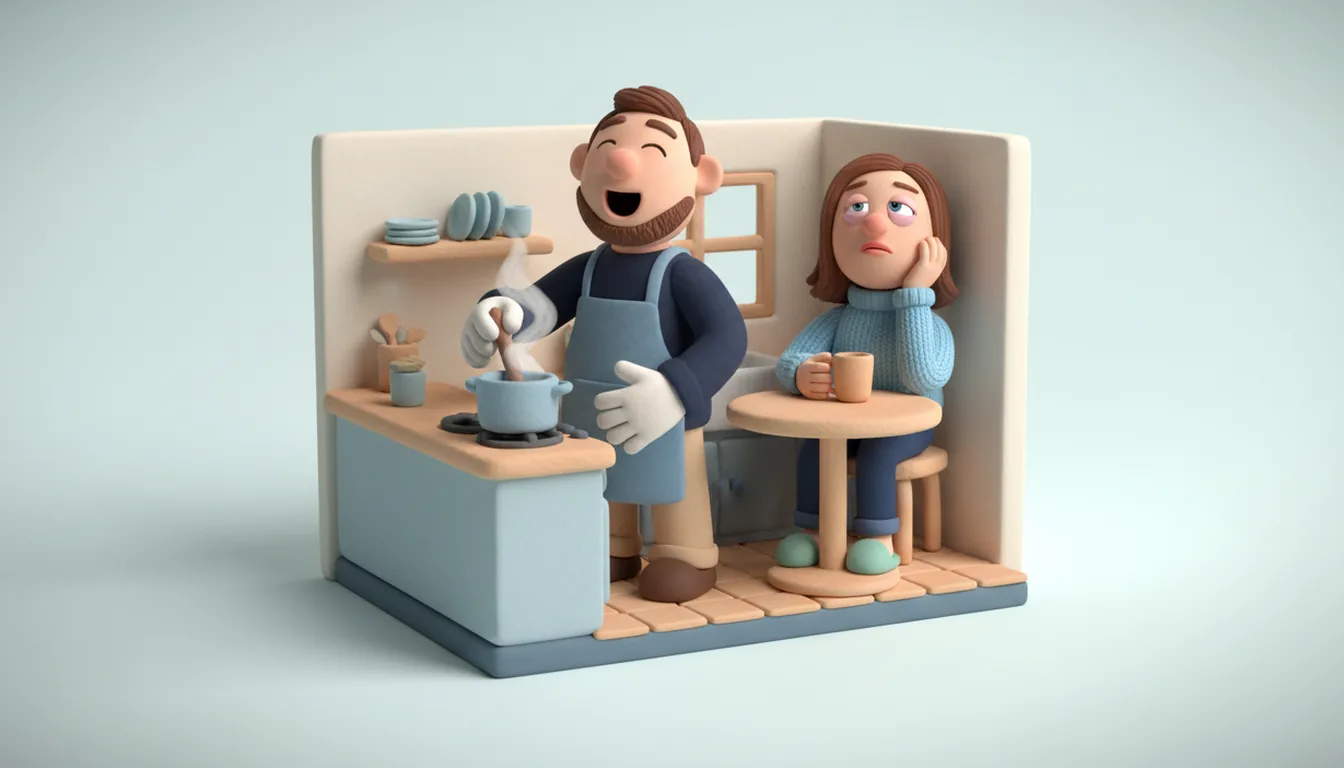
"Familiarity breeds contempt" is an old saying about closeness wearing away respect. The better you know someone, the easier it becomes to stop seeing their good side and to notice only what irritates you. It doesn't have to go that way, and many close bonds don't. It helps to know why it happens, so you can catch it early.
An example: when Talia moved in with Ben, she loved that he hummed while he cooked. It was the same three songs, always a little off key, and it made the kitchen feel like a home. Four years later, Ben is stirring a pot of chili and humming the same three songs, and Talia sits behind him with her coffee, rolling her eyes. Nothing about Ben has changed. Talia has just heard it about two thousand times.
What does familiarity breeds contempt mean?
The saying means that long, close contact can make people lose respect for each other. At a distance we see a person's best side. Up close and every day, we also see the dirty socks, the same old jokes and the bad moods, and some of the shine fades.
"Contempt" here is a strong word for a mix of scorn and impatience. It is the feeling behind an eye roll, a sigh, a sarcastic "Here we go again." People use the saying about partners, roommates, siblings, coworkers and even famous people who seem less impressive once you have met them.
Who said familiarity breeds contempt?
Nobody knows who said it first, because the idea is very old. It is often linked to an Aesop fable about a fox that nearly faints the first time it meets a lion. By the third meeting it walks right up and starts chatting. The fable's usual moral, though, is that getting to know something takes away fear.
The oldest known written form is French, from around 1340. Chaucer used an English version in the 1380s, in the Tale of Melibee. The line is also often credited to a Roman writer of short sayings, but no ancient source for that has turned up. Mark Twain later added a joke of his own: familiarity breeds contempt, and children.
Why closeness wears on us
Living close to someone is a long run of small repeats. A few things tend to happen along the way:
- A charming habit turns into background noise. The first time, a quirk is cute. The five hundredth time, it feels like a choice they make just to annoy you.
- You stop seeing the effort. When someone cooks dinner every night, it slowly turns from a kind act into something you expect.
- Manners slip. People say please and thank you to strangers, then forget them with the person they love most.
- You know where it hurts. Close people know each other's weak spots, and in a bad moment it is easy to aim there.
- Curiosity fades. You think you already know what they will say, so you stop really listening.
None of this makes someone a bad partner or friend. It is what tends to happen when two lives share the same small space and nobody pushes back.
What contempt looks like in a relationship
In a couple, contempt rarely starts with a big fight. It grows in small moments that each seem harmless:
- Rolling your eyes while your partner talks.
- Copying their voice to make fun of something they said.
- Sighing loudly when they ask a question.
- Jokes at their expense in front of friends.
- Answering a feeling with "You're overreacting" or "Seriously?"
Each of these says, without words, "I think I'm better than you." Alone, one eye roll means little. When they pile up, the partner on the other end starts to feel small at home. If one specific habit drives you mad, pet peeves in relationships looks at why one partner minds and the other doesn't.
When family gets too familiar
Families are where this saying hits hardest, because nobody chose each other and the history goes back decades. Adult siblings who get along fine by phone can be snapping at each other by the second day of a holiday visit. A grown son who is calm with everyone else can turn into a sulky teenager within an hour at his parents' table.
Part of it is that family members still treat each other as the people they were at twelve. It helps to notice who the person is now. Ask your brother about his week as you would ask a friend, and let your mother tell a story you have heard before without finishing it for her.
Housemates and the shared kitchen
Roommates and flatmates go through a quick version of the same thing. The first month is polite. Then come the dishes in the sink, the loud phone calls and the milk that is always nearly empty. Because you are not family or partners, there is less love to soften the small annoyances, so they can turn sour fast.
The fix is mostly practical. Talk early about chores, guests and quiet hours, before anyone is angry. Roommate rules has a fuller list to start from. Say what bothers you while it is still small and you can say it kindly. Leave each other some space, because two people who see each other at every meal need time alone to stay fond of each other.
Does closeness always wear thin?
No. Many couples, friends and siblings grow closer with every year, and familiarity is part of why. Knowing someone well means you can predict what will upset them, what will cheer them up and how they take their coffee. That is comfort and trust, and many people want more of it.
The saying comes true when respect thins out and nobody notices. Trouble starts when knowing someone well turns into thinking you have them all figured out.
How to keep respect when you know someone by heart
A few habits keep closeness warm:
- Keep your manners. Say thank you for the coffee, even the thousandth cup.
- Notice what you still admire. Once a week, think of one thing your partner, friend or sibling did well, and tell them.
- Ask new questions. People change. Ask about something you have never asked before.
- Separate the habit from the person. The humming is annoying. Ben is not.
- Speak up early and gently. A small "Could you hum a bit quieter in the morning?" is much better than months of silent eye rolling.
- Spend time apart. A weekend with your own friends gives you something new to bring home.
For a fuller picture of what respect looks like between two partners, see respect in a relationship.
Why the same quirk charms one person and grates on another
Often the trait that drew you to someone is the same one that wears on you later. Ben's humming was part of why Talia felt at home. Which quirks wear thin, and for whom, depends partly on personality type. Here is how some of them tend to wear, listed as on the types page:
- Ideator: brings a new plan every evening. Early on it feels exciting, and years later it can feel like nothing ever gets finished.
- Harmonizer: keeps the peace and the home cozy. Over time a partner may wish they would just say what they really think.
- Vitalizer: fills the room with energy and fun, which can feel like a lot on a tired Tuesday night.
- Inspector: keeps life in order. That is reassuring at first and can later feel like a list of rules about the dishwasher.
- Commander: decides fast and gets things done. After a while the people closest to them may feel steered more than asked.
- Diplomat: spontaneous and up for anything, until a partner gets tired of plans that change at the last minute.
- Organizer: shows love by fixing and handling things, which some people start to feel as being managed.
None of these traits is a flaw. They rub differently against different people, and two people who know where they rub can laugh about it before it turns into scorn.
See where the two of you rub
Talia bought Ben a pair of headphones, as a joke, so he could hum along to the real songs. The eye rolling stopped once she could laugh about it. If you want to know which of your habits will wear on each other, start with Typeza's couples compatibility test. Each of you does it alone on your own phone: 41 times you choose the truer of two statements. Your type shows right away, with four bars for the base traits and a brief free profile of what your type does well and where it slips.
To compare, one of you opens a free account and invites the other. You both need to be 16 or older. When the second person is done, your shared result opens and names one of the 16 relationship types. It describes what runs smoothly between you, where you two grate on each other and what that feels like.
Questions people ask
Is it "familiarity breeds contempt" or "contempt breeds familiarity"?
The saying is "familiarity breeds contempt." People sometimes flip it by mistake, but the reversed version doesn't have a set meaning.
Is familiarity breeds contempt in the Bible?
The exact words are not. A close idea appears in the Gospels, where Jesus says a prophet is not without honor except in his own hometown, among the people who knew him growing up.
What does it mean to treat someone with contempt?
It means acting as if you are above them: mocking, rolling your eyes, talking down to them or brushing off what they feel.
What is the opposite of familiarity breeds contempt?
"Absence makes the heart grow fonder" is the closest opposite. It says that time apart makes people value each other more.
Sources
- The Phrase Finder, "Familiarity breeds contempt": the French record from about 1340, and no version of the proverb in Aesop's fable.
- Wikipedia, "The Fox and the Lion": the fable and its usual moral.
- Chaucer, The Tale of Melibee, in Skeat's edition of The Canterbury Tales (Project Gutenberg): "over-greet homlinesse engendreth dispreysinge".
- Wikiquote, "Mark Twain": "Familiarity breeds contempt, and children", from Mark Twain's Notebook (1935).
Written by Virko Kask, founder of Typeza
Written with the help of AI tools.
One question for two, every week
A question to ask your partner, friend or family, and how different types tend to answer it.
Free. Unsubscribe any time.