
Orange peel theory: what it is, and what small acts of care say
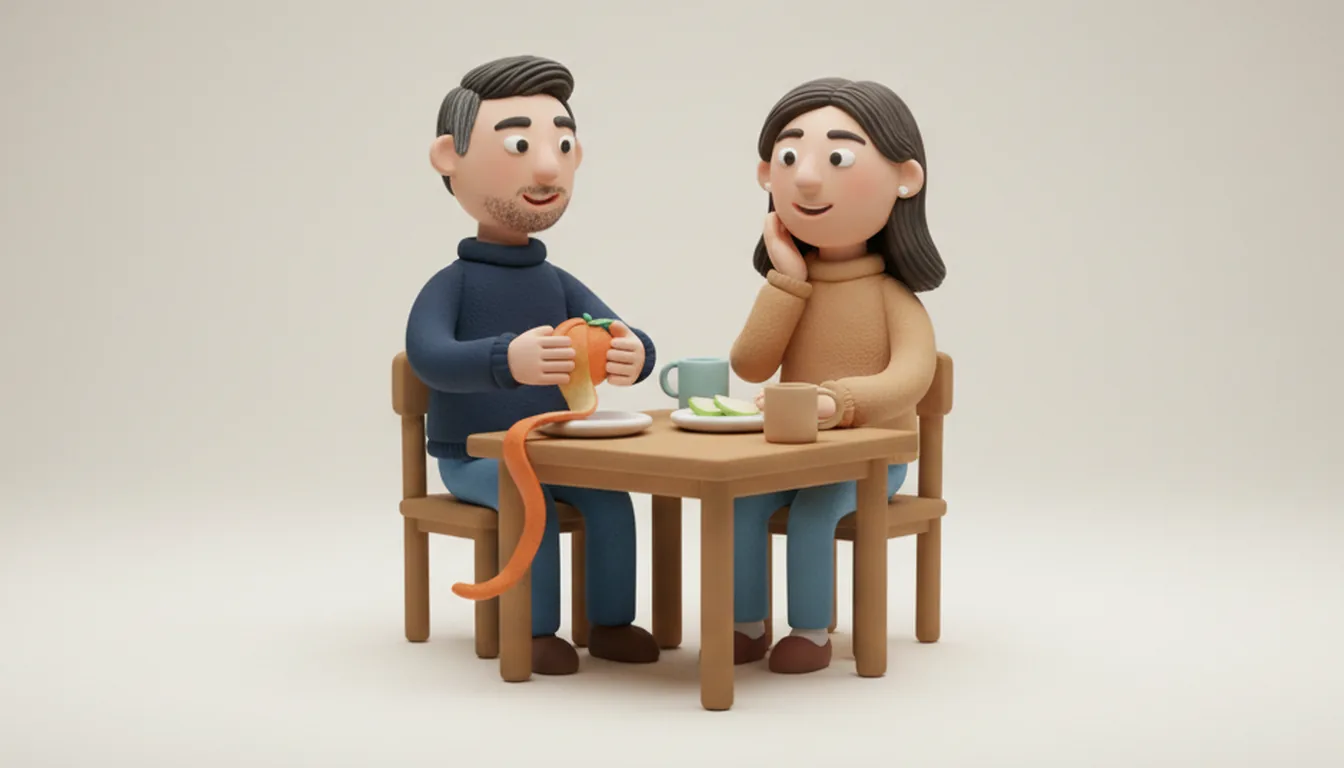
The orange peel theory is a social media trend about small acts of care in a relationship. The idea is that if you ask your partner to peel an orange for you, a task you could easily do yourself, their reaction shows how willing they are to do small things for you in general. People filmed their partners' answers and posted them, and the trend spread fast. Under the joke sits a real question: what do the small things a partner does for you every day actually say?
An example: Ilse first saw the orange peel videos in bed while her husband, Joost, made coffee downstairs. In eleven years, Joost had never peeled her an orange. He had, though, cut her apples into thin slices every evening since she cracked a tooth, warmed up the car on frosty mornings and kept her bike tires pumped without being asked. She had stopped noticing any of it. What she did notice was that he rarely asked about her day, and when he did, he looked at his phone while she answered. She didn't ask him to peel anything. She went downstairs and thanked him for the apples, which surprised him so much that he put the coffee pot down.
What is the orange peel theory?
In the usual version, someone says they would like an orange, but peeling it is a hassle. If their partner peels it for them without fuss, the theory says this partner will also show up in bigger ways. If the partner refuses or makes fun of the request, that is read as a bad sign. Some people call it the orange peel test.
The trend took off on TikTok in November 2023. The orange became the symbol. Peeling one is a small, slightly annoying job with sticky fingers and no reward, which is exactly why doing it for someone feels like care.
Why a peeled orange meant so much to people
Many people recognized something true in it. Big gestures happen a few times a year. Small ones happen every day, and they add up. Someone who saves you the last slice, texts when they land or remembers that you hate the crust is telling you, again and again, that you are on their mind.
The videos also touched people because many viewers felt unseen. Some of the comments came from people who do small things for a partner all the time and get few in return.
What small acts of care really say
A small act of care often carries one of a few quiet messages:
- "I noticed." They saw you were cold and brought a sweater.
- "I remembered." They bought the tea you mentioned once, three weeks ago.
- "Your comfort matters to me." They took the seat in the draft so you didn't have to.
- "I've got this one." They made the boring call to the bank.
- "I like making your day easier." They peeled the orange.
None of these needs words. That is part of why they are so easy to miss, especially when they come from someone who isn't much of a talker.
Why a secret test can backfire
The trend has a catch. When you set a small task to see what your partner does, they don't know it matters. They might be tired, busy or in the middle of something. They might simply hate the smell of oranges. One moment on a random afternoon says very little about years together.
Secret tests can also make the person running them more anxious, because now they are watching for proof. A partner who finds out they were being graded may feel hurt. If you want to know whether your partner will do small things for you, asking directly is fairer, and you get a better answer.
Small acts of care worth noticing
Many partners already peel oranges in their own way. A few everyday ones couples often overlook:
- Charging your phone when you forget to.
- Scraping the ice off the car before you leave.
- Saving you the corner piece, the window seat or the last biscuit.
- Filling your water glass at dinner.
- Turning the music down when you come home with a headache.
- Sending a photo of the dog in the middle of your long day.
- Taking the bins out on the night you always forget.
Try writing down what your partner did for you this week. The list may be longer than you expect. Quality time in a relationship looks at a related habit, which is giving each other your full attention.
When you and your partner show care in different ways
Ilse showed care with attention. She asked questions, remembered names and listened. Joost showed it with practical help. Each of them was giving a lot, and each felt the other gave less, because both were looking for their own kind of care.
In some couples, one partner tidies, fixes and fetches. The other talks, listens and plans evenings out. Both feel taken for granted. The way out starts with noticing what your partner already does, then telling them which kind of care reaches you most. Our guide on how to make your partner feel loved covers that second step in more detail.
Thanks matter too. Thanking a partner for something they do every day shows that you see it as a gift and don't take it as a duty. Respect in a relationship explains why that counts for so much over the years.
How each type tends to show care
People lean toward different kinds of care, and personality type can play a part in which. Here are eight of the 16 types:
- Harmonizer makes the room comfortable, with a blanket, a snack and soft light, before you know you need it.
- Analyst shows care by solving the problem you mentioned in passing, sometimes with a spreadsheet.
- Commander takes charge of whatever is stressing you and deals with it.
- Dreamer picks up on your mood and offers quiet company when you need it.
- Entrepreneur saves you time and effort, from booking the repair to finding a better deal.
- Guardian stays loyal in small ways, like remembering what upset you and making sure it doesn't happen again.
- Encourager sees your talents and keeps telling you what you are good at.
- Craftsman fixes, builds and peels without a word, and usually does it well.
Two partners of different types can both care a great deal and still miss each other's signals for years.
Ask for the orange
Instead of setting a test, try asking. "Would you peel me an orange?" is a perfectly fine thing to say to someone who loves you. So is "It would mean a lot if you asked about my day and put your phone down." Many partners are glad to know what helps. Joost was. He still slices the apples, and now he asks about Ilse's day over dinner with his phone face down on the table.
See how care travels between you two
If you wonder why your partner's care sometimes passes you by, or why yours does, your personality types are a good place to look. Start with Typeza's couples compatibility test. You go through pairs of statements and pick whichever sounds closer to you, and then your type appears on screen alongside four base traits. That first part is free and works without an account.
After your result appears, send your partner an invite to take it too. The invite needs a free account. When both of you are done, you'll see the relationship type you share, including what usually comes easily to the two of you and where you may misread each other.
Questions people ask
Where did the orange peel theory come from?
It took off on TikTok in November 2023, when people began filming their partners' reactions to being asked to peel an orange.
Sources
- Time, "The Meaning Behind TikTok's Orange Peel Theory": the trend began on TikTok in early November 2023.
- Know Your Meme, "What Is The 'Orange Peel Theory'? The Viral TikTok Relationship Test Explained": the test is about a partner's willingness to do small acts of care.
Written by Virko Kask, founder of Typeza
Written with the help of AI tools.
One question for two, every week
A question to ask your partner, friend or family, and how different types tend to answer it.
Free. Unsubscribe any time.