
Living alone: how to like it, whatever your type
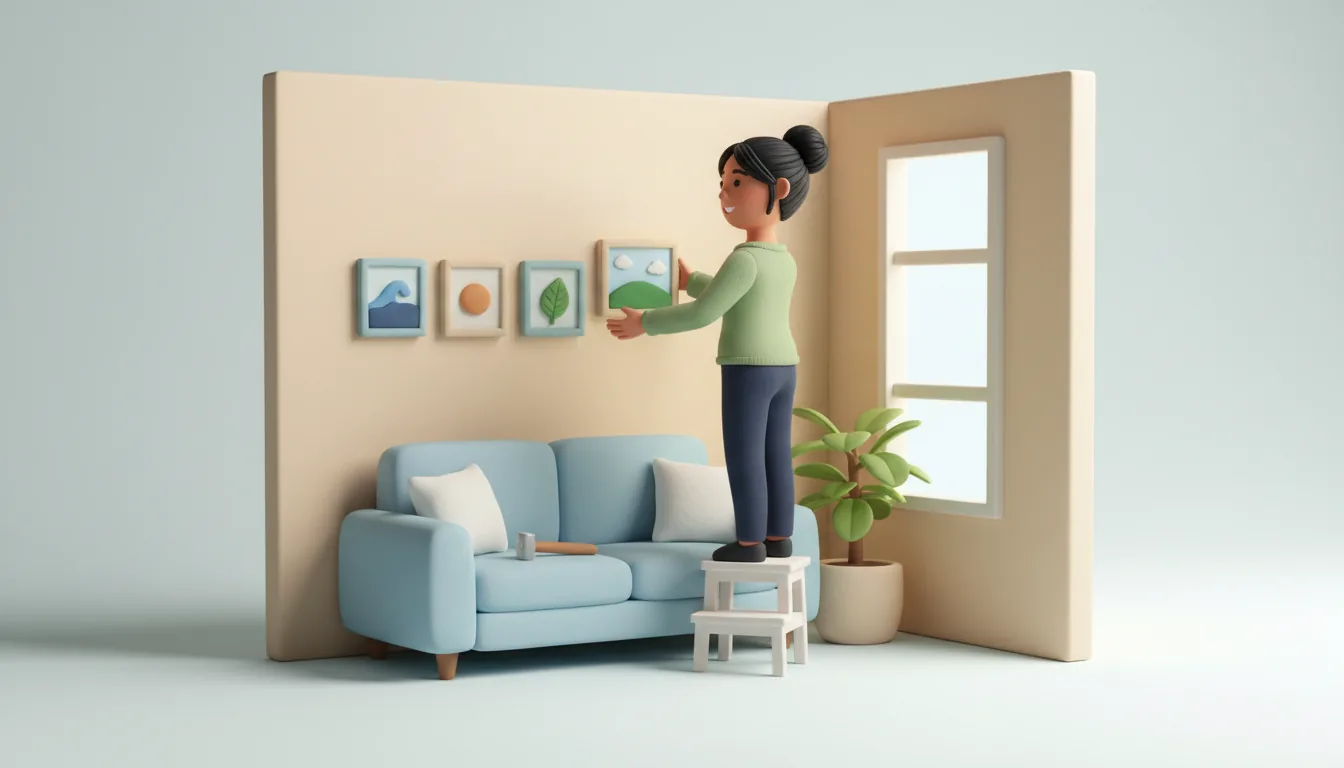
When you live alone, the home runs on your habits and nobody else's. Plenty of adults choose it and like it. The hard parts are real but mostly practical, and they get easier with a routine, a home that fits you and a few people who are part of your week. Many people who live alone are also single, and being single is about that side of life.
An example: a few weeks after she moves into her apartment, Mira stands on a white step stool beside her sofa and hangs the last of four small pictures. A blue wave, a sun and a green leaf are already up in a row. The last one, a green hill under two white clouds, is the one she saved for the end. Nobody has an opinion about where any of them go, and she has moved the sofa twice that morning. Across the hall, Tomas moved in the same month. His door stands open most Saturdays, with a friend or two at his kitchen table and somebody's jacket on the hook. They both live alone and like it, though not for the same reasons.
What's good about living alone
People who like living alone tend to name the same small pleasures.
- Nothing moves while you're out. The scissors are in the drawer, the last slice of bread is still there and your book is open at the right page.
- Mornings go your way. You can sing in the shower, eat breakfast standing at the counter and play the radio loud, and nobody else has to be awake for it.
- Chores are done to your standard. Nobody argues about whose turn the dishes are, and the place is exactly as tidy as you want it.
- You find out what you can handle. After the first time you clear a blocked sink or put up a shelf on your own, you know you can do it again.
- Guests come because you asked them. When friends come over, it's your idea, and when they go, the place is yours again.
The harder parts
Living alone has its downsides too, and it helps to know them before they surprise you.
- Every job is yours. The bins, the dripping tap and the lightbulb in the hall all wait for you.
- Some evenings are very quiet. Sunday evening is the one people often mention, and the winter holidays can be quiet too. Christmas alone has a plan for those days.
- Nobody hears about your day as it happens. The funny thing on the bus has to wait for a call or the next time you see a friend.
- Recipes are written for four. Cooking for one means the same stew three nights running, unless you freeze it in portions.
- Staying in becomes the default. With nobody else suggesting a plan, a whole week can pass at home without you choosing it.
None of this means something is wrong. It's the other side of the good parts, and much of it gets easier with a few habits.
Living alone for the first time
The first months are when living on your own feels most different. Small sounds are new, and the place is quieter than you're used to.
- Learn the building in the first week. Find out where the bins go, where the water shuts off and which day the stairs get cleaned.
- Say hello to your neighbors early. People remember a new face that introduced itself, and a neighbor you know is the first person to call when you lock yourself out.
- Keep a small toolbox. A screwdriver, a hammer, picture hooks and a tape measure cover most first jobs.
- Learn three meals for one. Pick three dishes you like and cook them until you don't need the recipe.
- Book your first guests. Put a date in the calendar for friends to come over, even if the boxes aren't all unpacked yet.
For many people the place starts to feel like theirs within a season.
A routine that fits you
A routine matters more when nobody else sets the rhythm of the house. It doesn't need to be strict, and three or four fixed points in the week are enough.
- A wake-up time you keep on weekends too. It stops a free Saturday from slipping away before lunch.
- One evening for chores. Laundry, floors and bins on the same night keep the rest of the week free.
- One evening out. A class, a club or a standing plan with a friend gets you out of the door whether you feel like it or not.
- A Sunday evening habit. A long call, a big cook for the week or a walk around the block gives the quietest evening a shape.
With nobody else in the kitchen, the first hour of the day is yours to plan too, and morning routine has ideas to pick from.
A home that fits you
Living alone is the one time a home can be built entirely around one person.
- Put one good chair in the best light. Make it the place where you read, have breakfast and sit when you get home.
- Give your favorite thing a corner. A desk for drawing, a mat for stretching or a sewing table tells you what the home is for.
- Hang pictures at your own eye height. There's nobody else to measure for.
- Keep one seat ready for a guest. A chair that's always free makes it easy to say "come over" at short notice.
If a night in is your favorite plan anyway, you may see yourself in homebody.
Keeping people close when nobody comes home
Living alone doesn't mean being alone all week. It just takes a bit more planning to keep people in your days.
- Swap keys with a neighbor. Water each other's plants when one of you is away, and you'll soon have a reason to knock.
- Start a dinner swap. One friend, every other week: you cook at your place, then they cook at theirs.
- Run errands at the same places. The bakery and the barber where people learn your name become small, friendly parts of the week.
- Host something small that repeats. A breakfast at your place on the first Sunday of the month, for whoever can come, turns into a habit people look forward to.
Being on your own a lot is not the same as missing people, and alone vs lonely looks at where one ends and the other begins.
How to learn to like living alone
Some people love living alone from the first night, and for others it takes a few months. It helps to notice what this setup lets you do that a shared home wouldn't, like eating late, reading half the night or leaving a project spread across the table for a week. Then do more of it.
It takes some practice to feel at ease in your own company, and how to enjoy your own company has simple steps for it. Going out alone helps too, and solo date ideas has plans for that. If one day you share a home again, moving in together covers that step.
A quiet home or an open door: living alone by type
For some people a quiet home is the best part of the day. Others need friends to drop in, or the place starts to feel too still. Typeza sees personality type as part of that. Six of the 16 types:
- Ideator rarely lets the home settle. The furniture moves every few months, there's always a new project on the table, and a friend who drops by with a pot of soup is very welcome.
- Vitalizer likes a lively home. A full table on Saturday and music in the kitchen keep living alone fun for them.
- Mentor fills the place with people they care about. Long talks at the kitchen table are the best part of having their own place.
- Inspector rests when the home is in order. A quiet evening in a tidy room, with everything where it belongs, is what living alone is for.
- Strategist plans the home like a long project, from where the desk goes to which jobs to finish before winter, and needs quiet evenings to think it through.
- Guardian keeps a calm home and opens the door to people they trust. A friend who keeps their word matters more to them than a busy calendar.
These are broad tendencies, and many people see a bit of more than one type in themselves. They describe how people like to live. Use them as a way to think about your home, not as advice on how to set it up.
Your type, and the friend who has your spare key
Typeza shows your type and the relationship type you share with someone close, like the neighbor who waters your plants or the friend who comes for dinner every other week. Type is often part of why one of you wants a quiet evening in and the other wants the door open. Get your type from the free personality test first, then invite that person to compare.
Questions people ask
Is it normal to enjoy living alone?
Yes. Plenty of adults choose it and keep choosing it for years. Liking your own space and liking people go together just fine.
Written by Virko Kask, founder of Typeza
Written with the help of AI tools.
One question for two, every week
A question to ask your partner, friend or family, and how different types tend to answer it.
Free. Unsubscribe any time.