
How to enjoy your own company, whatever your type
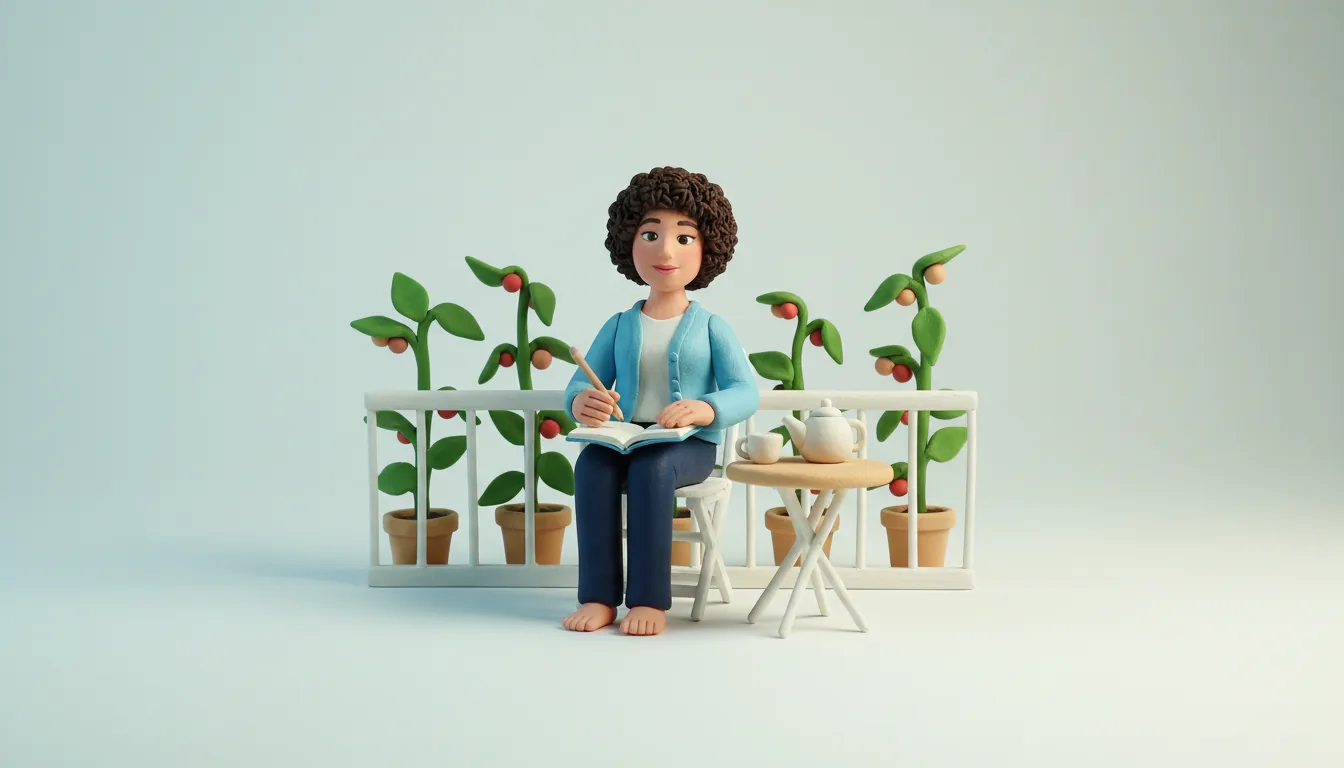
To enjoy your own company, treat time alone the way you'd treat time with a friend you like. Give it a loose plan, a small ritual and, now and then, something new. It gets easier with practice. Personality is often part of what a good day on your own looks like, so a plan that suits a quiet reader can bore a social person.
An example: Lena's partner Tom leaves on Friday evening to spend the weekend at his brother's, and her two closest friends are busy. On Saturday morning Lena stands in the kitchen and realizes she hasn't had a whole weekend to herself in six years. The first hour goes to her phone. By eleven she has sorted a drawer that didn't need sorting. Then she finds an old envelope and writes a plan on the back. The farmers market before noon. Tea on the balcony at four, with her sketchbook and the tomato plants she's meant to draw all summer. On Sunday, a film on her own at the small cinema in town, something she has never done. On Sunday night she texts Tom: "Miss you. Also, I had a really good weekend."
Being alone and feeling lonely are different things, and alone vs lonely explains why some people recharge best on their own. This guide is about what to do with the hours.
Why your own company can feel strange at first
Many of us fill every gap. There's always a message to answer, a show to finish or a friend to call, so a free Saturday with nobody in it can feel oddly empty. Some people feel guilty, as if time alone has to be earned. Others worry it means something is wrong with their social life.
Neither is true. Feeling awkward at first only means you're out of practice. Being comfortable alone starts small, with an hour, then an afternoon, then a day. The same goes for a holiday on your own, and how to spend Christmas alone has a plan for December 25. If you're single by choice, being single looks at that life across the whole year.
Make a loose plan
An empty day with no shape tends to drift into scrolling. A loose plan gives it an outline without turning it into a timetable.
- Pick one anchor for the morning and one for the afternoon. A walk to the market, a swim or a library visit is plenty. The rest can stay open.
- Decide about the phone. Put it in a drawer for two hours, or at least mute the group chats.
- Eat well on purpose. Cook something you love that nobody else at home eats, or take yourself out for lunch.
- Leave room to do nothing. Lying on the sofa watching the light move across the wall is allowed.
Lena's envelope has three lines on it. That's enough.
Keep one small ritual
A ritual turns time alone from "nobody's around" into something you look forward to. It should be small, easy to repeat and yours alone.
It could be tea at the same hour on the balcony, a long bath with the radio on, ten minutes of drawing whatever is in front of you or a crossword with your morning coffee. A walk on the same route every Sunday counts too. Lena's tea at four becomes a weekly thing, even on weekends when Tom is home. He learns that four o'clock on Saturday means half an hour on the balcony, and that she'll come back inside in a good mood.
Try one new thing on your own
For many people the big step is going alone to a place where others usually go in pairs or groups, like a film, a museum, a restaurant counter or a day trip by train. The first time feels exposed. By the second, many people notice that nobody is looking at them. They can sit where they want, stay as long as they please and leave the moment they've had enough.
If you're short of ideas, how to find a hobby sorts them by what you enjoy.
Things to do by yourself
A short list to start from:
- Go to an afternoon film and take the seat you really want.
- Ride a train to a town you've never visited and wander with no plan.
- Cook a recipe that takes three hours.
- Visit a museum and spend the whole time in one room.
- Go for a long swim or bike ride with no target.
- Sit in a café with a book and stay for a second cup.
- Repot every plant you own.
- Learn the first three songs on an instrument.
- Walk a route you usually drive.
- Write a long letter to a friend by hand.
- Sort your old photos and keep the twenty best.
- Fly a kite from the windiest hill near you.
- Find out who lived on your street a hundred years ago, from old records at the local archive.
- Teach yourself to whistle with two fingers.
- Learn one card trick and practice it until nobody can catch you.
To make one of these into a proper outing, solo date ideas shows how to plan your first one.
A good solo day for each type
Your lean toward introvert or extrovert changes how much time alone feels right. Typeza sees personality type as part of what fills it. Eight of the 16 types:
- Vitalizer: enjoys being alone among people. A busy market or a seat by a café window keeps the energy up while the day stays theirs.
- Mentor: likes solo time with feeling in it, such as a moving film, a long walk with music or an evening writing in a journal.
- Inspector: relaxes in a day that has a shape. A set walking route, a meal at a set hour and a cupboard put in order feel restful.
- Commander: wants something to push against. A hard hike, a long run or a big job in the garden makes the day feel well spent.
- Entrepreneur: likes a result at the end, like a shelf put up, a trip planned or a book finished at last.
- Guardian: uses quiet time to think things through on their own terms, then maybe writes an honest letter to one of the few people they trust.
- Organizer: finds it hard to stop being useful. Their best solo day has a job in the morning and real rest in the afternoon, with no guilt about the second part.
- Counselor: needs time alone to sort through the week, often with a book, a bath or a slow walk where nobody needs anything from them.
Extroverted types tend to want shorter stretches alone, ideally with some life around them. Introverted types can often go a whole weekend and come back rested. Both can enjoy their own company. They just like different doses.
Signs you need alone time in a relationship
Wanting time alone says nothing bad about the two of you. Many people need some, and the signs are easy to miss.
- Small habits of your partner's start to grate, like humming or cups left by the sink.
- You stay in the shower or the parked car a little longer than you need to.
- A free evening at home together sounds tiring instead of nice.
- You daydream about having the flat to yourself for a whole Saturday.
- You feel crowded even when your partner is being kind.
- An hour alone puts you in a noticeably better mood.
If several of these sound familiar, you probably need a little more space. Saying so early beats snapping about a cup by the sink.
How to tell your partner you need time alone
The worry is always that "I need time alone" will sound like "I need time away from you." How you say it makes the difference.
- Pick a calm moment. Brought up during a tense evening, it sounds like a reaction.
- Say what it's for. "I come back calmer and nicer after a few hours to myself" makes it about your energy.
- Give it a shape. "Saturday afternoons, from lunch until six" is easier to hear than an open-ended "some space."
- Make it regular. A fixed slot means you don't have to ask each time, and it stops feeling like news.
- Ask what they'd do with the time. Plenty of partners like a free afternoon too, once they know about it.
Lena tells Tom she wants one Saturday a month for herself. He's quiet for a moment. Then he asks if he can have another Saturday for fishing with his brother, and they both keep their days.
See why time alone refills one of you
Some people love a Saturday on their own and others get restless after an hour, and personality is often part of the difference. Start with the free personality test. To compare with your partner, pass along the link from your result so they can take the same test. When they have answered, you can read your relationship type together, including why one of you refills alone and the other with company.
Questions people ask
How do I start enjoying my own company?
Start small. Plan one short block of time alone with something you like in it, such as a walk or a meal out, and keep your phone out of reach. Repeat it every week and make it a little longer.
Is it normal to need time alone in a relationship?
Yes. Many people need some, and introverted types often need more. It tells you how you recharge and says nothing bad about your partner.
Written by Virko Kask, founder of Typeza
Written with the help of AI tools.
One question for two, every week
A question to ask your partner, friend or family, and how different types tend to answer it.
Free. Unsubscribe any time.