
Alone vs lonely: the difference, and why some people recharge alone
Alone and lonely sound alike, and they mean different things. Being alone is a situation: nobody else is around. Being lonely is a feeling: you miss people and want more closeness than you have right now. You can be alone and perfectly happy. Plenty of people have felt lonely at a crowded party.
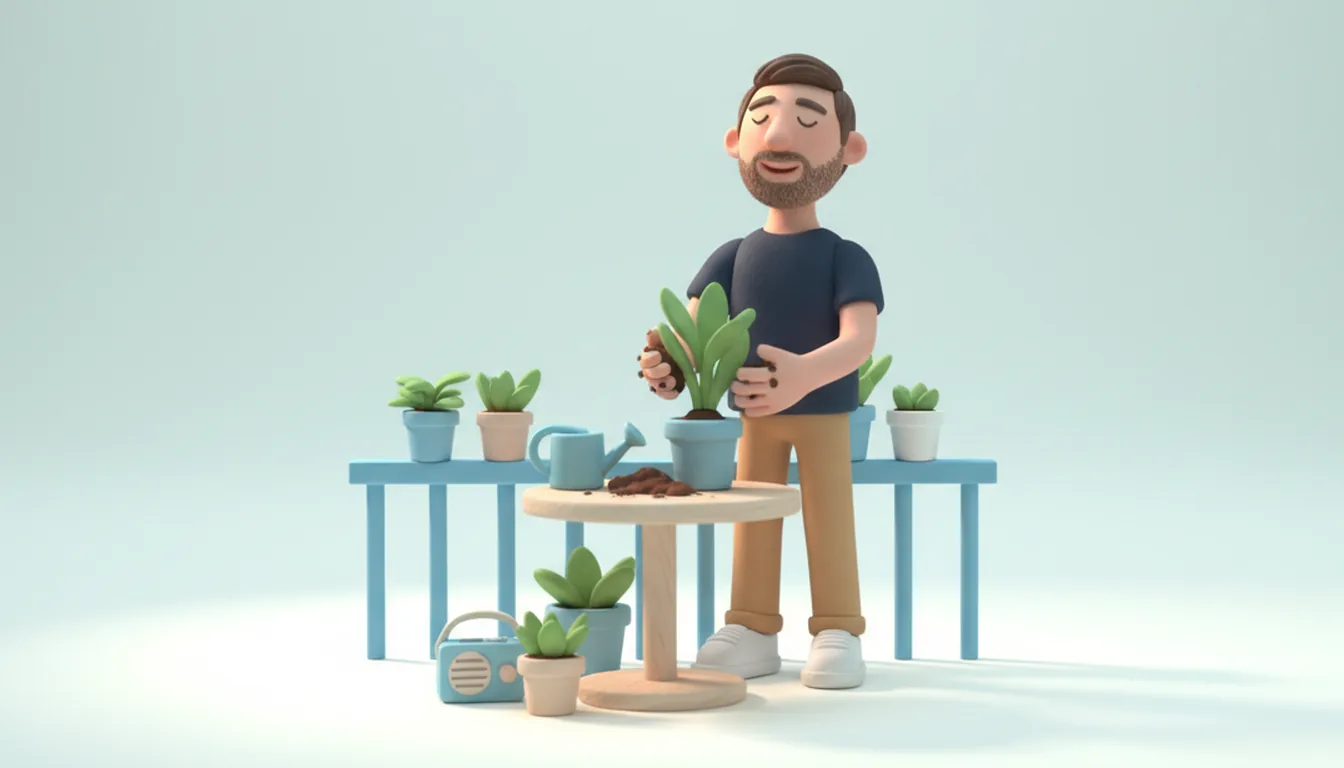
An example: Theo spends a whole Saturday on his balcony with fourteen plants, a bag of soil and the radio on low. His phone stays on the kitchen counter. At six it buzzes with a text from his sister, Nina: "You've been quiet all day. Are you okay? Not lonely, are you?"
Theo laughs out loud. It's been his best day in weeks. He sends her a photo of the repotted plants and a thumbs up, and then he makes dinner for one and enjoys every bite.
Alone is where you are, lonely is how you feel
Put the two side by side and you get four everyday situations:
- Alone and content. A long walk with no plan, a book on a rainy Sunday, Theo and his plants.
- Alone and lonely. A Friday night when every friend seems to be busy and you would love some company.
- With people and lonely. A family dinner where everyone talks over you, or a party full of people you can't really talk to.
- With people and content. An evening with friends who know you, where you can say anything.
So the number of people around you tells only half the story. What matters is whether the contact you have matches the contact you want. Some people want a lot, some want a little, and that amount can change from week to week.
The same is true of a home. Many people like living alone and still feel close to others, and some feel lonely in a full house.
Solitude vs loneliness, and what aloneness means
People mix these up. In plain English:
- Solitude is time alone that you chose and like. People seek it out.
- Aloneness is the simple fact of being by yourself, with no good or bad attached.
- Loneliness is the ache of missing people. It can show up when you're alone, and it can show up in company.
When people ask about solitude vs loneliness, the difference is choice. Solitude is a door you closed yourself. Loneliness feels more like a door that nobody else opens.
Why some people love their own company
For many people, time alone is how they charge up. They can enjoy a busy party, but they come home tired, and a quiet evening puts them right again. That lean is part of what being an introvert means, and am I an introvert or extrovert? goes into the difference in more detail.
Typeza sees personality type as part of what that time alone looks like. Five of the introverted types:
- Harmonizer: loves a slow afternoon at home with good food, a soft blanket and nothing that has to be done by a certain time.
- Analyst: can lose a whole day to a book or a problem and look up surprised that it's dark outside.
- Dreamer: needs quiet days and their own pace, and a week with no quiet in it wears them out.
- Strategist: does their best thinking alone and often guards a few quiet hours every day.
- Craftsman: is happiest with busy hands, fixing the bike or building a shelf with no one asking how it's going. Theo, with his fourteen plants, fits this one well.
None of them are hiding from people. They simply need a turn on their own before they have energy to give again.
Why others get restless after an afternoon alone
Other people run the other way. A morning alone is fine. By mid afternoon the house feels too quiet, and by evening they're texting everyone they know. For them, company is what charges them up, and a long stretch alone drains them faster than a busy day out. Four of the extraverted types:
- Ideator: gets new ideas all day and wants someone to share them with, ideally right now.
- Vitalizer: feels most like themselves in a room full of people and laughter, and an empty house goes flat fast.
- Diplomat: wants to be out doing something, and a slow day at home can feel like a day lost.
- Encourager: loves meeting people and hearing their stories, and gets bored without someone to talk to.
These types enjoy time alone too, in smaller doses. An hour with a coffee and a podcast can be lovely. A whole weekend of it can feel long. If you want those hours to go better, how to enjoy your own company has ideas for every type.
When one of you needs more time alone
Theo and Nina are a good example of two people who want different amounts. Nina would happily see friends every night. Theo needs at least two evenings a week to himself. Couples and close friends run into the same gap, and it hurts when it gets read as a lack of love. A few things help:
- Say it as a need. "I need tonight to myself to recharge, and tomorrow I'm all yours" lands better than going quiet.
- Spend time alone together. Same room, different things: one reads, one plays a game, both are happy.
- Plan the together time too. The person who wants more company relaxes when the next evening out is already on the calendar.
- Don't count it as rejection. When a friend wants a night in, it's often about their energy and has little to do with you. A low social battery is a common reason.
- Let the social one go out. One partner can see friends while the other stays home, and both come back in a better mood.
Some couples take this a long way and keep separate homes, which is what living apart together is about. Many just need a little space inside one.
When time alone starts to feel like missing people
Alone time can slowly turn into something else, even for people who love it. A few everyday signs that you've had enough of your own company:
- You keep picking up your phone, hoping somebody wrote.
- The quiet that felt great on Saturday feels flat by Tuesday.
- You say no to plans out of habit, then wish you'd gone.
- Something good happens, and there's nobody to tell.
- You catch yourself chatting a little too long with the cashier.
If that sounds familiar, small steps work best. Text one friend and suggest a walk. Say yes to the next invite, even for an hour. Join something that meets every week, like a choir or a running group, so seeing people doesn't depend on someone remembering to ask you. And if the feeling stays for weeks, tell someone you trust about it.
What your type says about time on your own
How much time alone feels good, and when it tips into loneliness, often has to do with type. The free personality test shows your type. If a brother or sister worries about you, send them the link from your result so they can take the same test. When your sibling is through, you both get your relationship type.
Questions people ask
What is the difference between lonesome and lonely?
Very little. Both mean sad from being alone or missing people. Lonesome can also describe a remote place, like a lonesome road.
What is the opposite of lonely?
Connected is the closest word, because loneliness is about missing contact. When you're alone and happy, like Theo with his plants, content fits better.
Sources
- Dictionary.com, "Lonesome". Lonesome means lonely, and also remote or deserted, as in "a lonesome road".
Written by Virko Kask, founder of Typeza
Written with the help of AI tools.
One question for two, every week
A question to ask your partner, friend or family, and how different types tend to answer it.
Free. Unsubscribe any time.