
Homebody: what it means, the signs, and is it bad to be one
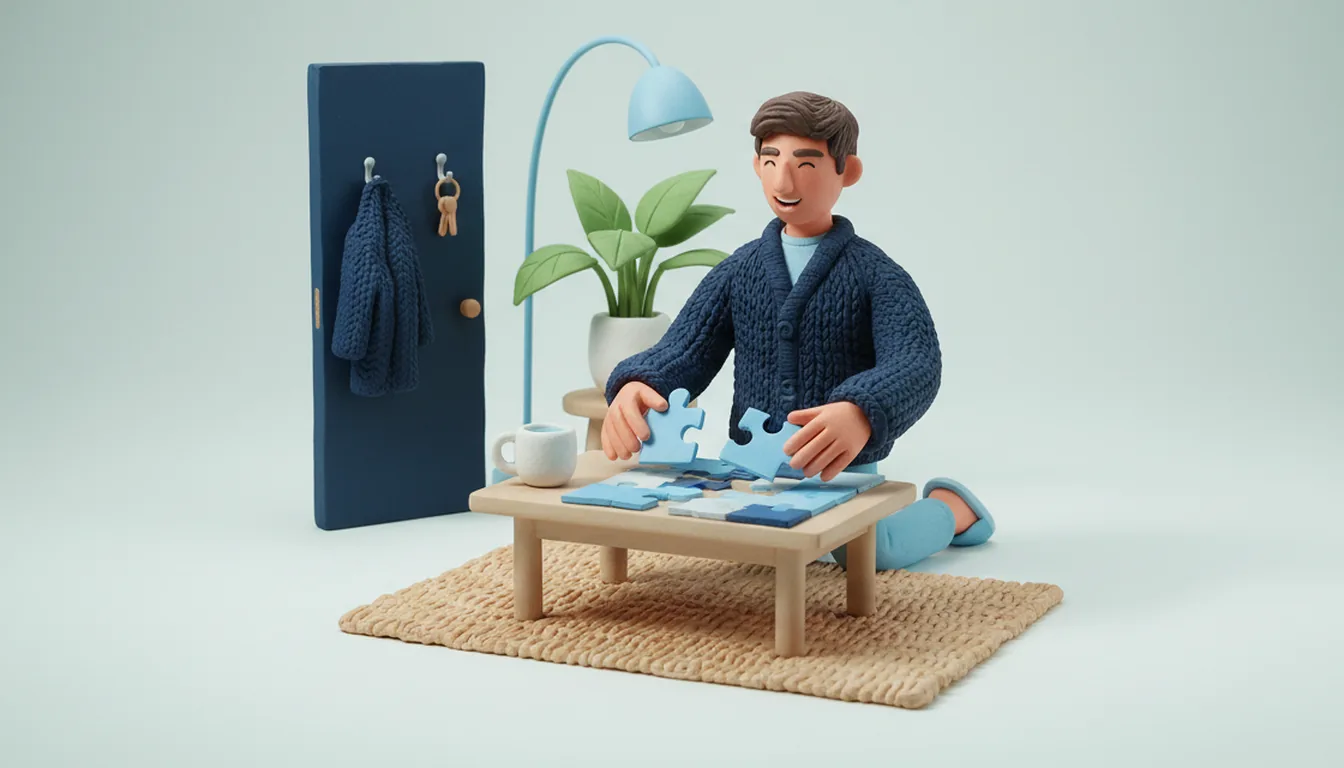
A homebody is a person who likes being at home and would usually rather spend free time there than go out. Home is where they feel rested and most like themselves.
An example: it is Friday, seven in the evening. One friend texts about a new bar downtown. Another has tickets to a band nobody has heard of. Jonas reads both messages in his slippers, with soup on the stove and a half-finished puzzle on the coffee table. He sends two kind replies saying no, and starts on the next corner of the puzzle. He is completely happy. Jonas is a homebody, and he stopped apologizing for it years ago.
What does homebody mean?
Homebody is a noun for someone who enjoys spending time at home. It is written as one word. "Home body" as two words is a common spelling of the same thing. The word is about two hundred years old, and people often say it with a smile.
Being a homebody does not mean never leaving the house. Homebodies go to work, see friends and travel. When they get to choose, though, they pick the evening in. A good night for a homebody is a meal they cooked, a show or a book, maybe one or two friends over, and their own bed at the end of it. Plenty of homebodies share a home, and others live alone and like it that way.
Signs you are a homebody
Homebodies may nod at many of these.
- A canceled plan feels like a small gift.
- You have a favorite spot on the sofa, and everyone knows it.
- You would rather host dinner than go out for one.
- Your perfect weekend has no alarm clock and no traffic.
- You spend money on things that make home nicer, like good sheets, plants or a proper coffee maker.
- After a trip, the best part is walking through your own front door.
- You can spend a whole Saturday inside and not notice the time.
- You rarely feel that you are missing out.
- Your friends still invite you, because they know you say yes to the small, easy plans.
Homebody vs introvert: is it the same thing?
The two often overlap, but they are different things. An introvert gets energy from time alone and spends it around people. A homebody gets energy from being at home.
An introvert who is not a homebody may love solo trips, long walks in a new city or a quiet corner of a café. An extrovert who is a homebody loves people, as long as the people come to them. They throw dinners, host game nights and keep the kettle on for whoever drops by.
The useful question is where you feel most like yourself. Introvert or extrovert looks at the other question, about how people affect your energy.
People also call homebodies an old soul, and sometimes both labels fit the same person. An old soul has tastes that seem older than their age. A homebody simply loves their nest, at 22 or at 72.
Is it bad to be a homebody?
No. Liking your home is a preference, like preferring the sea to the mountains. Plenty of homebodies have full lives, close friends and happy relationships. It can turn into a problem in a few situations:
- Going out has started to feel scary, and it gets a little harder each month.
- Friendships fade because you always say no and never invite anyone over.
- Your partner feels lonely, and the two of you have stopped talking about it.
If staying in still feels like a choice, it is a choice, and a perfectly good one. If it starts to feel like the only option, talk about it with someone you trust.
Why home recharges some people more than others
People are homebodies for different reasons, and the reason can say a lot about them. In Typeza, four personality types often feel a strong pull toward home:
- Harmonizer: home is where comfort lives. They notice the light, the blanket and the smell of dinner, and they make a space that feels good to everyone in it. Many are the hosting kind of homebody.
- Inspector: home is order and routine. They like knowing where things are and what the evening will bring, and they need regular time alone.
- Counselor: home is a safe place after a loud day. Busy, harsh places drain them, and quiet time lets them sort through what they felt.
- Craftsman: home is the workshop. They are happiest with a practical project, good tools and nobody asking them to make small talk.
Other types get restless after one evening in. The Diplomat wants to be where things are happening, and the Encourager wants new people and new ideas around them.
A type does not lock you in. A Diplomat can love a quiet Sunday, and a Craftsman can love a festival. Your type shows which way you lean when nobody else is making the plans.
When a homebody loves a social butterfly
Some of the happiest pairs are one homebody and one person who loves going out. Some of the most tired pairs look exactly the same. The difference is mostly whether each person gets what they need without the other paying for it.
A few things help:
- Split the week. Two nights out, two nights in, and the rest decided on the day.
- Go out separately. The social one sees friends without dragging the homebody along, and the homebody gets a quiet house.
- Bring the fun home. Dinner parties, game nights and movie nights give both of you people and comfort at once.
- Agree on a time to leave. A homebody who knows they can go home at ten may have a better time.
The same tips work for friends. A homebody friend is often the one who says yes to a long dinner at their place and no to a club.
Some couples go further and keep two homes. Living apart together looks at who that suits.
Whether this kind of pair feels easy or tiring depends on more than social habits. It also depends on the relationship type the two of you share. In some pairs the difference gives both people energy. In others, it is exactly where they rub.
Other words for homebody
English has a few words for the same thing, some kinder than others.
- Homebird: the British version, warm and fond.
- Nester: someone who loves making their home just right.
- Stay-at-home type: plain and neutral.
- Couch potato: a homebody who mostly watches TV. It is a tease.
- Hermit: much stronger. It suggests someone who avoids people altogether.
Homebody is the gentlest of them.
See what keeps you at home
If you have always been the one who stays in, your personality type can show you why. You can take the free personality test from the sofa with the puzzle half done. You pick between two statements each time. At the end you get your type plus a bar for each base trait, and one of those bars shows how outgoing or reserved you are. A click opens your type's free profile, with its strong sides, its weak sides and what it needs from the people at home.
Living with someone who would go out every night? Send them the same test through the link on your result. When they have a type too, your relationship type appears, showing which parts of the week run smoothly and where the two of you keep tugging in different directions.
Questions people ask
What is the opposite of a homebody?
People call someone who is always out a social butterfly or a party animal. They get restless when they stay in for too long.
Sources
- Dictionary.com, "homebody": one word for "a person who prefers pleasures and activities that center around the home," first recorded around 1815 to 1825.
- Wiktionary, "homebird": homebird is an informal UK word.
Written by Virko Kask, founder of Typeza
Written with the help of AI tools.
One question for two, every week
A question to ask your partner, friend or family, and how different types tend to answer it.
Free. Unsubscribe any time.