
Mother and daughter relationship: the close bond, the fights, and what helps in adult life
A mother and daughter relationship is the tie between a mom and her daughter, often the closest in the family. When the daughter grows up, the two become grown women who know each other better than almost anyone else does. A healthy one has closeness, honest talk and room for each woman to live her own way, even though a daughter is rarely as much like her mother as people say.
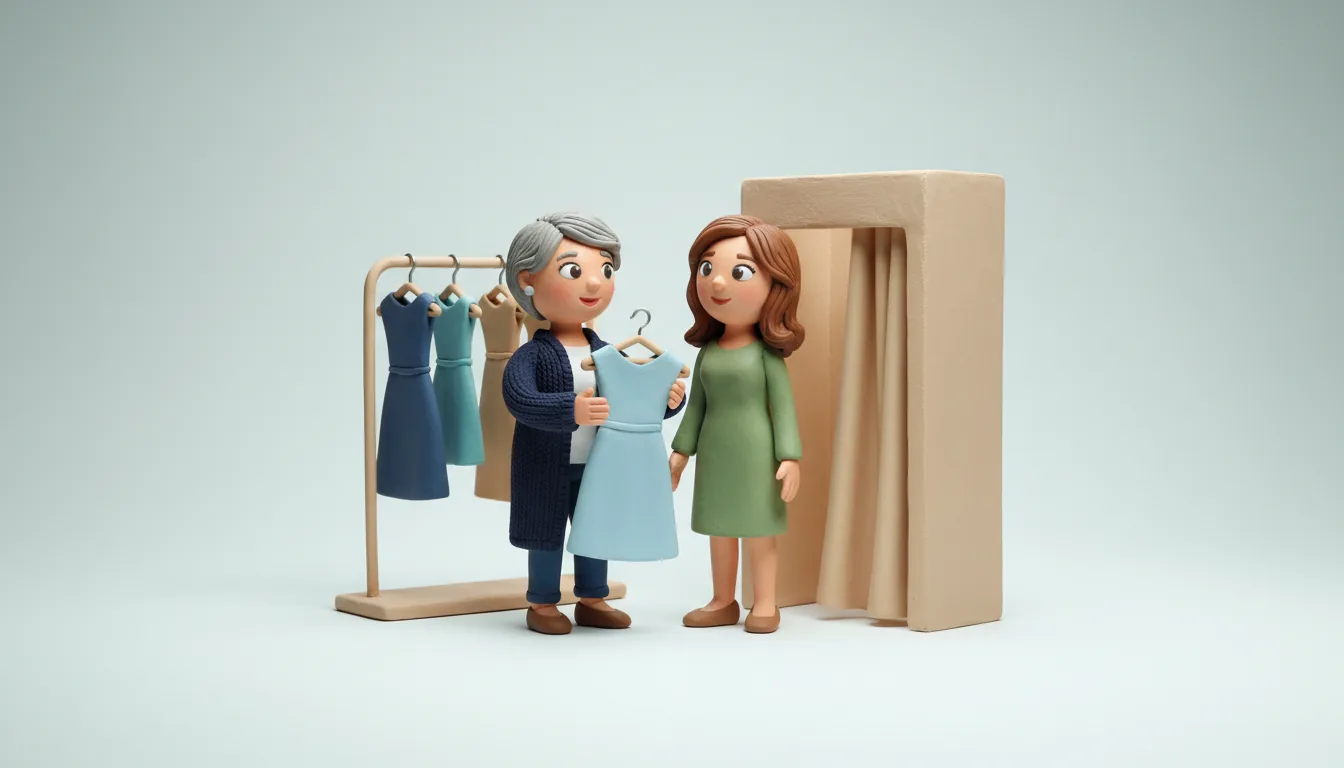
An example: in the fitting room mirror, the green dress looks right to her. Then her mother says, "It's nice. The blue one suited you better." She is 38, runs a team of twelve and has two children of her own, and for a moment she feels fifteen again. Twenty minutes later they share one slice of cake in a cafe and laugh about an old family holiday. Both moments belong to the same relationship.
What is a healthy mother and daughter relationship?
A healthy mother and daughter relationship, once the daughter is grown, is one where both women feel close and free at the same time. The mother takes an interest in her daughter's life and accepts that the choices are hers. The daughter shares what she wants to share and sees her mother as a person, with a history, worries and plans of her own. They can disagree about how to raise a child and still call each other the next day.
Close does not have to mean daily. One pair speaks every morning, another sees each other once a month, and both can be equally close.
What makes the mother and daughter bond so strong?
For many women, their mother is the first person they learned from about work, love and running a home. Even a daughter who chose a very different life tends to measure it against her mother's, so the mother daughter bond carries a lot. A daughter often knows her mother's mood from one word on the phone. A mother often knows something is wrong before her daughter says it. Many daughters grow closer to their mother once they have children of their own.
The same closeness makes small things hurt. A comment about your hair from a colleague is just a comment. From your mother, it can stay with you all week.
How do mother daughter relationships change when the daughter grows up?
In her twenties, many a daughter pulls away to prove she can run her own life, and her mother's advice sounds like a vote of no confidence.
In her thirties, the bond often warms up again, especially if she has children. For once, she may call her mother to ask for advice instead of just to report.
Later, the roles start to turn. The daughter goes with her mother to the doctor, and a mother who was always the strong one has to accept help. A daughter who waited years to be treated as an equal suddenly finds herself in charge.
How to be a better daughter
Being a good daughter as an adult looks different from being one at ten. Many mothers stop wanting obedience and start wanting to stay part of their daughter's life. Small, steady habits do more for that than big gestures:
- Call or text without a reason now and then, and not only when you need something.
- Ask about her week and her friends, the way you would ask a friend.
- Tell her your own news before she has to hear it from someone else.
- Keep track of her important dates, from her birthday to Mother's Day, and the sad ones too.
- Thank her for something specific she did when you were young.
- Let her help in the ways she's good at, even when you could manage alone. It's one of the surest ways to make your mom happy once you're grown.
How can you be a better daughter when the two of you often clash? Start with one thing you can change on your side, such as how quickly you get defensive on the phone. You don't have to agree with everything she says, or move back to your hometown, to be a good daughter. A grown daughter who keeps in touch and lets her mother see who she has become is already doing a lot. Even a new nickname for your mom can show her you see the person she is now.
Why do mothers and daughters fight?
Mother and daughter fights often come back to a few themes.
- Advice about her weight, her clothes, her partner, her job or how she raises her children.
- Comparison. The mother measures her daughter's choices against her own, and the daughter hears that her way is wrong.
- Old roles. The mother still sees the girl, and the daughter still reacts like one.
- Different ideas of closeness. One wants to talk every day, and the other calls when she has news.
- Grandchildren. Two women with strong views on raising a child end up in the same kitchen.
The dress in the example above is a typical case. The mother meant, "I want you to look your best." The daughter heard, "You still can't choose for yourself." Many mother daughter fights live in the gap between what one meant and what the other heard.
One more reason sits inside the pair, and it explains why some mothers and daughters hardly ever argue.
Why can a mother and daughter be so close and still clash?
In socionics, the theory Typeza uses, every person has one of 16 personality types. A type handles some kinds of information with confidence, such as feelings, logic, practical comfort or the long view, and feels shaky with the rest. Two types together make one of 16 relationship types. That relationship type comes from the pair alone, so a mother and daughter would have the same one if they had met as friends or coworkers. So a compatibility test made for any two people works for a mother and daughter too.
Many mothers expect a daughter to be like them, and relatives often say she is. A daughter can share her mother's face, her laugh and even her job, and still have a different type. Then the mother's advice, which often means "do it the way I would", lands on someone built another way. Here are four patterns that often show up between mothers and grown daughters.
The mother who handles the practical side and the daughter who reads the mood
An Organizer mother shows love by doing. She fixes the dripping tap, sorts out the insurance and turns up on moving day with a bag of meals. Talking about feelings is harder for her. Her daughter the Counselor is the other way round. She hears from one word on the phone that her mother is tired or hurt, and she helps her say it. Forms and repairs are where she feels lost. Each one gives the other what she needs most, without effort. Theirs is Duality, the top fit for a couple or a close friendship, and in a family often the most relaxed pair at the table.
The daughter everyone calls her mother's copy
A Vitalizer mother fills every room with warmth and noise. Her daughter the Diplomat is just as lively, and at every party someone says she is her mother all over again. Yet they often miss each other. For the mother, a good evening is one where everyone feels close and included. For the daughter, it is one where things happen and the right people meet. They use the same words, like fun, family and a good time, and mean different things by them. This is Quasi-identity, two people who look like a match and rarely quite connect. It does little harm, and it explains many puzzled silences.
Fine over coffee, tense at the family table
An Ideator mother is always starting something new, like a pottery class, a plan to move to the coast or a theory about the neighbors. Her daughter the Strategist sees at once where each plan could go wrong. Alone over coffee, they can talk for hours and enjoy every minute. At a family dinner the same talk turns sour. In front of others the daughter's doubts sound like put-downs and the mother's plans sound like nonsense, and both go home flat. This is Extinguishment: good for thinking together, hard for doing things together, and at its worst with an audience.
Close, and stuck on the same problem
A Harmonizer mother makes a home feel calm and warm. Her daughter the Encourager brings ideas and new people, which add color to her mother's life. They also share one weak spot, because both put off dull jobs like paperwork, deadlines and money plans. When the daughter's rent contract goes wrong, or the mother's pension forms pile up, they comfort each other and the forms stay on the table. This is Semi-duality: most of the fit of Duality, with one gap neither can cover. For that one area, it helps to ask a third person.
A type pattern does not excuse unkindness or decide how close you can be. It shows which parts come easily and which will take effort.
How to improve a mother and adult daughter relationship
For mothers:
- Ask before you advise, and accept the answer you get.
- Tell her what she does well. Many grown daughters still wait to hear it, and National Daughters Day on September 25 is a good day to say it.
- Let her raise her children her way.
- Send a short line on an ordinary day. A few to borrow are in mother and daughter sayings.
- Write her birthday card to the grown woman she is. Our birthday wishes for a daughter have lines to start from.
For daughters:
- Treat her advice as one opinion, and decide for yourself without a fight.
- Say plainly what help you want. "Can you take the kids on Thursday?" works better than hoping she offers.
- When an old role comes back, answer as the woman you are now.
How to find your mother and daughter relationship type
A mother and daughter can share a face and a laugh, and still nobody can see their relationship type by looking. Mom or daughter, whoever is first, does the free family compatibility test and passes the result's link to the other. Typeza is for people 16 and older, so you both need to be at least 16. Once the other has finished, mother and daughter can each read their relationship type, the ground they share without effort and the topics where they tend to clash. Family dynamics covers the parts everyone plays in a family as a whole.
Questions people ask
Why am I so different from my mother?
A daughter can look like her mother and share her habits and still have a different personality type. In Typeza, a mother and daughter can be in any of the 16 relationship types, from one where each covers the other's weak spots to one where they keep talking past each other.
How can a mother and adult daughter become closer?
See each other one to one now and then, and settle on how often to be in touch so it works for both. Mothers can hold back advice until it is asked for, and daughters can say plainly what they need.
Sources
- Awareness Days, National Daughters Day: the US date of September 25.
Written by Virko Kask, founder of Typeza
Written with the help of AI tools.
One question for two, every week
A question to ask your partner, friend or family, and how different types tend to answer it.
Free. Unsubscribe any time.